Sportradar and Golf Betting Technology: The Data Behind In-Play Odds
 Available in US

Table of Contents
Sportradar and Golf Betting Technology: The Infrastructure Behind Every Live Bet
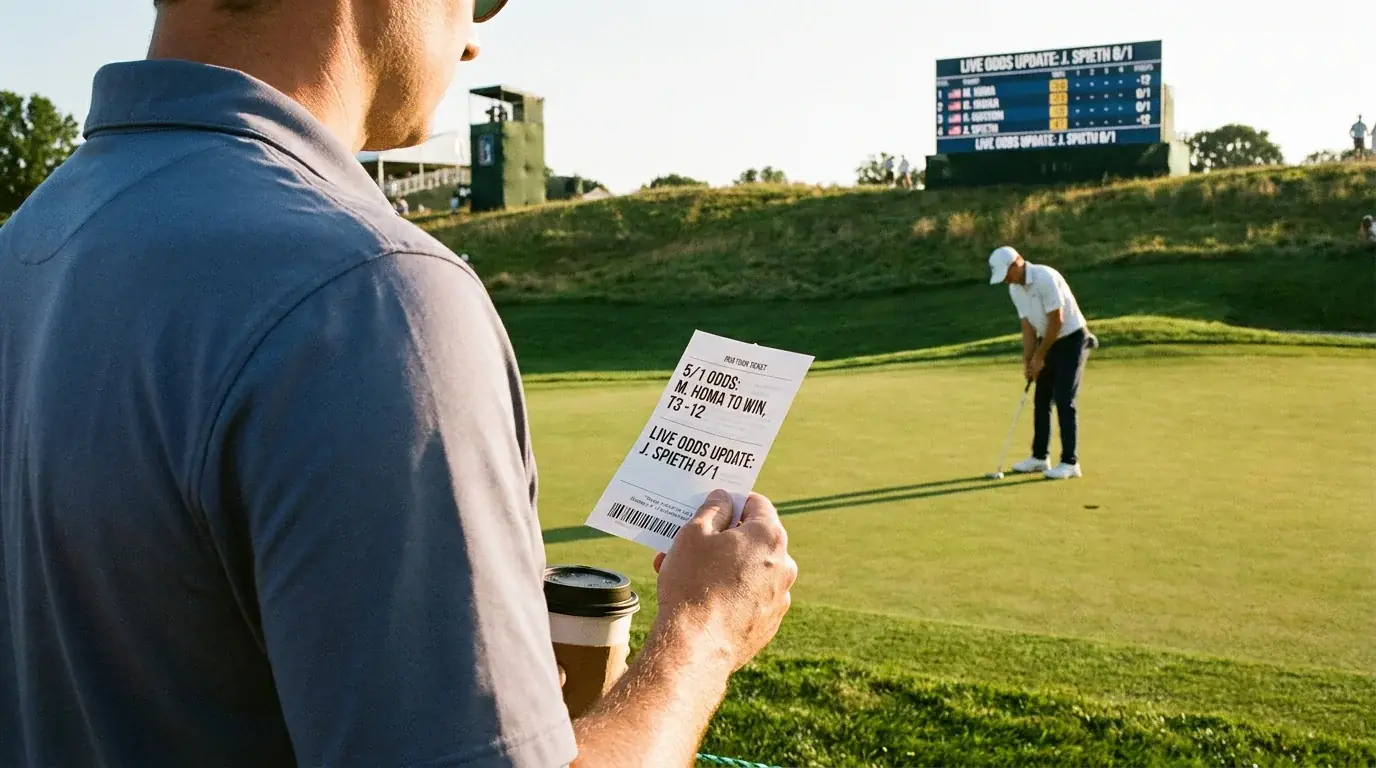
Most golf bettors never think about where their in-play odds come from. You open an app, see a price next to a player’s name, and either back it or move on. But behind that price is a data pipeline that stretches from a radar unit mounted beside the fairway to a server farm processing shot trajectories in real time, and the company controlling that pipeline has quietly become the most important entity in golf betting that most punters have never heard of.

Sportradar’s acquisition of IMG Arena in November 2025 consolidated an already dominant position. The combined entity now holds official betting data rights across 39,000 events and 30,000 streaming events spanning 14 sports — golf prominently among them. The PGA Tour, DP World Tour, and an expanding network of professional events flow through Sportradar’s infrastructure. Every in-play golf odd you see at a UKGC-licensed bookmaker almost certainly originates from data processed by this one organisation. That is not hyperbole — it is the structural reality of how live golf betting works in 2026.
The IMG Arena Acquisition and Its Impact on Golf Data
IMG Arena was already the gatekeeper of golf betting data before the acquisition. It held exclusive agreements with the PGA Tour for official scoring data, ShotLink integration, and event-level streaming rights. The DP World Tour ran through a similar arrangement. When Sportradar acquired IMG Arena, it absorbed those rights into a broader portfolio that already included data agreements with the NFL, NBA, MLB, and dozens of other leagues.
For golf specifically, the consolidation means a single company now controls the entire data chain — from the moment a shot is struck to the moment the in-play odds update on your betting app. The raw data (ball position, shot distance, lie, trajectory) feeds into Sportradar’s processing layer, which generates probability models that are licensed to bookmakers. Those bookmakers use the models to set and adjust their in-play markets. At no point in this chain does a competing data provider offer an alternative feed for PGA Tour events. The market structure is, for practical purposes, a monopoly on official golf betting data.
The implications for punters are mixed. On one hand, the data quality is excellent — Sportradar’s investment in technology has produced the fastest and most accurate golf data feeds available. On the other, the lack of competition means there is no market pressure to reduce data licensing costs, and those costs are ultimately reflected in the margins bookmakers charge on in-play golf markets. Whether you view this consolidation as efficiency or extraction depends on your perspective, but its existence is a fact that every live golf bettor should understand.
3D Shot Tracking and Real-Time Data Feeds
The technology that powers modern golf betting data is genuinely impressive, and understanding it gives you a clearer picture of what the market “knows” versus what you see as a punter.

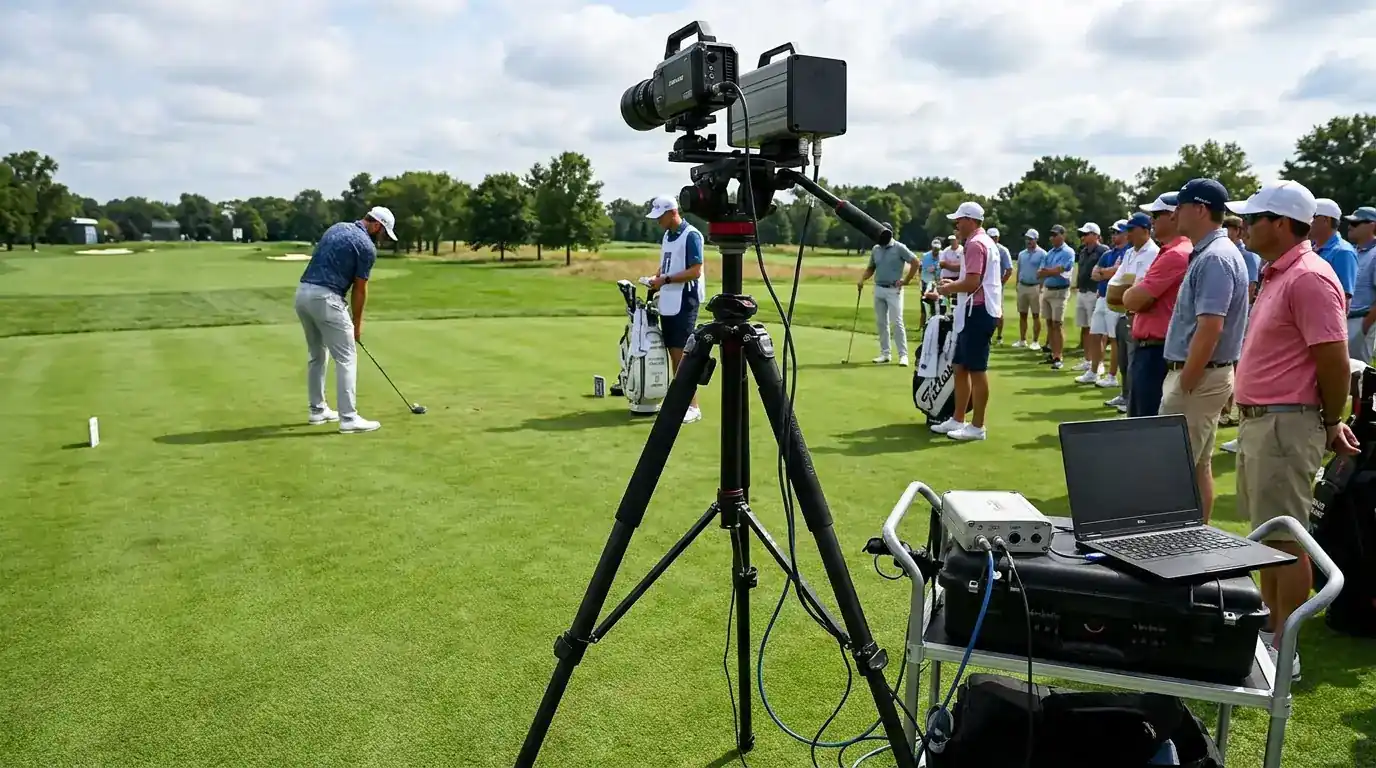
3D shot tracking combines radar systems and high-speed cameras positioned around the course to capture every shot in three dimensions — trajectory, spin rate, launch angle, carry distance, roll distance, and landing position. On PGA Tour courses equipped with ShotLink, this data is generated for every shot by every player in the field, creating a dataset of roughly 30,000 individual data points per tournament round. That dataset feeds into Sportradar’s real-time processing engine, which converts shot-level data into probability updates for dozens of market types — outright, match-up, top-finish, micro-betting lines, and more.
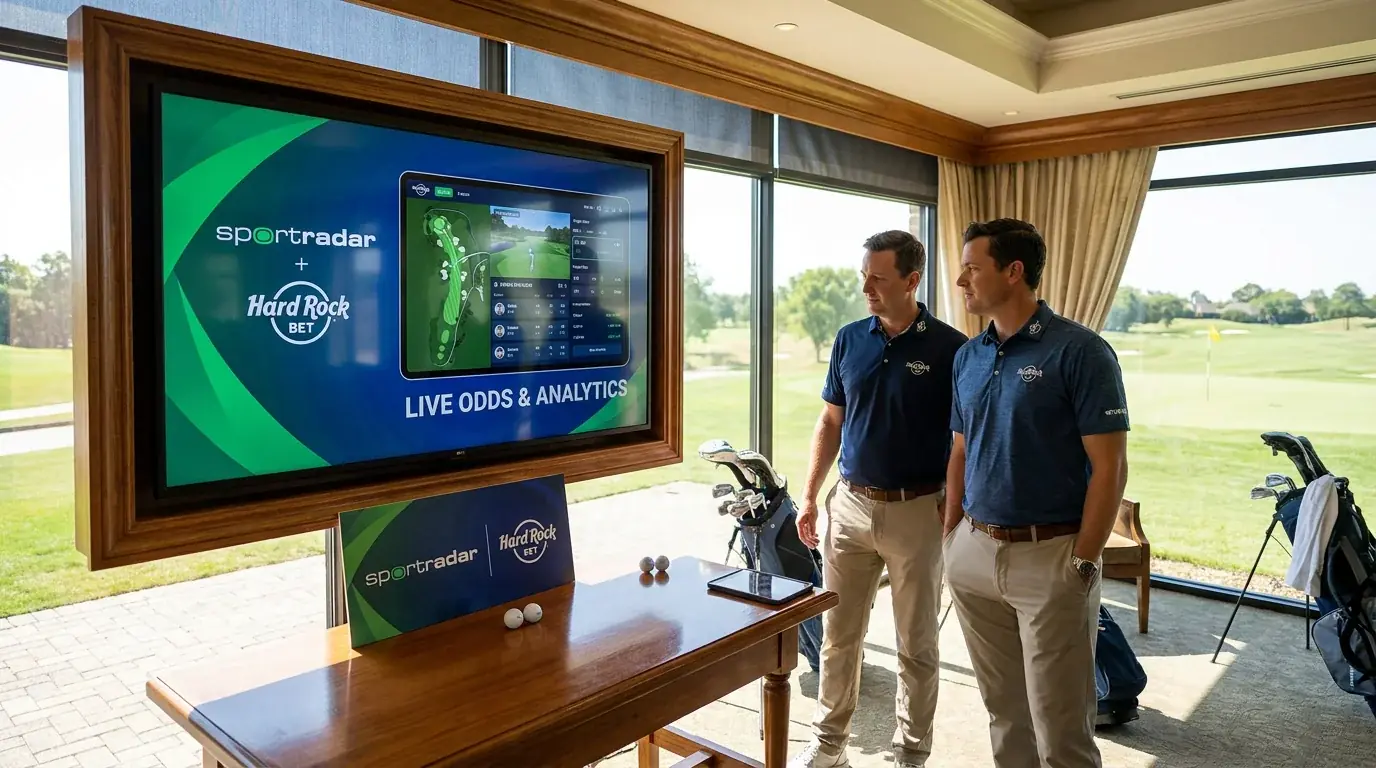
Sportradar’s expanded partnership with Hard Rock Bet has pushed this technology further, integrating 3D tracking visuals directly into the betting experience alongside micro-market pricing. Carsten Koerl, Sportradar’s Chief Executive, has spoken about the partnership philosophy as opening “a new, exciting chapter” in the evolution of sports data — and while that language was directed at baseball, the same technology stack applies to golf. The 3D visualisation of a player’s approach shot landing 12 feet from the pin, combined with an instant update to his birdie probability and the associated micro-market price, represents a betting experience that would have been science fiction a decade ago.
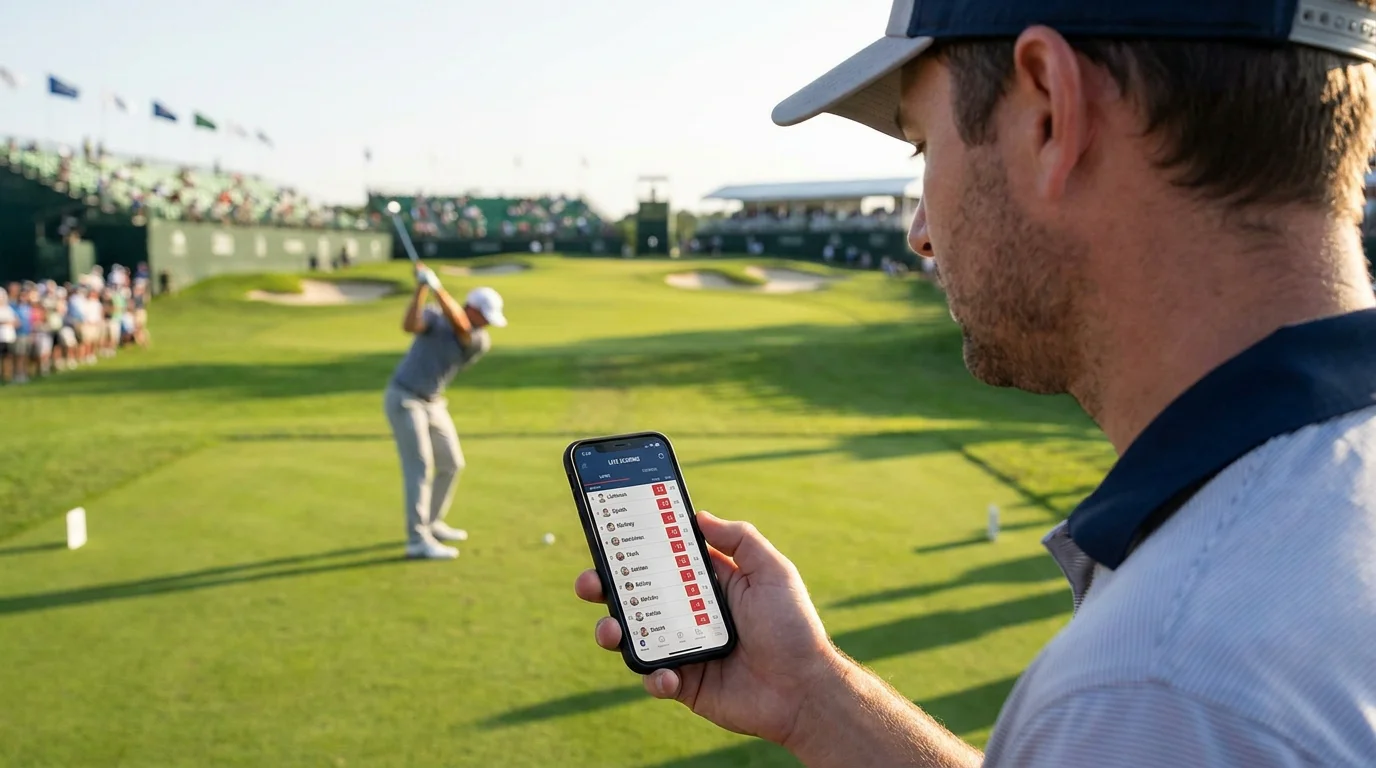
Feed latency — the delay between a shot being struck and the data reaching bookmakers — is measured in seconds rather than minutes. For practical purposes, the bookmaker sees what happened on the course before you do. The live leaderboard on the PGA Tour app might update 30-60 seconds after a putt drops; the data feed to bookmakers updates faster. That information asymmetry is small but systematic, and it explains why in-play odds sometimes move before the scoring change is visible on public platforms.
What This Means for UK Golf Bettors
The net effect of Sportradar’s infrastructure is a live golf betting experience that is faster, deeper, and more granular than anything available five years ago. More micro-markets exist because the data to price them exists. In-play odds are more accurate because the underlying probability models are fed by richer datasets. Settlement is faster because the data confirming outcomes arrives in near-real-time rather than waiting for manual verification.
But the data access is not symmetrical. Bookmakers receive the full real-time feed — every shot, every probability update, every micro-market trigger — while punters see a delayed, filtered version through public leaderboards and broadcast coverage. That gap is not a conspiracy; it is a product of commercial licensing. Sportradar sells its premium feed to operators who pay for it, and there is no equivalent product available to individual bettors at any price. The practical consequence is that in-play golf odds are set by entities with better information than you have, and the edges you find will almost always come from interpretation and analysis rather than raw speed.
For UK bettors specifically, the Sportradar infrastructure underpins every UKGC-licensed operator that offers live golf markets. Whether you bet with a large high-street brand or a smaller digital-only bookmaker, the data flowing into their pricing engine comes from the same source. Differences in odds between operators reflect their own margin policies and risk management decisions, not differences in underlying data. That uniformity means shopping for the best price across operators is a genuine edge — you are comparing different commercial decisions applied to identical information.

The trajectory of this technology points toward even more granular markets. As 3D tracking improves and processing speeds increase, expect to see in-play markets on individual shots, green-reading probabilities, and real-time strokes-gained calculations that update hole by hole. The infrastructure is already capable of supporting these markets; what remains is operator adoption and regulatory comfort with the pace of betting they enable.
Frequently Asked Questions
Does Sportradar provide data for DP World Tour betting markets too?
Yes. Through the IMG Arena acquisition, Sportradar holds official data rights for the DP World Tour as well as the PGA Tour. The data pipeline — shot tracking, live scoring, probability modelling — operates across both tours, meaning in-play odds at UK bookmakers for DP World Tour events are generated from the same infrastructure.
How does 3D shot tracking improve the accuracy of live golf odds?
3D tracking captures trajectory, spin, distance, and landing position for every shot, generating probability updates in near-real-time. This data allows bookmakers to adjust in-play odds within seconds of a shot being played, producing more accurate pricing than systems that rely solely on hole-by-hole scoring updates.
The Data Layer You Never See Shapes Every Bet You Place
Sportradar is not a brand you interact with as a punter, but it is the engine behind every live golf price on your screen. Understanding that infrastructure does not give you a direct edge — you cannot access the same feed that bookmakers use — but it gives you context. It explains why in-play odds move before leaderboard updates appear, why micro-markets exist at some events and not others, and why the information asymmetry between operator and punter is structural rather than accidental. Knowing the system helps you work within it rather than against it, and that awareness — quiet, background, constant — is part of what separates informed golf betting from guesswork.
Prepared by the Live Golf Betting editorial staff.