Responsible Golf Betting UK: Tools, Limits and Support for Punters
 Available in US

Responsible Golf Betting in the UK: Keeping the Game Enjoyable
There was a period — roughly 18 months around 2019-2020 — when I was betting on golf in a way I would now describe as undisciplined. Not catastrophically so, but enough that the enjoyment had drained out of it. I was chasing losses during Sunday back nines, adding stakes to in-play markets I had not researched, and telling myself that the next major would be the one where I “got it all back.” Nothing dramatic happened to snap me out of it — no financial crisis, no intervention. I just stopped one Tuesday, looked at my spreadsheet, and saw a pattern I did not like. That was enough.
I share that because the conversation about responsible gambling is too often framed as a binary — you are either a problem gambler or you are fine — when the reality is a spectrum. The UKGC estimates that around 1.4 million people in the UK have problems with gambling, roughly 3% of the adult population. But the number of people sitting somewhere between “fine” and “problematic” is far larger, and live golf betting creates specific conditions that can push you along that spectrum faster than you realise. A four-day tournament means sustained engagement. In-play markets create constant decision points. The combination of duration and frequency is unlike almost any other sport you can bet on.
Recognising Warning Signs in Your Own Betting
The warning signs in golf betting are subtle because the sport itself is slow and cerebral — it does not feel like you are gambling impulsively when you are placing a considered bet on a two-ball market after watching three holes of play. But the frequency adds up, and certain patterns should make you pause.
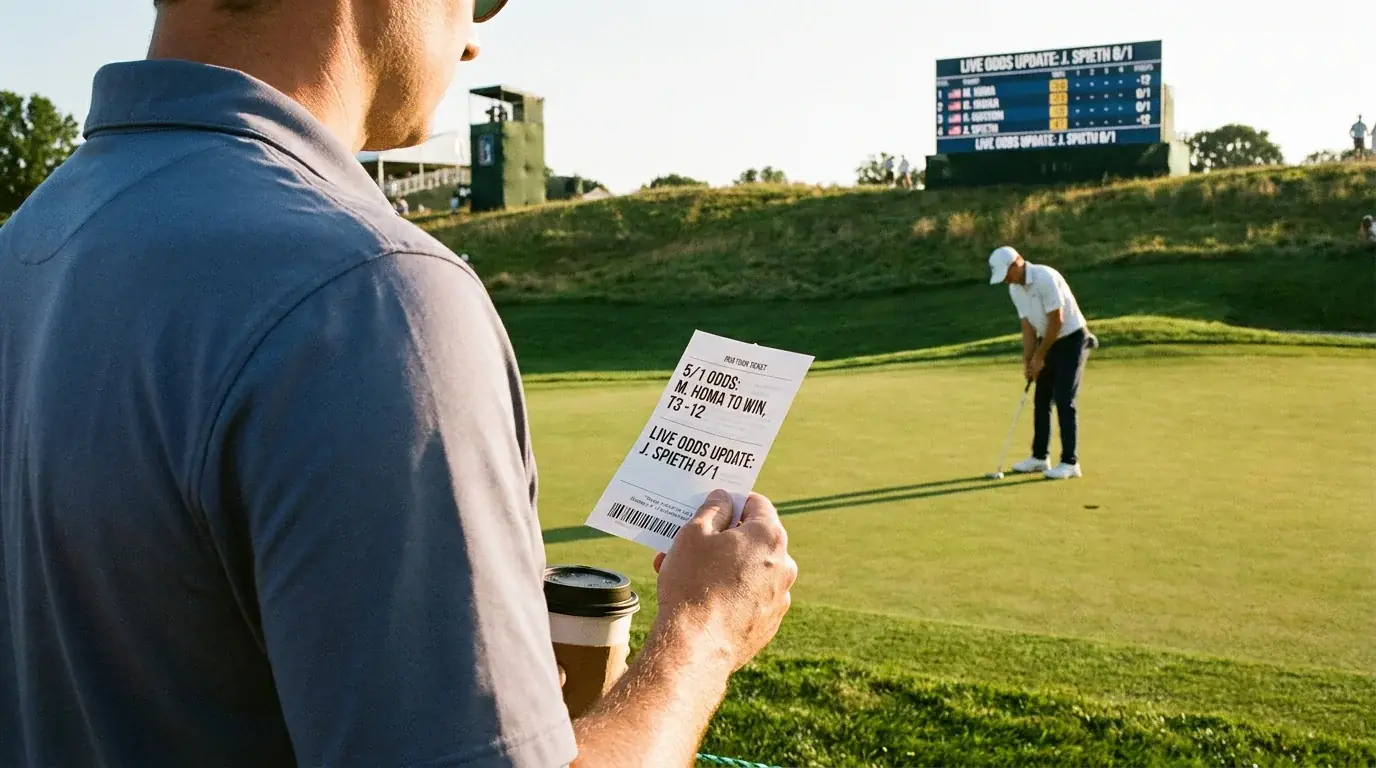
Chasing losses during a live round is the clearest signal. If a player you backed pre-tournament is having a poor day and your response is to add a new bet on a different market to recover the first loss, that is not strategy — that is reaction. Betting on every hole of a featured group, rather than selecting specific entry points, is another pattern I have seen in my own behaviour and in friends’ accounts. The feeling of engagement is appealing, but the expected value of unselective hole-by-hole betting is deeply negative.
Exceeding your planned stake for the week is a third flag. Bankroll management only works if the limits hold when you are tempted to break them — and the temptation is strongest during Sunday afternoon in-play, when the leaderboard is volatile and every hole feels like an opportunity. If you set a weekly budget on Monday and have blown through it by Saturday evening, the discipline has failed regardless of whether the individual bets were “good” bets.
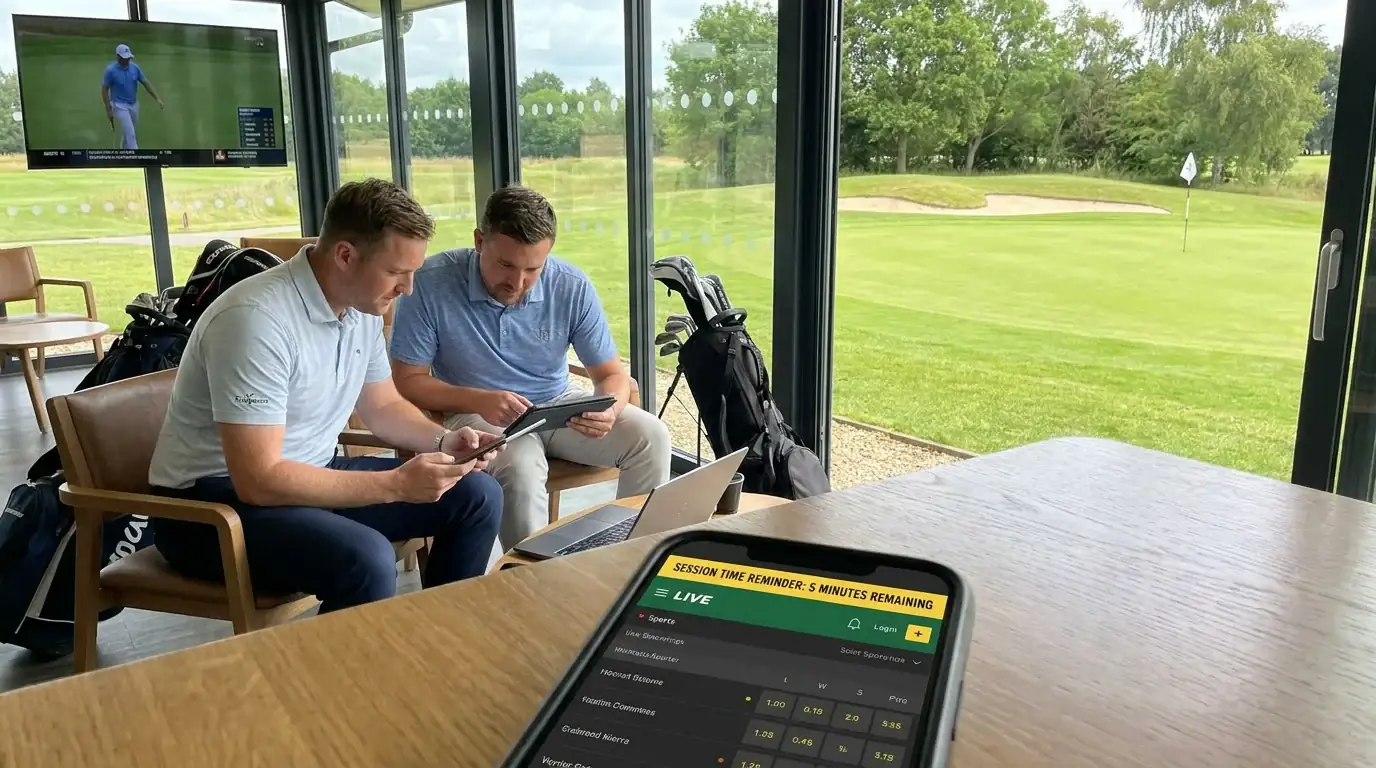
One pattern specific to golf is the sustained session. A football match lasts 90 minutes; a golf round takes five hours. It is easy to remain logged into a betting app for an entire round without realising how much time has passed or how many bets you have placed. That slow accumulation is harder to detect than a rapid burst of activity, and it is why session awareness matters more in golf than in most other betting contexts.
Self-Protection Tools Available at UK Bookmakers
The structural reality of gambling industry economics is stark: an analysis presented to the House of Lords found that 60% of industry profits come from just 5% of customers — those who are either problem gamblers or at risk. That imbalance is the reason regulators mandate self-protection tools, and it is the reason those tools exist at every UKGC-licensed operator you will encounter.

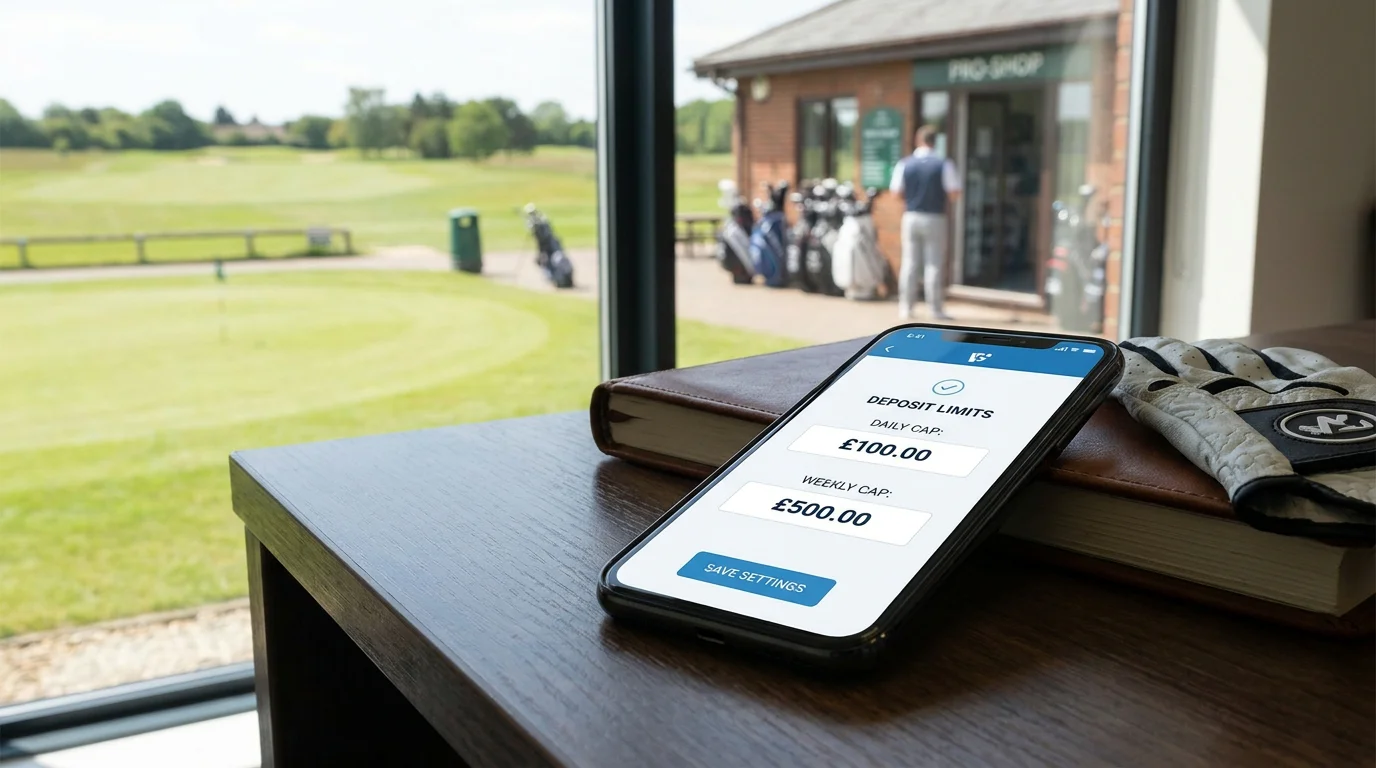
Deposit limits are the foundation. You can set daily, weekly, or monthly caps on how much money you add to your betting account. Once the limit is hit, the operator blocks further deposits until the next period begins. Decreasing a deposit limit takes effect immediately; increasing one triggers a cooling-off period — usually 24 hours — to prevent impulsive escalation. I have used weekly deposit limits since 2020 and consider them non-negotiable.
Loss limits cap the net amount you can lose in a defined period. They function differently from deposit limits because they account for winnings: if you deposit £100 and win £50, your net position is +£50 and the loss limit has not been touched. If you then lose £150, your net loss is £100 and a £100 loss limit would freeze further betting. Not all operators offer loss limits separately from deposit limits, so check your platform.
Session time reminders pop up after a pre-set duration of continuous use — typically 30, 60, or 90 minutes. They show you how long you have been active and, in some cases, how much you have wagered. These are particularly useful during long golf rounds when time distortion is common. Cooling-off periods let you take a voluntary break for 24 hours, 7 days, or 30 days without permanently closing your account.

Self-exclusion is the most comprehensive measure. You can self-exclude from a single operator through their app or website, or from all UKGC-licensed operators simultaneously through GamStop. A GamStop registration covers a minimum of six months and up to five years. During exclusion, operators must close your accounts and remove you from marketing lists. Registering takes under five minutes and requires only basic identification.
Where to Get Help
The first call I would suggest — and this is not a formality, I have actually spoken with them — is the National Gambling Helpline, run by GamCare. It is free, confidential, and staffed by trained advisors who understand the specifics of sports betting, including the patterns that live golf creates. They are available by phone, live chat, and email, and they can provide both immediate support and referrals to longer-term counselling.
GamCare also operates a network of face-to-face and online counselling services across the UK. Sessions are free and typically arranged within a few weeks of initial contact. For more intensive residential treatment, Gordon Moody provides a 12-week programme specifically designed for people with severe gambling problems. BeGambleAware is the primary awareness and research body, offering a treatment directory that lets you search for local support services by postcode.

All of these resources are free to access and funded through the statutory gambling levy — the same 1.1% of gross gambling revenue that operators have been required to pay since April 2025. If you are reading this and recognising something in your own behaviour, the infrastructure to help exists and it works. The hardest part is not finding the resource — it is acknowledging that you might benefit from it.
Frequently Asked Questions
How do I self-exclude from all UK golf betting sites at once?
Register with GamStop, the national self-exclusion scheme. It covers all UKGC-licensed online gambling operators. You choose a minimum period of six months, one year, or five years, and all participating operators must close your accounts and stop marketing to you during that period. Registration is free and takes a few minutes.
Can I set a time limit on live golf betting sessions?
Yes. Most UKGC-licensed betting apps offer session time reminders that notify you after a pre-set duration of continuous use — typically 30, 60, or 90 minutes. Some apps also display a summary of your wagering activity during the session when the reminder triggers.
Responsible Betting Is a Practice, Not a One-Off Decision
I do not frame responsible betting as a sacrifice or a constraint. The deposit limit I set in 2020 did not reduce my enjoyment — it restored it. Knowing that I cannot exceed a defined amount in a given week removes the anxiety of runaway stakes and lets me focus on the analysis and strategy that made golf betting appealing in the first place. The tools are there. The support is there. Using them is not a sign that something is wrong — it is a sign that you are treating betting as what it should be: entertainment with boundaries.
Prepared by the Live Golf Betting editorial staff.