Live Golf Betting
Live Golf Betting in the UK: Why the Fairway Is the New Front Line
By Live Golf Betting Analyst
 Available in US

Table of Contents
- Live Golf Betting in the UK: Why the Fairway Is the New Front Line
- The Short Version: What Every UK Golf Bettor Needs from This Guide
- How Live Golf Betting Works: Mechanics Behind In-Play Markets
- The UK Live Golf Betting Market in Numbers
- In-Play Markets You Can Bet on During a Golf Round
- How Golf Odds Move In-Play: Steamers, Drifters and Momentum Shifts
- Core Strategy Pillars for Live Golf Bets
- Live Golf Betting Toolkit
- Betcast, Sportradar and the Technology Powering Live Golf Bets
- UK Regulation and What It Means for Golf Bettors
- Responsible Gambling: Staying in Control During Live Rounds
- The Live Edge: Where Golf Betting Is Heading
- Frequently Asked Questions About Live Golf Betting
Live Golf Betting in the UK: Why the Fairway Is the New Front Line
I placed my first live golf bet during a weather delay at The Open in 2014. The leaders were sitting in the clubhouse, a 40-knot gust was tearing across the links, and the afternoon wave hadn’t even reached the turn. The outright market was frozen, yet everything about the tournament was still moving. That gap between what the odds said and what the weather was doing felt like free money. It wasn’t, entirely, but it taught me something I’ve built an 11-year career around: live golf betting rewards the punter who pays attention between the shots, not just during them.
If you’ve only ever backed a tournament winner on Tuesday and checked the leaderboard on Sunday, you’ve been watching golf with one eye shut. Live golf betting – also called in-play or in-running betting – lets you react to every birdie, every bogey, every gust of wind and every momentum shift across four days and 72 holes. The PGA Tour recorded a 20% surge in golf betting handle in 2025, the fourth consecutive year of double-digit growth. Meanwhile, golf’s share of UK gross gaming revenue sits at 1.2% and has climbed 30.7% since 2021 – modest in absolute terms, but the growth rate outpaces most established sports verticals.
This isn’t a niche corner of the market any more. The infrastructure behind live golf betting has transformed in the past two seasons. The PGA Tour’s Betcast – a dedicated broadcast built around real-time odds, strokes-gained overlays and shot-by-shot tracking – is expanding from 50 hours of coverage to more than 400 hours in 2026, spanning 12 tournaments including The Players Championship. Sportradar’s acquisition of IMG Arena brought 3D shot-tracking technology and micro-market pricing capabilities into the mainstream data pipeline. For UK punters, this means deeper markets, faster odds updates and a volume of information that simply didn’t exist when I started.
This guide is the resource I wish I’d had back in 2014. It covers how in-play golf betting actually works at a mechanical level, what the UK market looks like in hard numbers, which live markets are worth your attention, how odds move hole by hole, and which strategy pillars separate consistent punters from casual flutter-merchants. I also address the technology reshaping the product, the regulatory landscape under the UK Gambling Commission, and – critically – how to stay in control when the pace of live betting tempts you to chase. Whether you’re placing your tenth in-play bet or your thousandth, every section here is grounded in data, personal experience and the kind of specifics that the promotional fluff on operator sites never touches.

Golf Betting Handle Growth
+20% year on year (2025), fourth straight year of double-digit increases
Golf GGR Share (UK)
1.2% of total gross gaming revenue, up 30.7% since 2021
Betcast Live Hours (2026)
400+ hours across 12 PGA Tour tournaments, up from 50 hours in 2025
UK Online Bets Monthly
~290 million wagers placed on real events every month
The Short Version: What Every UK Golf Bettor Needs from This Guide
- Live golf betting handle grew 20% in 2025, with golf’s UK GGR share up 30.7% since 2021 – the fastest-growing sports vertical for in-play wagering.
- In-play markets now span outrights, each-way, head-to-head, hole-by-hole and micro-markets, with 3D shot-tracking data powering real-time pricing.
- Three strategy pillars drive consistent results: strokes-gained analysis, course-fit alignment and disciplined timing around weather delays and leaderboard overcorrections.
- The PGA Tour Betcast expands to 400+ hours across 12 tournaments in 2026, transforming the data available to punters mid-round.
- UKGC regulation – including the 1.1% statutory levy and mandatory responsible gambling tools – shapes every aspect of the UK in-play experience. Set deposit limits before tournament week, not during it.
How Live Golf Betting Works: Mechanics Behind In-Play Markets
In-play betting (also known as in-running or live betting) is any wager placed after a sporting event has started. In golf, this means bets placed from the moment the first group tees off on Thursday through to the final putt on Sunday – and every shot in between.
A mate of mine spent three years betting pre-tournament outrights before he placed a single live wager. His reason? “I don’t see the point – the field is too big to react to.” He was thinking about golf like it was a 90-minute football match with a halftime to reassess. It isn’t. A standard PGA Tour event runs four rounds of 18 holes, producing 72 discrete scoring opportunities per player across roughly 28 hours of play. With a field of 144 players at the start and 70-odd after the cut, the tournament generates thousands of individual data points that shift the market every few minutes. Live betting is the leading category on the global sports betting market by volume, and more than a quarter of all UK online punters have placed in-play bets – with the 25-to-34 age bracket leading the way.
The basic mechanic is straightforward. Before the tournament, you see a static set of odds reflecting each player’s perceived chance. Once play starts, those odds become dynamic. A birdie on a tough par-4 compresses a player’s price. A double bogey on a short par-3 blows it wide open. Weather delays suspend some markets and create opportunity in others. Each of these moments is a new entry point – a chance to bet at a price that reflects what just happened, not what was expected 48 hours earlier.
What makes golf unusual compared to football or tennis is the sheer number of concurrent competitors and the slow-burn structure. A football match has two teams and roughly 180 minutes of market movement. A golf tournament has 144 individuals generating outcomes simultaneously across different holes, different waves (morning and afternoon tee times), and different weather conditions. The market never settles. Even overnight, odds adjust as traders reprice based on course conditions forecast for the next morning.
| Factor | Pre-Tournament Betting | In-Play Betting |
|---|---|---|
| Timing | Bets placed before Round 1 tee-off | Bets placed at any point during play |
| Odds behaviour | Static until market opens for live | Dynamic – updated after every hole or shot |
| Information advantage | Form, course fit, weather forecast | Real-time performance, ShotLink data, live conditions |
| Market depth | Outright, top finishes, matchups | All pre-tournament markets plus hole-by-hole, props, micro-markets |
| Volatility | Low – prices shift gradually | High – a single eagle can halve a player’s odds |
| Number of decisions | Typically one or two per tournament | Dozens of potential entry points per round |
The four-day, 72-hole format creates a rhythm that experienced in-play bettors learn to exploit. Rounds one and two are about survival and positioning – the cut usually falls around even par or one over at a regular tour event, and the market overreacts to early bogeys from fancied players. Rounds three and four are where the outright and top-finish markets become most volatile, because fewer players are in contention and each shot carries more weight on the leaderboard. I find the richest opportunities tend to cluster around three moments: immediately after a front-nine stumble by a leader, during weather interruptions when less-informed money drifts out, and in the early holes of Sunday’s final round before the TV cameras settle on the final group.
In-play – a bet placed while a golf round or tournament is live. Interchangeable with “in-running” and “live betting” in UK bookmaker terminology.
In-running – the traditional UK bookmaking term for live betting, still used by some operators and in Gambling Commission reporting.
Understanding the mechanics is step one. The real question – which markets are available during a live round and how to navigate them – is where the edge starts to form.
The UK Live Golf Betting Market in Numbers
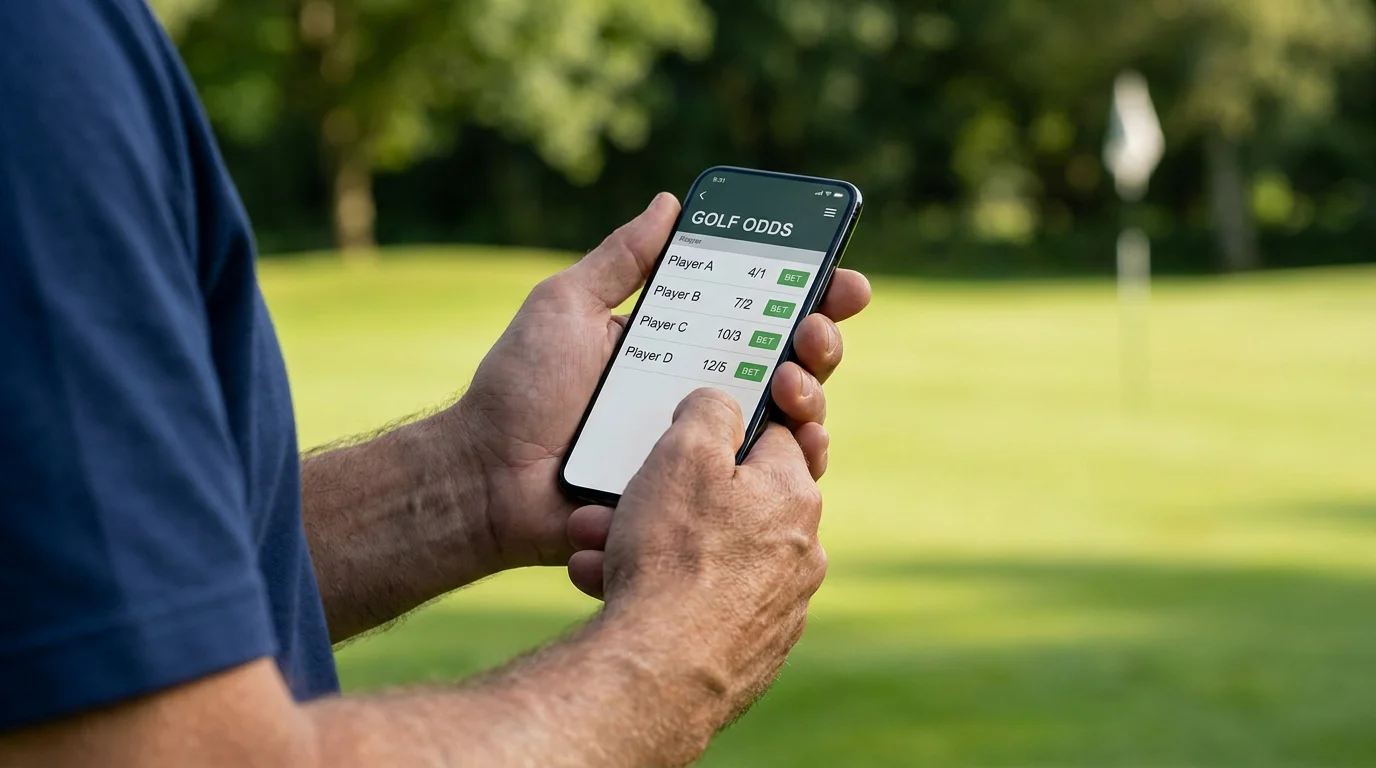
Numbers don’t lie, but they can mislead if you look at them out of context. When someone tells you that golf betting is “small” in the UK, they’re quoting a percentage. When I look at the same data, I see a vertical that’s growing faster than the sports it sits alongside – and that growth rate is what matters to anyone trying to find inefficient markets.
UK Gambling GGY (Q4 2025)
£4.5 billion total, £3.3 billion excluding lotteries
Sports Betting Revenue Share
57.1% of UK online gambling revenue in 2025
Remote Betting GGY
£2.4 billion (Apr 2023 – Mar 2024), football £1.1 billion, horse racing £771 million
UK Sports Betting Market
$11.2 billion (2024), projected $21.3 billion by 2030
The UK gambling industry posted £4.5 billion in gross gaming yield for Q4 2025 alone, with sports betting commanding 57.1% of all online gambling revenue. The overall UK sports betting market was valued at $11.2 billion in 2024, with projections pointing to $21.3 billion by 2030 at a compound annual growth rate of 11.4%. Remote betting – the category that includes every in-play wager you place from your phone – generated £2.4 billion in GGY over the most recent full financial year, with football taking £1.1 billion and horse racing £771 million of that total.
Golf’s 1.2% slice of gross gaming revenue looks like a footnote next to those figures. But context changes everything. That 1.2% has expanded by 30.7% since 2021, and the PGA Tour’s own data shows handle growing 20% year on year in 2025 – a streak that now stretches back four consecutive seasons. Betting volume during the FedEx Cup Playoffs surged 50% year on year, and the handle on the Tour Championship more than doubled. Scott Warfield, the PGA Tour’s Vice President of Gaming, has described the stickiness of golf bettors as a defining characteristic of the vertical – once punters engage with live golf markets, they tend to stay.

UK punters place roughly 290 million online bets on real sporting events every single month – and golf’s share of that volume is climbing faster than almost any other individual sport.
Why does this matter for someone reading a guide on in-play golf betting? Because market growth drives product investment. When handle rises 20% a year, operators fund deeper market coverage. When Betcast expands from 50 hours to 400+, the data available to punters multiplies. When Sportradar acquires IMG Arena for its portfolio of 39,000 official events across 14 sports – including the PGA Tour – the infrastructure behind your bet slip gets a significant upgrade. Growth begets tools, tools beget sharper bettors, and sharper bettors drive further growth. The UK market, regulated and mature as it is, sits at the centre of that cycle.
Football and horse racing still dominate the British betting landscape in raw volume. That won’t change any time soon. But dominance brings efficiency – finding value in a Premier League market is like finding a mispriced stock in the FTSE 100. Golf, by contrast, is a mid-cap play: growing fast, attracting institutional investment, and still carrying enough pricing inefficiency to reward the punter who does the work. The numbers suggest that window is wide open in 2026, but it won’t stay that way forever.
In-Play Markets You Can Bet on During a Golf Round
Outright Winner and Each-Way In-Play
The outright winner market is where most punters start, and it’s where live betting on golf gets genuinely exciting. Before the tournament, a mid-ranked player might sit at 80/1. By Saturday afternoon, if they’ve strung together three solid rounds and sit two shots off the lead, that price could have compressed to 8/1 or shorter. The reverse is equally dramatic – a pre-tournament favourite at 10/1 who opens with a 75 can drift past 40/1 before lunch on Thursday.
What changes in-play is not just the price but the terms. Each-way betting – backing a player to win or finish in the top places – adjusts as the field shrinks. Pre-tournament, a standard each-way offer might pay a quarter of the odds for the first five places in a full-strength field event. Once the cut reduces the field to 70-odd players, some operators tighten those terms or remove each-way entirely from specific in-play sub-markets. Understanding when and how each-way terms shift mid-tournament is fundamental, and I’ve covered the mechanics, payout calculations and dead-heat implications in detail in the each-way golf betting guide.

| Scenario | Pre-Tournament Odds | In-Play Odds (After R3) |
|---|---|---|
| Favourite starts birdie-birdie-birdie | 10/1 | 5/1 |
| Favourite opens with double bogey, bogey | 10/1 | 25/1 |
| Mid-field player leads by 2 after 54 holes | 66/1 | 7/2 |
Head-to-Head and Two-Ball
Head-to-head markets – sometimes listed as “two-ball” or “matchup” bets – strip the 144-player field down to a simple question: which of these two players will post a lower score over a specified period? That period might be a single round, an 18-hole pairing based on tee times, or even the full tournament. In-play, the two-ball market follows the live groupings on the course, so if two players are paired together for round three, you can back one against the other shot by shot.
I find head-to-head markets particularly useful for isolating a view. If you believe Player A’s putting is going cold but his long game is holding up, backing Player B in the matchup lets you express that opinion without needing Player B to contend for the whole tournament. The market resets with each round’s pairings, which means fresh opportunities every morning.

Hole-by-Hole, Props and Micro-Markets
This is where live golf betting is evolving fastest. Hole-by-hole markets let you bet on the outcome of a single hole – will Player X make birdie on the par-5 13th? Will the group’s combined score go over or under a set line on a specific hole? These markets barely existed three years ago. The expansion of Sportradar’s partnership with Hard Rock Bet has introduced 3D shot-tracking data and new micro-market pricing capabilities, pushing in-play offerings into territory that was once purely theoretical.
Micro-market – a granular betting market tied to a single shot, hole or moment within a round. Examples include “birdie on the next hole,” “drive to hit the fairway” and “up-and-down from a greenside bunker.”
Prop bet – short for “proposition bet.” Any wager on a specific occurrence within a tournament that isn’t directly tied to the final result. Examples: total birdies in a round, a hole-in-one during the event, or a player to make/miss the cut.
Prop markets – total birdies, hole-in-one yes/no, make or miss the cut, bogey-free round – sit alongside micro-markets and offer another layer of live engagement. A full breakdown of every market type, including how pricing works for each, is in the golf betting markets guide.
How Golf Odds Move In-Play: Steamers, Drifters and Momentum Shifts
I once watched a player’s outright price collapse from 50/1 to 12/1 in the space of five holes during a Saturday afternoon at Wentworth. He’d eagled the par-5, birdied the next two, and the market decided he was a contender. By the 15th, he’d found water, made double bogey, and was back out to 35/1. That 90-minute window contained more price movement than most Premier League matches generate in the entire second half. Golf odds don’t just move – they lurch.
The volatility comes from structural factors unique to the sport. In a football match, two teams produce a limited range of outcomes per minute. In golf, 70+ players are simultaneously producing outcomes across 18 holes, each capable of a three-shot swing on a single par-5. A field of that size means the implied probability for any individual player is already low – even a tournament favourite might carry an implied win probability of just 10-12% – so each positive or negative result moves the needle dramatically. Layer in weather (a wind shift can add two strokes to an entire wave’s scoring average), course setup changes between rounds, and the psychological pressure of major contention, and you have a market that reprices more frequently and more aggressively than any other sport I cover.
Steamer – a selection whose odds are shortening rapidly, indicating strong market support. In golf, a steamer typically emerges when a player strings together several birdies or when early-round conditions favour their tee time.
Drifter – the opposite of a steamer: a selection whose odds are lengthening, suggesting the market is moving away from that player. Often triggered by bogey runs, injury concerns or unfavourable weather in a player’s wave.
Implied probability – the market’s assessment of an outcome’s likelihood, derived from the odds. Fractional odds of 9/1, for example, imply roughly a 10% chance. Decimal 5.0 implies 20%.
Spotting steamers and drifters in real time is a core skill for live golf bettors. A steamer – a player whose odds are shortening fast – signals that the market is adjusting to strong performance or a rush of informed money. A drifter – odds lengthening – suggests the opposite. Neither label tells you whether the price is right, only that it’s moving. The edge lies in determining whether the movement has overshot. If a player birdies three holes in a row and their outright price halves, the market may be pricing in a continuation that the course layout doesn’t support. If the next four holes are the hardest stretch on the course, that compressed price might represent poor value rather than a trend.
| Scenario | Opening In-Play Price | Price After Event | Movement |
|---|---|---|---|
| Player eagles 13th, birdies 14th and 15th | 50/1 | 12/1 | Steamer |
| Leader finds water on 16th, makes double bogey | 5/2 | 7/1 | Drifter |
| Weather delay suspends play; afternoon wave faces wind | Various | Morning wave shortens 15-20% | Wave-split adjustment |
The critical point for UK punters is that golf odds move fast but not randomly. Every shift has a trigger – a score change, a weather update, a withdrawal, a wave-split advantage. Learning to read those triggers, and to distinguish genuine market corrections from overreactions, is where consistent profit lives. I unpack the mathematics behind odds formats, implied probability and how to calculate value in the odds and probability guide, which is essential reading before you start trading in-play.
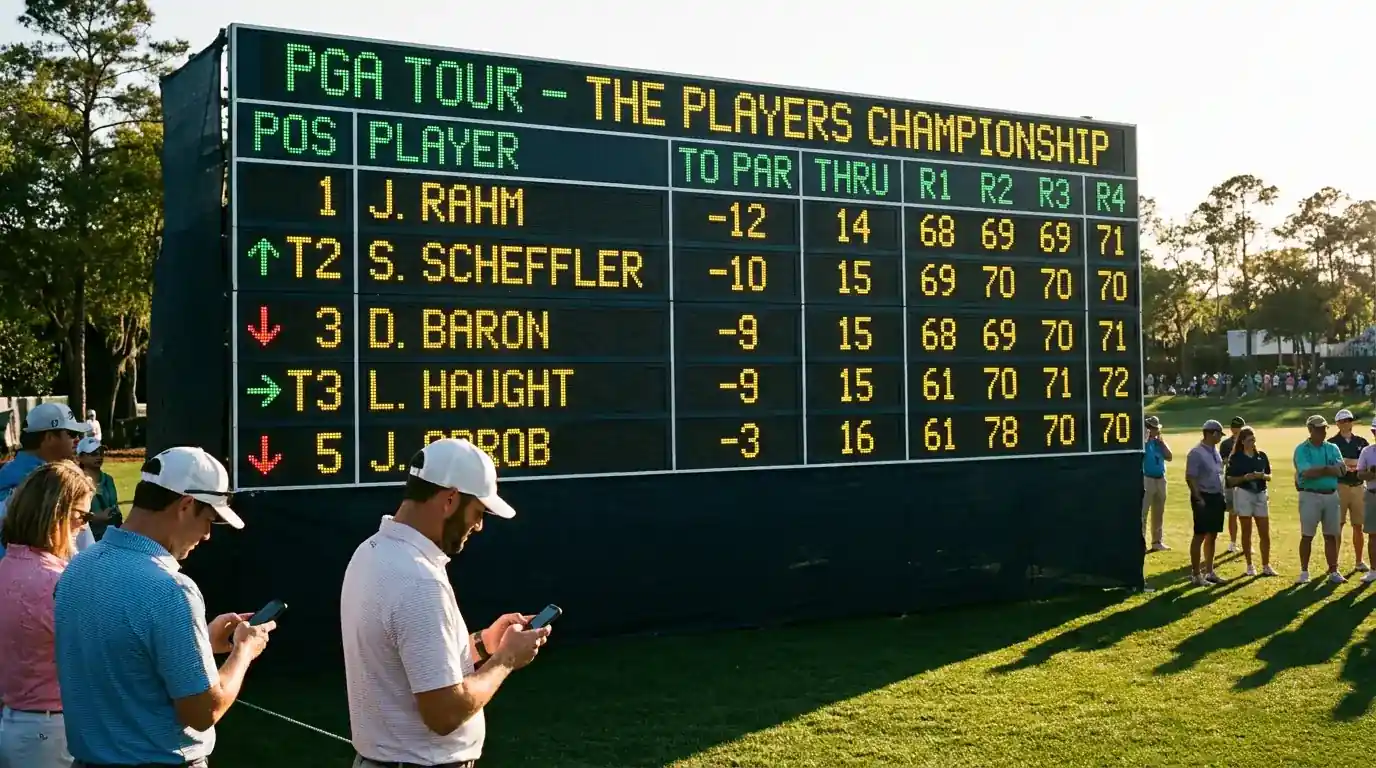
Core Strategy Pillars for Live Golf Bets
Early in my career I kept a spreadsheet of every in-play bet I placed over a full PGA Tour season. At the end of 52 weeks, the data told a story I didn’t expect: my profitable bets clustered almost entirely around three variables – strokes-gained performance, course-fit alignment and timing. Everything else – gut feel, narrative momentum, “he looks confident on the greens” – was noise dressed up as insight. That spreadsheet reshaped how I approach live golf betting, and the three pillars I extracted from it still hold up a decade later.
The first pillar is strokes gained. Traditional golf stats – driving distance, greens in regulation, putts per round – describe what happened without telling you how well it happened relative to the field. Strokes gained decomposes a player’s performance into four categories: off the tee (SG: OTT), approach shots (SG: APP), around the green (SG: ATG) and putting (SG: P). Each category measures how many strokes a player gains or loses versus the field average on that specific skill. For in-play betting, SG data lets you assess whether a player’s current position on the leaderboard reflects genuine skill or just a lucky run of holed putts. If a player is three under through 12 holes but their SG: Putting is +2.8 while their SG: APP is -0.5, the leaderboard flatters them – the putting is unsustainable over 72 holes, and their approach play suggests the correction is coming.
Form fades – course fit persists. A player’s recent results across different venues carry far less predictive weight than their historical performance on a specific course type. Links specialists outperform on links every year. Bombers thrive on long, open parkland layouts. Matching a player’s strokes-gained profile to the course setup is the single most reliable edge in live golf betting.
The second pillar is course-fit analysis. Not every player performs the same way on every course, and the data backs this up consistently. A player who gains 1.5 strokes per round off the tee on wide-open parkland courses might lose half a stroke on a tight links track where accuracy matters more than distance. I look at three to five years of a player’s results at a specific venue (or on a comparable course type) before forming a view. When that historical profile aligns with real-time SG data during a tournament, the signal is strong enough to act on.
The third pillar is timing – knowing when to bet, not just who to bet on. The PGA Tour’s VP of Gaming, Scott Warfield, has described the organisation’s product development team as “pretty nimble,” constantly exploring new in-play opportunities including micro-markets and features that didn’t exist a season ago. That expanding product set creates more entry points, but the best ones follow predictable patterns. After a front-nine struggle by a contender, the market often overcorrects – odds lengthen beyond what the course layout justifies. During weather delays, casual money drains out, leaving sharper prices. Between rounds, overnight repricing can lag behind afternoon course condition changes. These windows are where timing becomes tangible strategy.
In-Play Toolkit
Live Golf Betting Toolkit
Read whether a leaderboard is stat-inflated, work out an each-way return, and turn any price into a probability — the way a live-golf trader does.
Enter a player’s strokes-gained by category (gains positive, losses negative). The read tells you whether their position is built on ball-striking that lasts — or putting that usually doesn’t.
A read, not a tip. The smaller the sample (early holes), the noisier strokes-gained becomes — weight it with course fit and remaining holes.
Golf is the each-way sport. Enter your stake, the price (decimal like 21.0 or fractional like 20/1) and the place terms — see exactly what a win and a place return.
If players tie for the final place, dead-heat rules cut the place return in proportion to the number tied. In-play place terms can also tighten after the cut — check your bet slip.
Convert any price to the probability the market is assigning — then compare an opening price with the current one to see if it’s a steamer or a drifter.
Movement tells you the market is shifting, not that the price is right. The edge is judging whether a steamer has overshot what the remaining holes support.
Five Checks Before Placing a Live Golf Bet
- Review the player’s strokes-gained breakdown for the current round – is their position leaderboard-real or stat-inflated?
- Confirm course-fit alignment: does the player’s SG profile match this venue’s demands (accuracy vs distance, green firmness, rough penalty)?
- Check the wave split: is the player’s tee time in the favoured or unfavoured weather window?
- Assess the remaining holes: are the next four to six holes scoring-friendly or the toughest stretch on the course?
- Set a staking limit before opening the bet slip – never size a live bet based on how confident you feel in the moment.
These three pillars – strokes gained, course fit and timing – are the foundation. The full framework, including worked examples, momentum triggers, weather-adjusted timing models and bankroll discipline, lives in the in-play golf betting strategy guide. What I’ve laid out here is the overview; that guide is where the system becomes actionable.

Betcast, Sportradar and the Technology Powering Live Golf Bets
Two years ago, I flew to a PGA Tour event and watched the Betcast feed on a secondary screen while following the live coverage on the main broadcast. The difference was startling. Standard golf coverage follows the narrative – the leader, the chaser, the dramatic shot. The Betcast follows the numbers. Every player’s strokes-gained data updated in real time. Odds overlays on screen. Live prop pricing shifting as each shot landed. It felt like the broadcast had been built by someone who actually bets on golf, because it was.
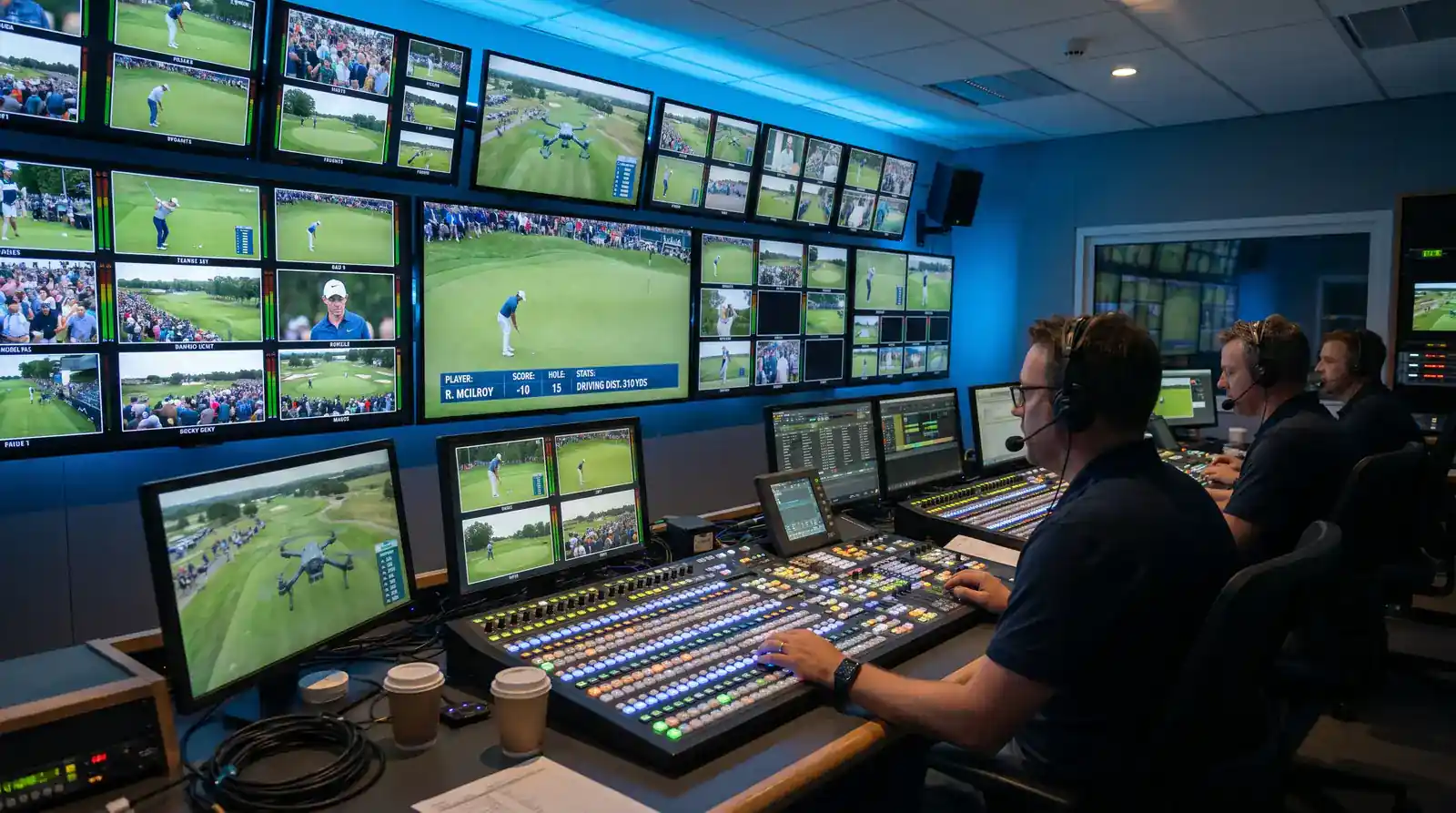
What is the PGA Tour Betcast? A dedicated live broadcast produced in collaboration with ESPN and DraftKings, designed specifically for golf bettors. Unlike standard tournament coverage, the Betcast features real-time odds overlays, strokes-gained data displayed per player, shot-by-shot tracking visualisations and live prop market pricing integrated directly into the viewing experience.
The scale of expansion in 2026 is significant. The PGA Tour has confirmed an increase from six tournaments and roughly 50 hours of Betcast coverage in 2025 to 12 tournaments and more than 400 hours in 2026. The Players Championship is among the additions – a flagship event that draws one of the strongest fields on tour. The Tour’s VP of Gaming, Scott Warfield, put it directly: the PGA Tour is delivering more than 400 hours of live betting coverage alongside ESPN and DraftKings. That volume transforms the Betcast from an experimental product into a core part of the golf-betting ecosystem.
Warfield has also framed the Betcast as more than a tool for existing bettors. His stated aim is to create an experience that works for sports fans and golf bettors alike – growing the overall audience rather than simply serving the existing base. That ambition explains the product’s design: it doesn’t assume you already know how to read strokes gained or parse implied probability. The overlays do the translation for you, surfacing the betting-relevant data without requiring a statistics degree.
The PGA Tour Betcast will deliver over 400 hours of live betting-integrated coverage across the 2026 season – an eightfold increase from the 50 hours broadcast in 2025.
Behind the Betcast sits a data infrastructure that has undergone its own transformation. Sportradar completed its acquisition of IMG Arena in November 2025, absorbing a portfolio that includes betting rights across 39,000 official events and 30,000 streaming events spanning 14 sports. The PGA Tour’s data – including the ShotLink system that tracks every shot on tour to within centimetres – is now part of that ecosystem. Sportradar’s expanded partnership with Hard Rock Bet added official PGA Tour data feeds and 3D shot-tracking capabilities, enabling the kind of micro-market pricing that was technically impossible just two seasons ago.
For UK punters, the practical impact is threefold. First, more granular data flows through to the odds you see on your bet slip, meaning prices reflect real-time performance more accurately. Second, the range of in-play markets continues to expand – shot-level micro-markets, per-hole props and live strokes-gained overlays are becoming standard rather than experimental. Third, the streaming and broadcast infrastructure means you can follow the data-enriched feed that drives the market, not just the highlight-reel coverage on Sky Sports. Access to the Betcast from UK soil remains limited for now – it’s built around DraftKings and ESPN, both US-focused platforms – but the underlying data improvements flow through to every UK-licensed operator that uses Sportradar feeds. The technology gap between what American bettors see and what UK punters receive is narrowing rapidly.
UK Regulation and What It Means for Golf Bettors
I’ve spent enough time in this industry to know that regulation is the topic most punters skip and most operators wish you’d ignore. That’s exactly why it matters. The UK’s regulatory framework for gambling is the most developed in the world, and the changes implemented since the Gambling Act Review White Paper have reshaped the landscape in ways that directly affect how you bet on golf in-play.
The statutory gambling levy is here. Since April 2025, remote operators pay a mandatory 1.1% levy on revenue, replacing the voluntary contribution system that the industry had maintained for years. This funds research, prevention and treatment of gambling harm – and the cost is baked into the margins that shape your odds.
The most visible regulatory change arrived in May 2025: online slot stake limits set at £5 for players aged 25 and over, and £2 for those aged 18-24. On the surface, this has nothing to do with golf betting. In practice, it has everything to do with it. When slot stakes are capped, a portion of high-volume online casino players migrates toward sports betting, where individual wager limits are higher and the regulatory ceiling is less restrictive. That migration increases liquidity in sports markets, including golf, and drives operators to expand their sports product offerings – more markets, more depth, more in-play coverage. It’s an indirect but measurable effect that I’ve watched play out across the past year.
UKGC Licensing Basics: Every operator offering live golf betting to UK customers must hold a licence from the UK Gambling Commission. This applies to remote operators based overseas as well as domestic firms. Licensed operators are required to implement responsible gambling tools, verify customer age and identity, and report suspicious betting activity. The UKGC publishes quarterly industry statistics that track revenue, participation and compliance.
The statutory levy of 1.1% replaced what had been a system of voluntary donations from operators. The regulated UK gambling industry generates £6.8 billion annually, pays £4 billion in taxes, and supports around 109,000 jobs. The levy adds a layer of mandatory funding for harm prevention – a structural shift that signals the direction of travel for UK regulation.
For in-play markets specifically, the regulatory framework imposes requirements on data latency and market integrity. Operators offering live golf betting must ensure their data feeds are sufficiently up to date to prevent exploitation of stale odds – a requirement that ties directly into the Sportradar and ShotLink infrastructure discussed in the previous section. The UKGC also mandates that operators provide customers with real-time access to responsible gambling tools during live betting sessions, including deposit limits, session time reminders and the ability to pause or close a bet slip mid-round.
Andrew Rhodes, former Chief Executive of the UK Gambling Commission, described the coming period as one of significant consequence for the gambling industry. That assessment resonates with what I see on the ground. The combination of mandatory levies, stake limits, enhanced data requirements and tighter affordability checks is reshaping the economics of sports betting in the UK. For golf bettors, the practical takeaway is this: the operators licensed to serve you in 2026 are operating under stricter rules, tighter margins and more oversight than at any point in the industry’s history. That’s broadly a good thing – it means the market you’re betting into is cleaner, the odds are generated from verified data feeds, and the tools to protect yourself are built into the platform by law, not by choice.

Responsible Gambling: Staying in Control During Live Rounds
I lost more money in my first six months of live golf betting than I care to admit publicly. Not because my analysis was wrong – it was, but that wasn’t the main problem. The main problem was that in-play betting strips away the cooling-off period that pre-tournament wagers naturally provide. You place a bet on Tuesday, and you have four days to sit with it. You place a bet at the 12th hole on Saturday, and five minutes later you’re tempted to place another one at the 13th. The speed of the product creates a feedback loop that rewards impulsive behaviour, and impulsive behaviour is where bankrolls go to die.
Live betting amplifies impulsive decision-making. The rapid pace of in-play markets, combined with constant odds movement and real-time data, compresses the gap between thought and action. Every tool described below exists to put friction back into that gap – and friction, in this context, is your ally.
The numbers behind gambling harm in the UK are sobering. The UK Gambling Commission estimates that approximately 1.4 million people in Great Britain experience problems with gambling – roughly 3% of the adult population. Parliamentary evidence presented in Hansard states that 60% of the gambling industry’s profits come from just 5% of customers, who are either problem gamblers or at risk of becoming one. Andrew Rhodes, the UKGC’s former Chief Executive, urged operators to examine their own customer bases in light of these findings, noting that the evidence around risk profiles and gambling consequences continues to deepen.
These are not abstract statistics. If you bet on live golf regularly, you sit somewhere on a spectrum of risk, and the features of in-play betting – fast markets, frequent decision points, the emotional highs and lows of watching a tournament unfold in real time – can push you along that spectrum faster than you realise.
GamStop and Self-Restriction Tools: GamStop is a free service that allows you to self-exclude from all UK-licensed online gambling operators for a period of six months, one year, or five years. Beyond GamStop, individual operators are required by UKGC licence conditions to offer deposit limits, loss limits, session time reminders, cooling-off periods and the ability to close your account at any time. During live golf betting sessions, look for the “set a reminder” or “time limit” option in your operator’s responsible gambling menu – it exists precisely for the moments when the pace of in-play markets outstrips your self-control.
I use deposit limits on every account I hold. Not because I don’t trust my own discipline, but because I’ve learned that discipline is a depletable resource. A four-day golf tournament involves dozens of potential in-play entry points. By the time Sunday’s back nine arrives, the emotional investment in the tournament makes rational staking harder, not easier. A hard cap set on Monday, before the first ball is struck, removes the decision from the moment when you’re least equipped to make it well. If you take one thing from this section, make it this: set your limits before the tournament, not during it.

The Live Edge: Where Golf Betting Is Heading
A year from now, the live golf betting landscape in the UK will look different from what I’ve described in this guide – and that’s the point. The direction of travel is clear: more data, faster markets, deeper micro-market coverage and tighter regulation. The PGA Tour’s Betcast expansion to 400+ hours signals that the sport’s governing body sees live betting as a growth engine, not a sideshow. Sportradar’s 3D shot-tracking and the integration of ShotLink data into mainstream operator feeds means the information asymmetry that once separated professional traders from recreational punters is shrinking by the season.

But more data is not the same as better decisions. The punter who profits from live golf betting in 2026 and beyond will be the one who combines strokes-gained literacy with course-fit analysis, disciplined timing and – above everything – a staking plan that respects the variance inherent in a 144-player field. The tools are better than they’ve ever been. The regulatory framework is more protective than it’s ever been. The question is whether you’ll use both to your advantage or let the speed of in-play markets flatten your bankroll before the weekend.
I’ve been doing this for more than a decade, and the single constant across every season is that preparation beats reaction. The punters who read the data before the round, set their limits before the tournament, and build their approach around repeatable principles are the ones I see thriving year after year. The impulsive, narrative-driven, gut-feel crowd? They cycle in and out. If you’re serious about live golf betting in the UK, start with the mechanics, move to the markets, sharpen your strategy, and choose where you bet with the same rigour you’d apply to any other financial decision. The guide to evaluating UK live golf betting sites is a practical next step for making that final choice count.
Frequently Asked Questions About Live Golf Betting
How does live (in-play) betting on golf work?
Live golf betting allows you to place wagers after a tournament round has started and throughout the event. Odds update dynamically after every hole – and sometimes after every shot – reflecting real-time scoring, weather changes and leaderboard movement. You can bet on outrights, head-to-head matchups, hole-by-hole outcomes and a range of prop markets, all while the round is in progress. The key difference from pre-tournament betting is that you’re acting on observed performance and live conditions rather than forecasts and form guides.
What types of live bets can you place on golf?
The most common in-play markets include outright winner (adjusted live), each-way, head-to-head or two-ball matchups, top-5/10/20 finishes, round-specific bets (first-round leader, for example), hole-by-hole outcomes (birdie, bogey, par), and proposition bets such as total birdies in a round or a hole-in-one. Micro-markets – shot-level wagers on fairway accuracy, proximity to the pin, or up-and-down success – are an emerging category available at select operators, driven by 3D shot-tracking data from Sportradar.
How do each-way bets work in golf in-play markets?
An each-way bet in golf consists of two parts: a win bet and a place bet. The place terms specify how many finishing positions pay out and at what fraction of the win odds. In-play each-way terms can change during a tournament as the field shrinks after the cut. Some operators tighten the place terms from, say, the top eight to the top five once the field reduces. Dead-heat rules also apply if players tie for a qualifying place position, reducing your payout proportionally. Check the current each-way terms on your bet slip before confirming any in-play wager.
What is the best timing for placing live golf bets?
Three windows consistently offer the sharpest value. First, immediately after a contender stumbles – the market tends to overcorrect on bogey runs, pushing odds wider than the remaining course layout justifies. Second, during weather delays, when less-informed money exits the market and prices settle at more rational levels. Third, between rounds, when overnight repricing may lag behind changing course conditions (such as firming greens or a forecast wind shift). The worst time to bet is during a player’s hot streak, when the steamer effect compresses odds to the point where value has already evaporated.
Is live golf betting available at all UK-licensed bookmakers?
Most major UK-licensed operators offer some form of in-play golf betting, but the depth of coverage varies significantly. Larger operators tend to provide live markets across all four days of PGA Tour and DP World Tour events, including outright, each-way, matchups and selected props. Smaller operators may limit live golf to outright and top-finish markets, or cover only the higher-profile tournaments. The availability of micro-markets and hole-by-hole betting is still expanding and is not yet universal across the UK market.
What tools can help with live golf betting decisions?
The most useful tools are data platforms that provide real-time strokes-gained breakdowns by category (off the tee, approach, around the green, putting). The PGA Tour’s own statistics portal publishes SG data, and third-party services offer more granular analysis with historical comparisons. The PGA Tour Betcast integrates live SG overlays and odds data directly into the broadcast feed. For course-fit analysis, historical venue data and shot-tracking archives help identify which players’ profiles match a given course setup.
Are there responsible gambling features specific to in-play betting?
UK-licensed operators are required by the Gambling Commission to offer responsible gambling tools that function during live betting sessions. These include deposit limits, loss limits, session time reminders, cooling-off periods and access to self-exclusion via GamStop. Some operators provide in-play-specific features such as a pop-up reminder after a set number of bets placed within a session, or a mandatory pause between consecutive wagers. These tools are designed to counteract the increased impulsivity that fast-paced live markets can encourage.
Written by the editors at Live Golf Betting.