Live Betting at Golf Majors: When In-Play Markets Hit Peak Depth
 Available in US

Live Betting at Golf Majors: When In-Play Markets Hit Peak Depth
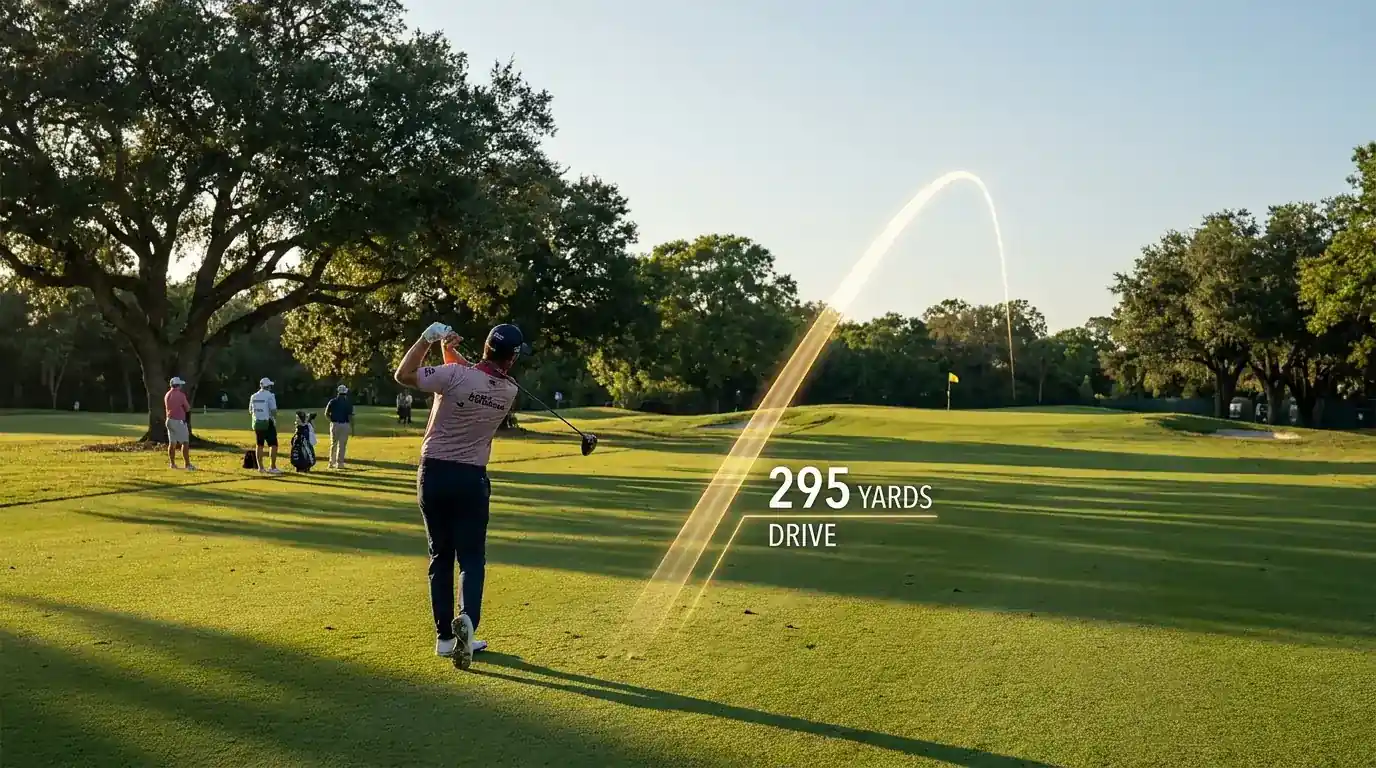
The back nine at Augusta on Sunday afternoon is the single most electrifying window in live golf betting. I have been doing this for 11 years, and nothing else compares — not FedEx Cup finals, not Ryder Cup singles, not The Open in a gale. Majors combine the deepest in-play markets, the highest betting volumes, the most complete broadcast coverage, and the most dramatic scoring variance in professional golf. Four times a year, everything peaks simultaneously.
The four major championships — the Masters, the PGA Championship, the US Open, and The Open — attract the strongest fields, the most media attention, and the heaviest betting handle. FedEx Cup Playoff handle jumped 50% year on year, and major championships drive even greater surges. Every major UK bookmaker expands its in-play market menu for major weeks, adding hole-by-hole markets, group-specific props, and enhanced each-way terms. For in-play bettors, these four weeks are the calendar’s anchors.
The Masters: Augusta’s Unique Live Betting Dynamics
Augusta National is the most familiar course in golf — and the most deceptive. Television flattens the contours. The greens look manageable until you see the speed. The par-5s look scoreable until the wind shifts. I have watched more live golf from Augusta than any other venue, and the in-play dynamics still surprise me.
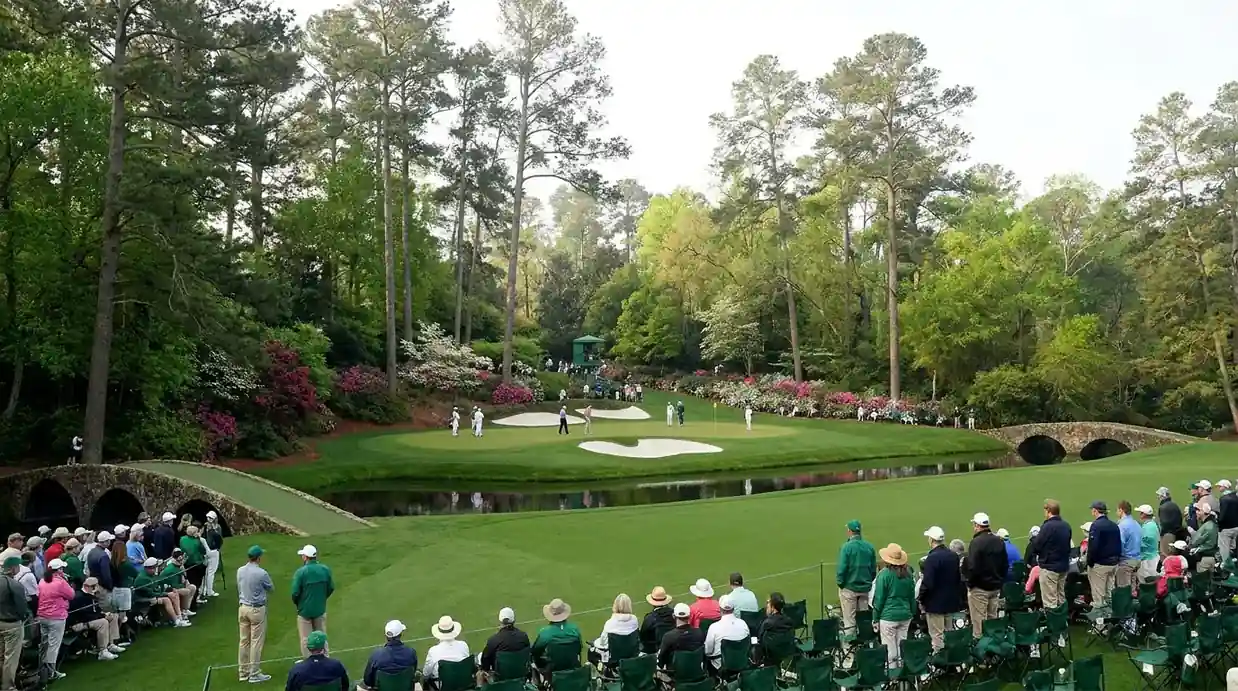
Amen Corner — holes 11, 12, and 13 — is the epicentre of live betting at the Masters. The 11th is a long, demanding par-4 with water left and a green that slopes toward the pond. The 12th is the shortest par-3 on the course but arguably the most terrifying shot in golf: 155 yards over Rae’s Creek with swirling wind that changes between a player taking the club from the bag and addressing the ball. The 13th is a reachable par-5 where eagles are possible and double bogeys are not unusual. In three holes, the leaderboard can turn inside out. Odds movement through Amen Corner on Sunday is the most volatile stretch in any professional golf tournament, and that volatility creates windows where the market overcorrects on a single splash into the creek or a short-sided miss.
Augusta’s back nine on Sunday is where the Masters is won. The par-5 13th and 15th offer eagle chances. The 16th is a par-3 with a pin position that funnels balls toward the cup. The 17th and 18th are demanding closers. The narrative tradition of “the Masters doesn’t start until the back nine on Sunday” is not just television mythology — it is a statistical reality. More strokes are gained and lost in those nine holes than in any other stretch of major championship golf.
The Open Championship: Wind, Links and Wave Splits
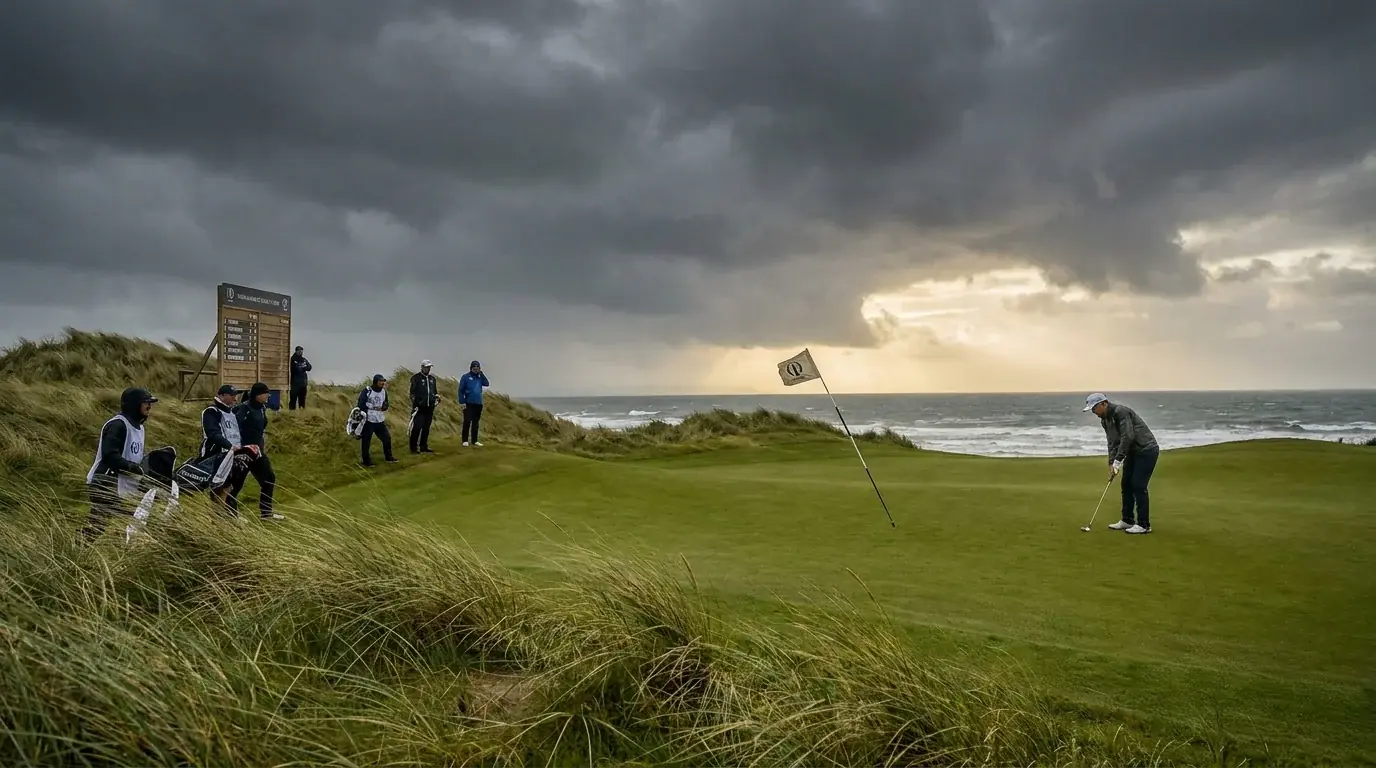
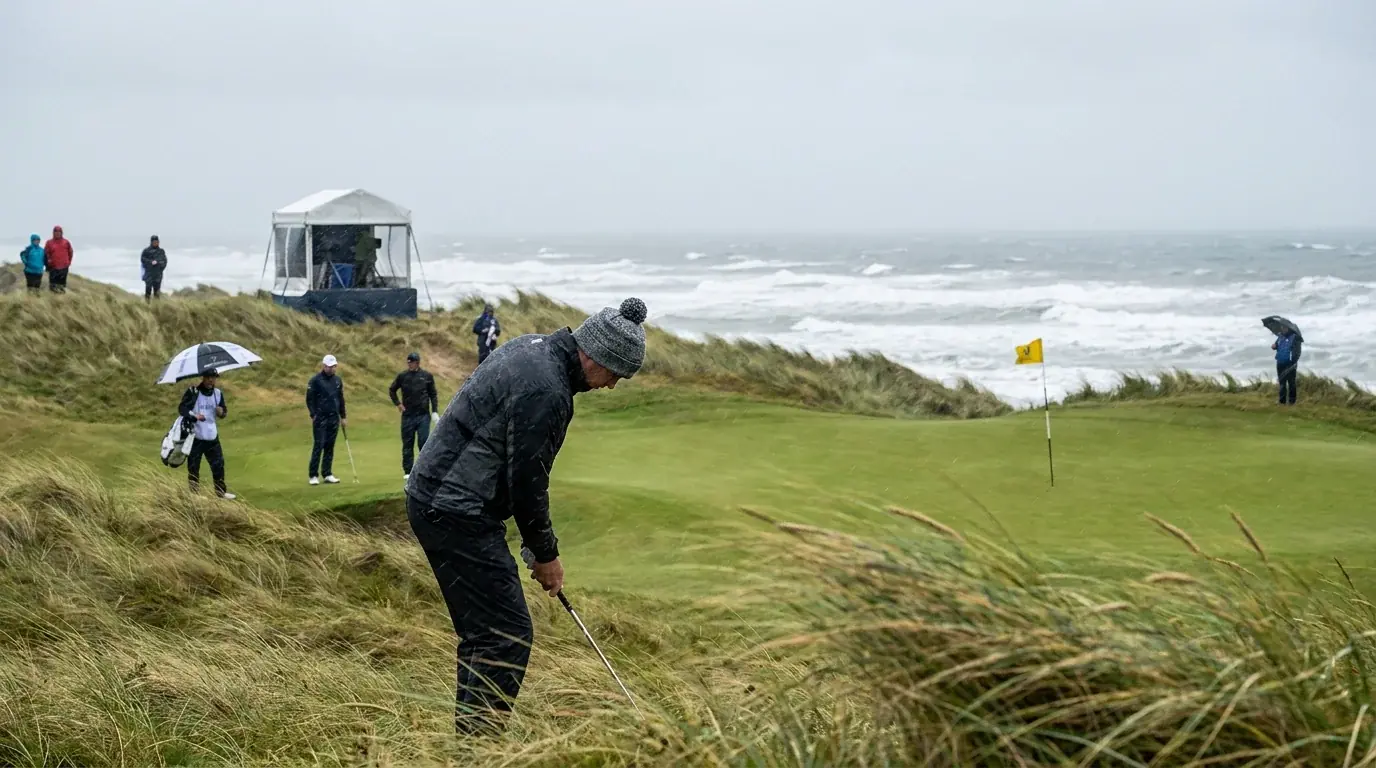
The Open is the major that rewards weather-aware bettors most. Played on links courses along the British and Irish coastline, the championship is exposed to wind, rain, and temperature shifts that no other major regularly experiences. The AM/PM wave split in Rounds 1 and 2 can produce three-stroke scoring differentials between waves — and the in-play markets sometimes fail to price that gap until it is too late.
I treat Open Championship weeks as weather-first analysis. Before I look at form, course fit, or odds, I check the hourly wind forecast for each day. A player in the calm morning wave has a quantifiable advantage over one battling 25 mph gusts in the afternoon. Weather’s impact on golf odds is at its most extreme during Open week, and the punter who monitors real-time wind data during play holds an edge the algorithms take time to process.
Links courses produce more upsets than parkland courses, which makes outright betting at The Open inherently more volatile. The favourites still contend, but the winner comes from a wider range of the field than at Augusta or the US Open. For in-play purposes, this means the late-round outright market at The Open offers value on players at longer prices — 40/1 shots who find themselves three back with six to play have a genuine chance on a links course where a birdie-birdie-birdie stretch is possible on the right holes with the right wind.
US Open and PGA Championship: Course Setup and Scoring Range
The US Open and PGA Championship occupy different positions on the major spectrum, and their in-play betting profiles reflect those differences.
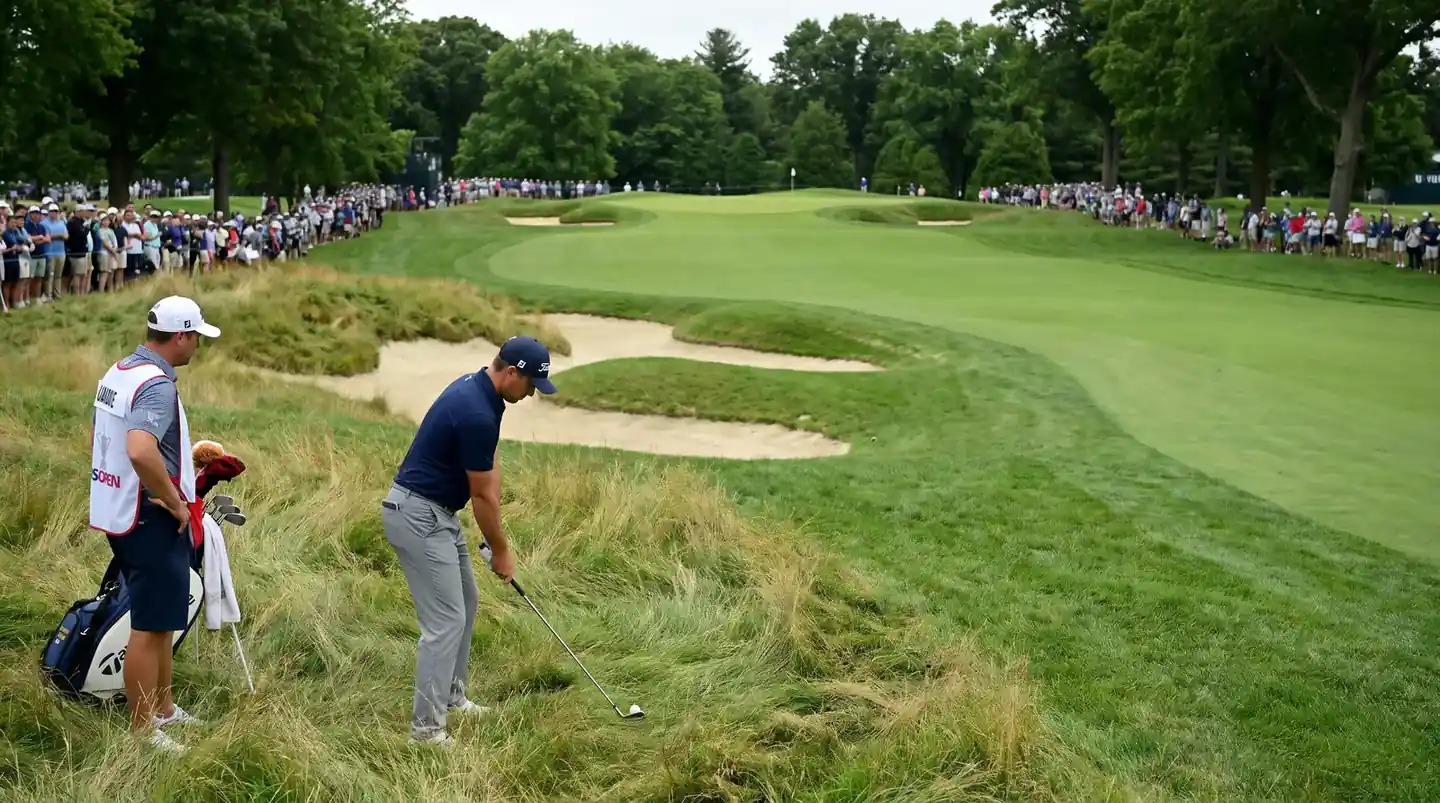
The US Open is the most punishing major. The USGA sets up courses with narrow fairways, deep rough, firm greens, and pin positions designed to test every aspect of a player’s game. Scoring is higher than at any other major. Winning scores at the US Open regularly finish closer to even par than double digits under, which compresses the leaderboard and creates a survival-of-the-fittest dynamic. For live betting, the US Open rewards patience: backing players who are grinding out pars while others make bogeys is a strategy that aligns with the course setup. The odds on the leader rarely shorten dramatically early because the USGA’s setup guarantees attrition over 72 holes. Sunday afternoon at a US Open is when the field collapses and the in-play market suddenly reprices the remaining contenders — that is the window to act.
The PGA Championship is the most balanced major. Played on a mix of parkland and resort courses, the setup allows more aggressive play than the US Open but demands more precision than the Masters. Scoring tends to fall between the two extremes. The PGA Championship’s in-play markets are deep — the Betcast expansion covering The Players Championship and other marquee events has pushed production quality and data availability higher — and the scoring environment creates a leaderboard that stays fluid longer than the US Open’s attritional grind.

For both the US Open and PGA Championship, the field size matters. With 156 players at each, the outright market is wider than at the 90-player Masters. More players means more potential outcomes, longer odds on mid-range contenders, and greater potential for live upsets. The place terms on each-way bets also tend to be more generous at the full-field majors.
Majors Are the Four Weeks That Define Your Year
Every other tournament on the calendar prepares you for these four weeks. The data you gather on course fit, the weather-reading skills you develop at regular tour events, the staking discipline you build across the season — all of it converges at the majors. I allocate a higher proportion of my seasonal betting budget to major weeks, because the combination of market depth, broadcast quality, and scoring volatility creates the richest environment for in-play golf betting. The punter who arrives at Augusta, the US Open, The Open, and the PGA Championship with preparation, discipline, and a clear plan for each course’s unique characteristics has the best chance of making these the most profitable weeks of the year.
Which golf major has the deepest in-play betting markets?
The Masters and The Open typically have the deepest in-play markets at UK bookmakers, driven by enormous betting volume and comprehensive broadcast coverage. The PGA Championship and US Open are close behind. All four majors receive the full menu of in-play markets including outright, two-ball, top-finish, round betting, and hole-by-hole props at the larger UK operators.
How does the Masters invite-only field affect outright odds?
The Masters fields approximately 90 players, compared to 156 at the US Open or PGA Championship. The smaller, invitation-only field means the talent density is higher, outright favourites are priced shorter, and the range of plausible winners is narrower. Each-way place terms may also be tighter. The compressed field makes outright betting at the Masters more competitive but with lower variance than full-field majors.
Written by the editors at Live Golf Betting.