In-Play Golf Betting Strategy: Timing, Data and Live Edge
 Available in US
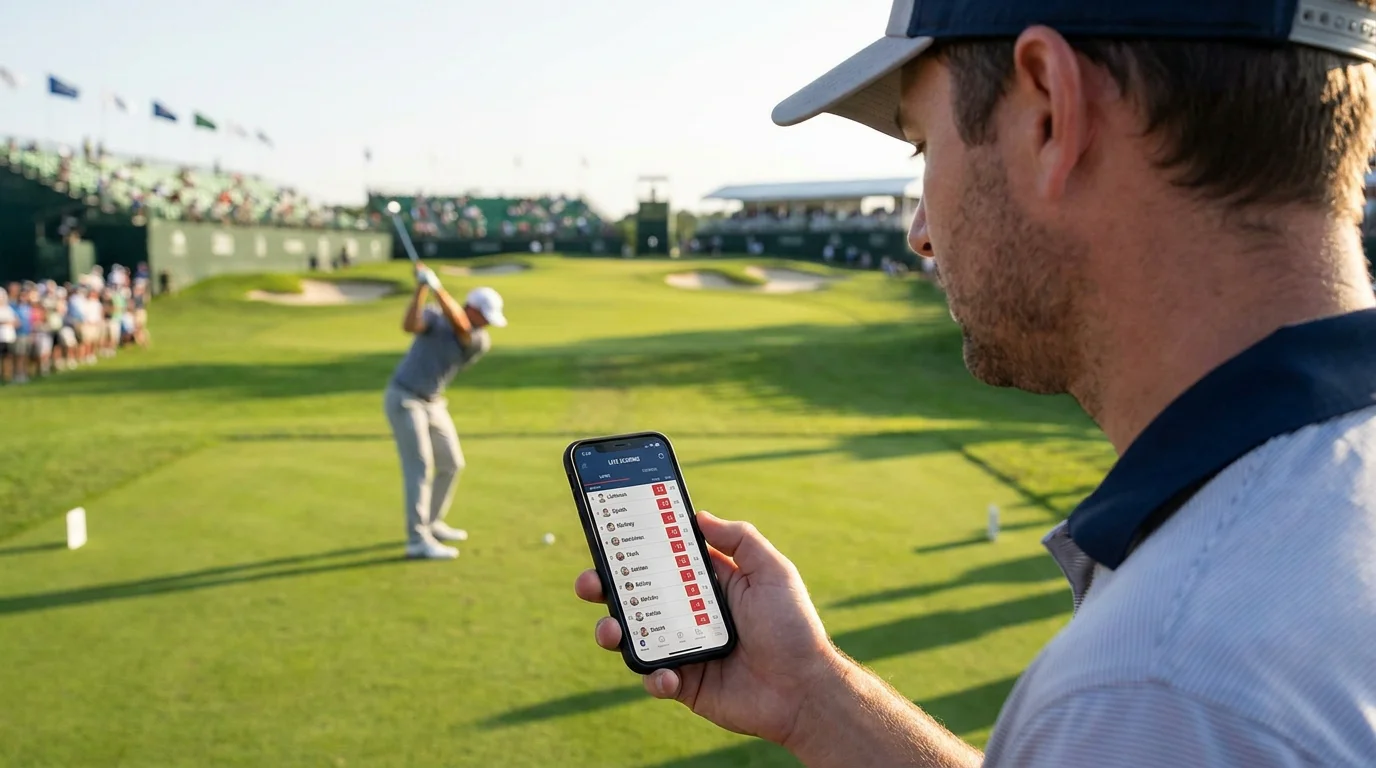
Table of Contents
- In-Play Golf Betting Strategy: From Gut Feeling to Data-Driven Decisions
- When to Strike: A Timing Framework for Live Golf Bets
- Reading Strokes Gained in Real Time
- Momentum Signals That Move Live Odds
- Applying Course-Fit Data to In-Play Decisions
- Staking Discipline for In-Play Golf Markets
- Golf Betting Strategy Questions Answered
- Building Your In-Play Edge One Hole at a Time
In-Play Golf Betting Strategy: From Gut Feeling to Data-Driven Decisions
I spent the first three years of my in-play golf betting career watching leaderboards and reacting to scores. Every guide I read said the same thing – “follow the form, back the leaders, trust your instincts.” That advice cost me roughly two full betting banks before I finally sat down with the data and built a framework that actually works.
In-play golf betting strategy is not about gut feeling. It is about structure – knowing when to enter a market, which metrics to trust in real time, and how to size your stake when 144 players are spread across 72 holes over four days. The PGA Tour recorded a 20% increase in golf betting handle in 2025, marking a fourth consecutive year of double-digit growth. That rising volume means sharper markets, faster odds adjustments, and a punter base that is getting smarter every season. If your strategy has not evolved past “back the guy on the leaderboard,” you are already behind.
Pre-tournament strategy and in-play strategy are fundamentally different disciplines. Before the first tee shot, you are working with historical course data, current form cycles, and weather forecasts. Once the round starts, the game changes. You are reading strokes-gained feeds hole by hole, tracking momentum shifts in real time, and exploiting windows where the market has either overreacted or not reacted at all. This guide breaks down a practical framework built over eleven years of live golf wagering – the timing triggers, the data reads, the staking rules, and the discipline that separates a structured in-play bettor from someone who is just chasing the leaderboard.
Nothing here is theoretical. Every principle I outline comes from actual in-play positions I have taken, adjusted, or abandoned across PGA Tour, DP World Tour, and major championship events. Let me walk you through it.
When to Strike: A Timing Framework for Live Golf Bets
Post-Bogey Windows on Tough Holes
The 12th hole at Augusta National ruined more of my early betting days than I care to admit. A tournament favourite would make bogey on that demanding par-3, and I would panic-sell or rush to back whoever was climbing. It took me years to realise that the bogey itself was the opportunity, not the threat.
Here is the framework I use now. When a top-20 player in the betting makes bogey on a hole rated par 4.2 or harder, I flag a window. The market reacts immediately – outright odds drift by 15-30% within minutes. But the data tells a different story. Players ranked in the top 10 for Strokes Gained: Approach historically recover within the next three to four holes at a rate that far exceeds what those drifted odds imply. The key filter is the bogey hole’s difficulty rating. A bogey on the easiest par-3 on the course is genuinely bad news. A bogey on a par-4 where the field averages 4.3 is noise, and the market overprices noise.
I set up alerts for three conditions: the player’s SG:APP rank is inside the top 15 for the tournament, the hole where the bogey occurred is above par on the strokeplay average, and the upcoming stretch of three holes includes at least one scoreable par-5 or short par-4. When all three align, I enter outright or top-5 markets at the drifted price. Not every window pays off – this is golf, and variance is baked in – but over a full season, the edge compounds.
Timing matters within the window itself. The sharpest price is usually available 60-90 seconds after the bogey is confirmed on the live leaderboard, before the next tee shot settles the market’s nerves. Wait five minutes and you have already lost half the value.
Weather Delay Opportunities
A thunder siren at a PGA Tour event is one of the most profitable sounds in live golf betting. I am not being dramatic – weather delays create genuine market inefficiencies that you can exploit if you have done your homework before the horn sounds.
When play is suspended, most bookmakers either freeze their markets or widen their spreads significantly. The players sitting on the course mid-round carry their scores forward, but the market often treats the delay as a reset rather than a continuation. I focus on the AM/PM wave split. If the morning wave completed 14 holes in benign conditions before a delay, and the afternoon wave has only played 4 holes in tougher weather, the morning wave players are effectively locked in with a scoring advantage that the suspended market underprices.
The second angle is simpler. During a 90-minute delay, casual punters lose interest or cash out. Liquidity drops. When play resumes, the first 20 minutes of re-opened markets offer prices that reflect the thinner book, and those early movers get filled at generous odds before the market corrects. I keep a shortlist of three or four players updated before every round specifically for delay scenarios – names whose course position and remaining holes create clear value if the market reopens slowly.

Between-Round Recalibration
The overnight window between rounds is the quietest edge in live golf betting. After Round 1 closes, the market reprices everyone based on their score relative to the field. What it rarely accounts for is the following day’s pin positions and course setup changes.
PGA Tour course superintendents move pins between rounds, adjust rough length on specific holes, and occasionally firm up or soften greens. If you follow the tournament’s social media channels and course setup reports – released early morning before Round 2 – you can identify setups that favour certain player profiles. A back-left pin on a par-3 with a steep false front rewards a high-flight iron player. A tucked pin behind a bunker on a short par-4 suits a precise wedge player over a bomber. The overnight odds do not reflect these granular changes because the market is primarily repricing based on aggregate score.
I spend 20-30 minutes each morning reviewing pin sheets before the first group tees off. It is tedious work, but it creates an informational gap between me and the market that persists for the first three to four holes of each round.

Reading Strokes Gained in Real Time
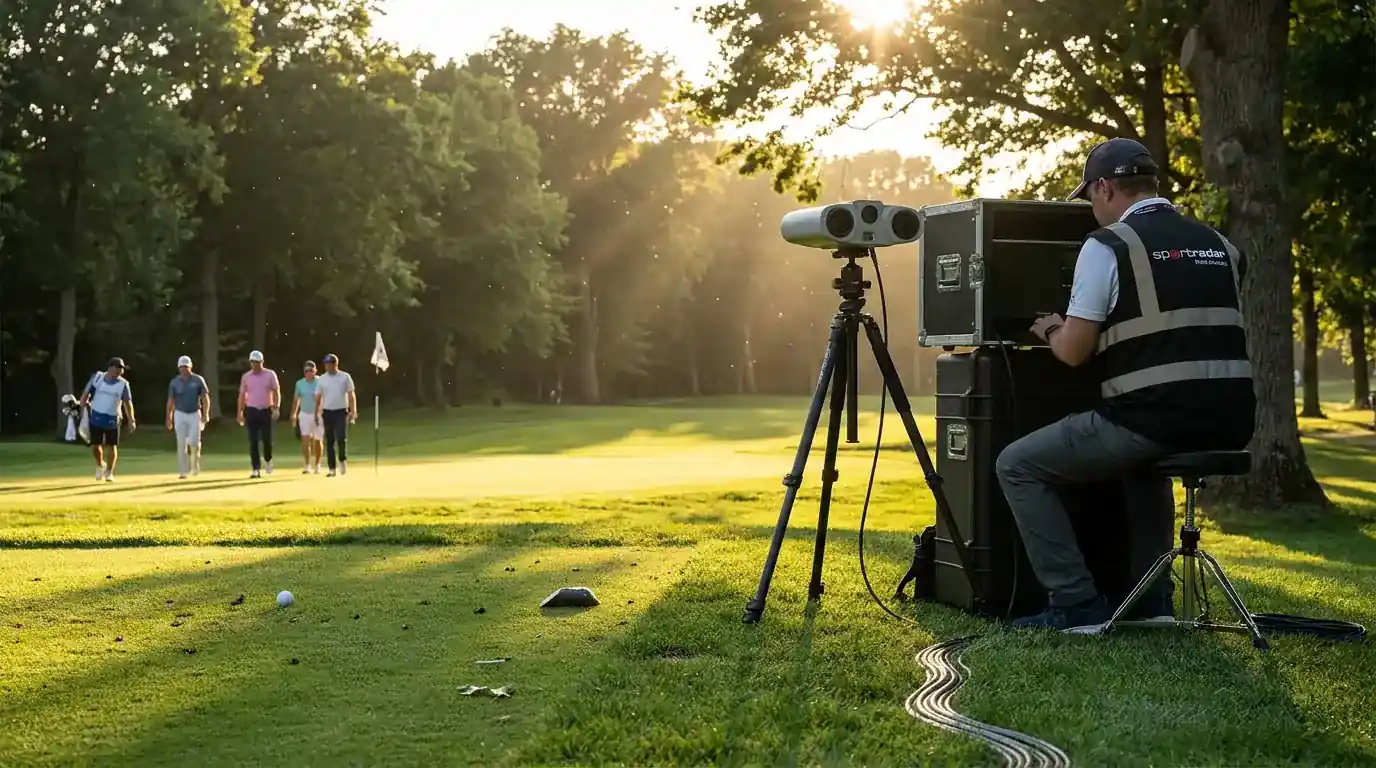
Five years ago I could not have written this section because the data simply was not available in real time. Sportradar’s acquisition of IMG Arena in late 2025, bringing 39,000 official events into their data pipeline with 3D shot tracking and expanded in-play capabilities, changed the landscape entirely. Today, if you are making live golf bets without reading strokes-gained data, you are flying blind in a cockpit full of instruments.
Strokes Gained breaks a golfer’s performance into four categories: Off the Tee (OTT), Approach (APP), Around the Green (ATG), and Putting (P). Each one measures how many strokes a player gains or loses relative to the field average on that specific skill. For in-play purposes, not all four categories carry equal weight at every stage of a tournament.
During rounds one and two, SG: Approach is the strongest signal. Players gaining strokes on approach shots are creating birdie opportunities at an above-average rate, and the market has not yet fully adjusted to approach quality because leaderboard position – which dominates casual punter attention – is driven more by putting variance in the early rounds. A player sitting 20th on the leaderboard but first in SG:APP through 36 holes is a better live prospect than his position suggests.
The equation shifts on Sunday. In the final round, SG: Putting becomes disproportionately important because the pressure of contention amplifies putting variance. A player who has been average on the greens for three days can gain or lose two full strokes on Sunday through putting alone. I watch the first four or five greens of a contender’s final round. If a player who ranks inside the top 10 for SG:APP all week suddenly holes a 25-footer on the 2nd and a 15-footer on the 4th, the live market will move – but often not enough, because the market weights putting gains less heavily than scoring gains from approach play.
One practical tip that took me too long to learn: do not chase SG: Putting leaders in rounds one or two. Putting is the most volatile of the four categories and tends to regress hard. A player who is top of the field in SG:P through 18 holes is far more likely to be average on the greens in round two than to sustain that level. I use putting data to explain a score, not to predict the next one. The exception is a player on poa annua greens who has a documented history of excelling on that surface – strokes-gained categories and their applications go much deeper into surface-specific reads.
Combining two SG categories creates a sharper filter than relying on any single one. When a player ranks top 10 in both SG:OTT and SG:APP through the first two rounds, their scoring tends to be more sustainable than a player who is top 5 in SG:P alone. I build my in-play shortlist around dual-category leaders and ignore players whose leaderboard position is propped up entirely by a hot putter.

Momentum Signals That Move Live Odds
Scott Warfield, the PGA Tour’s Vice President of Gaming, described the approach to live product development as “pretty nimble,” with teams exploring “all sorts of opportunities to integrate into the live feed, like single game parlays and new micro markets.” That nimbleness means the live market is becoming faster and more granular every season – and momentum signals that gave you a 90-second window two years ago now give you closer to 45 seconds before the price corrects.
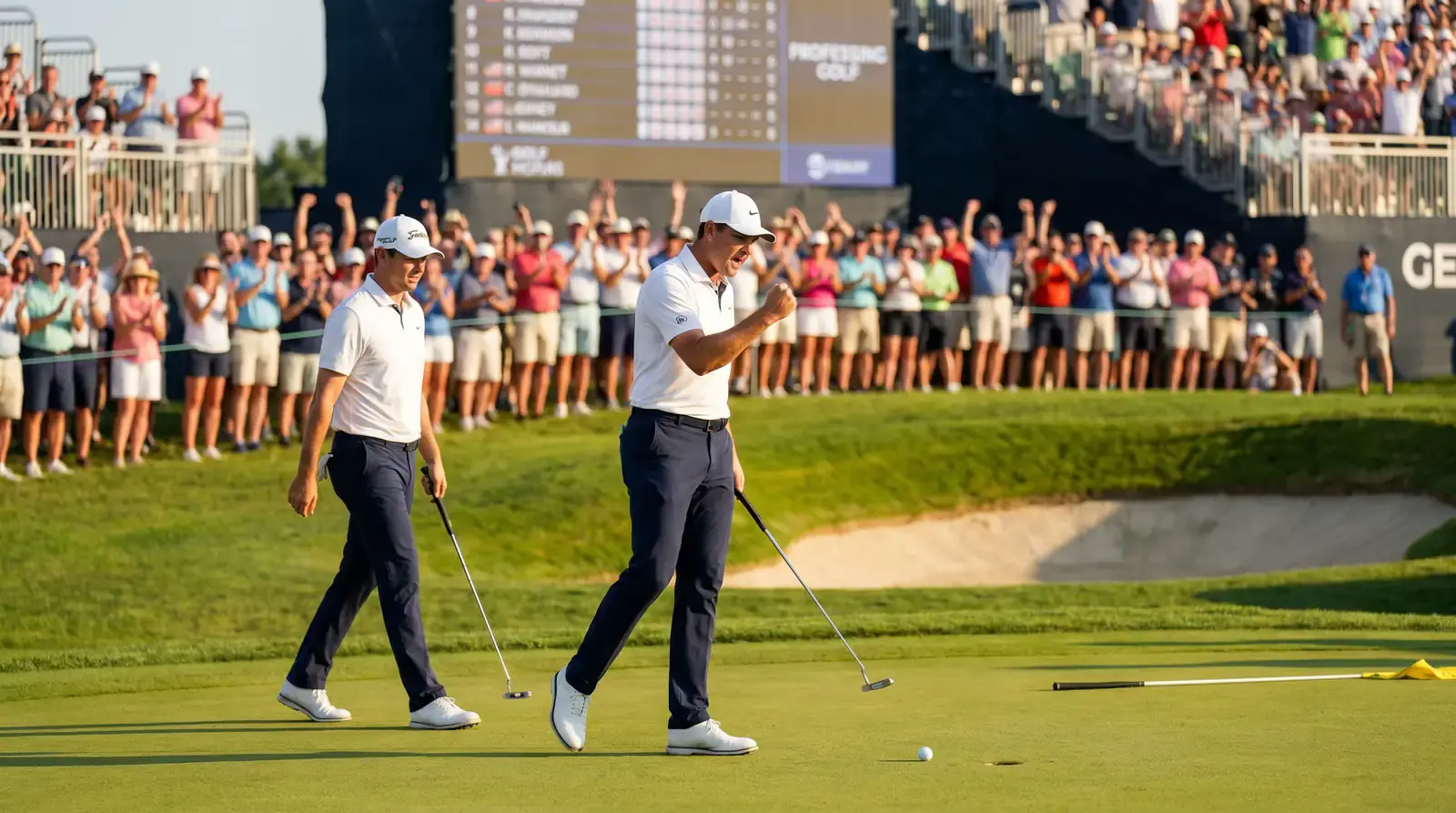
An eagle on a par-5 is the most dramatic momentum trigger in golf. When a player who is sitting 10th on the leaderboard eagles the 13th at Augusta, his outright odds can compress by 40-50% within two minutes. The question is whether that compression is justified or an overreaction. My rule is simple: check the player’s SG:APP for the round so far. If the eagle was set up by a genuinely excellent approach shot – say, a 220-yard 4-iron to eight feet – the momentum is likely sustainable. If the eagle came from holing a 60-foot chip or a bunker shot, the market is overreacting to a low-probability event that is unlikely to repeat.
Birdie streaks work differently. Three consecutive birdies send a clear signal to the market, and prices compress aggressively. But birdie streaks in golf are less predictive of continued scoring than in most sports because each hole presents an independent challenge. The market overprices a three-birdie streak relative to the player’s underlying SG profile, particularly on courses where the three holes in question are among the easiest on the layout. I watch for the “easy-stretch mirage” – a player birdies 14, 15, and 16, which happen to be the three lowest-scoring holes on the course. Their odds collapse. The remaining two holes are the hardest on the back nine. That is a sell window, not a buy window.
Double bogeys and triple bogeys create the opposite dynamic. The market punishes a disaster hole swiftly, and casual bettors abandon the player entirely. In-play betting on golf became the leading category globally in 2024 by volume, which means more recreational money is flowing into these markets than ever before – and recreational money overreacts to visible disasters. When a genuine contender makes a double bogey on a hole that plays over par, his odds drift far more than the scoring damage justifies. That drift is your entry point, provided his SG profile for the tournament is intact.
Latency is the invisible variable in all of this. The gap between when a shot is struck and when the live leaderboard updates varies from 20 seconds to two minutes depending on the data feed. Punters watching a broadcast have a visual advantage over those relying purely on scoring apps, but the broadcast itself is on a delay. The real edge is combining multiple feeds – live leaderboard, broadcast, and SG data portal – so you are triangulating information rather than waiting for a single source to tell you what happened.
Applying Course-Fit Data to In-Play Decisions
I backed a player at the 2023 Open Championship who was in terrible recent form – missed two of his previous three cuts, sitting outside the top 100 in the FedEx Cup standings. His outright price was 125/1. He finished in the top 10. The reason was not some mystical turnaround. It was course fit. His SG profile – elite driving accuracy, above-average wind-adjusted approach play, below-average putting – was practically designed for a firm links course where hitting greens matters more than holing putts.
Course-fit data is the single most underused tool in live golf betting. Most punters track “form” as a blunt measure – top-10 finishes in recent weeks, world ranking, FedEx Cup position. Form fades. Course fit persists. A player who gains 1.5 strokes per round on approach at TPC Sawgrass has a structural advantage at that venue that transcends his current form cycle, and that advantage shows up in his historical scoring average at the course over three, five, or seven years.
For in-play purposes, course fit tells you who to trust on Sunday when the pressure mounts. A player who has historically performed well at a venue will navigate its specific challenges – the doglegs he knows, the green contours he reads instinctively, the wind patterns he has experienced before – with less cognitive load than a first-time visitor. That familiarity edge is invisible on the live leaderboard but measurable in venue-specific SG data.
Links versus parkland is the broadest course-fit divide. Links courses demand low ball flight, creative shot-making, and comfort in wind. Parkland courses reward aerial approach play, distance, and putting on smoother surfaces. A player who thrives on parkland setups will often struggle on links tracks, and the market does not always price this structural mismatch correctly because it focuses on recent results rather than surface-specific SG profiles. The FedEx Cup Playoffs saw a 50% increase in betting volume year on year, and much of that handle was placed by punters who understood tournament context – including how venue familiarity creates repeat contenders at playoff courses.
I maintain a simple spreadsheet for the 20 most-bet PGA Tour events. For each course, I record which SG categories predict top-10 finishes most reliably, based on the past five years of data. At Augusta, it is SG:APP and SG:ATG. At Pebble Beach, it is SG:OTT on specific holes where the fairway narrows dramatically. At St Andrews, it is SG:OTT with a wind-adjusted filter. When I pull up this sheet during a live round, I can immediately assess whether a player climbing the leaderboard is doing so because of skill sets that match the course or because of putting luck that is likely to fade.
The practical application in-play is straightforward. When two players are tied at -8 through 54 holes, and one has a venue-specific SG advantage while the other is a first-time visitor riding a hot putter, the market often prices them similarly. That is where the edge lives – not in picking winners, but in identifying mispriced contenders based on structural course-fit data that the casual market underweights.

Staking Discipline for In-Play Golf Markets
Here is a confession that might save your betting bank: I once staked 8% of my bankroll on a single in-play outright bet during the third round of the US Open because “the data was screaming.” The player finished 40th. The data was not screaming – my emotions were. That experience forced me to build staking rules that I follow regardless of how convinced I am by the signal.
In-play golf betting carries higher variance than pre-tournament wagering because you are reacting to partial information. A player’s round can turn on a single tee shot into water or a lip-out from three feet. More than a quarter of all UK online bettors now place in-play wagers, with the highest participation among 25-to-34-year-olds – a demographic that research consistently links to larger average stakes and more impulsive betting behaviour. Staking discipline is not optional in this environment. It is the difference between a profitable season and a blown bank by July.
My unit structure for in-play golf is simple. I risk 1-2% of my current bankroll on any single in-play bet. For volatile markets – outright bets during round three or four, where a single hole can move a player ten places – I drop to 0.5-1%. Pre-tournament bets get a slightly higher ceiling at 2-3% because the variance is lower (you have four rounds of regression to the mean rather than one). The maximum exposure to any single tournament, across all bets, is 5% of bankroll. That cap matters more than any individual bet size because golf’s four-day format tempts you to keep adding positions.
Two errors destroy more golf betting banks than any others. The first is chasing after a bad round. Your pre-tournament selection shoots 76 in round one, his odds drift to 200/1, and you convince yourself the price is now “too good to miss.” It is not. The price reflects new information – that the player is struggling with his game this week. Adding to a losing position is not strategy; it is hope dressed up as analysis. The second error is doubling on drifters. A player at 14/1 drifts to 20/1 after a bogey, and you increase your stake because “the value is better now.” The value might be better. Your exposure is definitely worse. If you want the position at 20/1, take it at your standard unit size and accept that your original 14/1 bet is a separate decision.
I review my total tournament exposure after every round. If I am above 4% going into Sunday, I will not add any new positions regardless of what the data shows. That rule has saved me from myself more times than any analytical framework ever has. The best staking advice I can give for in-play golf is boring: small units, hard caps, no exceptions. The strategy earns the edge. The staking protects it.

Golf Betting Strategy Questions Answered
How do you adjust strategy between stroke-play rounds and a Sunday shootout?
During rounds one and two, I focus on SG: Approach data to identify players whose scoring potential exceeds their leaderboard position. On Sunday, I shift to SG: Putting and momentum signals because pressure amplifies putting variance. The cut after round two also thins the field from 144 to roughly 70, which concentrates the market and changes how odds move on each score change.
Which strokes-gained category matters most for in-play golf bets?
It depends on the round and the course. SG: Approach is the most reliable predictor in rounds one through three because approach quality creates scoring opportunities sustainably. SG: Putting becomes more influential on Sunday when contention pressure magnifies variance on the greens. On links courses, SG: Off the Tee with a wind-adjustment filter is more predictive than on parkland tracks.
How should weather forecasts change your live betting approach?
Weather delays create immediate opportunities because markets freeze or widen. Beyond delays, the AM/PM wave split is the most actionable weather factor – if wind is forecast to increase in the afternoon, the morning wave holds a structural scoring advantage that the market typically underprices until results confirm it. I check hourly wind forecasts before each round and compare them to tee-time draws.
What is the ideal unit size for in-play golf wagers?
I use 1-2% of my current bankroll for standard in-play bets and reduce to 0.5-1% for high-volatility markets like final-round outright positions. The maximum total exposure per tournament is 5% of bankroll. These are smaller than typical pre-tournament units because in-play golf carries higher variance from partial information and single-hole score swings.
Building Your In-Play Edge One Hole at a Time
Everything in this framework comes back to one principle: structure beats instinct in live golf betting. The timing windows are real, but they close fast. The strokes-gained data is powerful, but only if you know which category to weight at which stage. The momentum signals are profitable, but only if you can distinguish a genuine trend from a low-probability event that the market has overpriced.
I have built this system over eleven years, refined it through expensive mistakes, and tested it across hundreds of PGA Tour and DP World Tour events. It is not a system that picks winners – golf has too much variance for that. It is a system that identifies mispriced positions, enters them at the right moment, and protects capital when the data goes quiet. If you take one thing from this guide, make it the staking discipline. The analytical edge gets you into good positions. The discipline keeps you in the game long enough for that edge to compound across a full season.
Written by the editors at Live Golf Betting.