Outright Golf Betting: The Case for Backing a Tournament Winner
 Available in US
Outright Golf Betting: The Case for Backing a Tournament Winner
I backed a player at 80/1 to win the 2018 Travelers Championship. He led after 54 holes, bogeyed 17 on Sunday, and finished second by one stroke. I still think about that bet. It captures everything that makes outright golf betting simultaneously thrilling and maddening — the long odds, the four-day emotional investment, and the razor-thin margins that separate a winner from the rest.
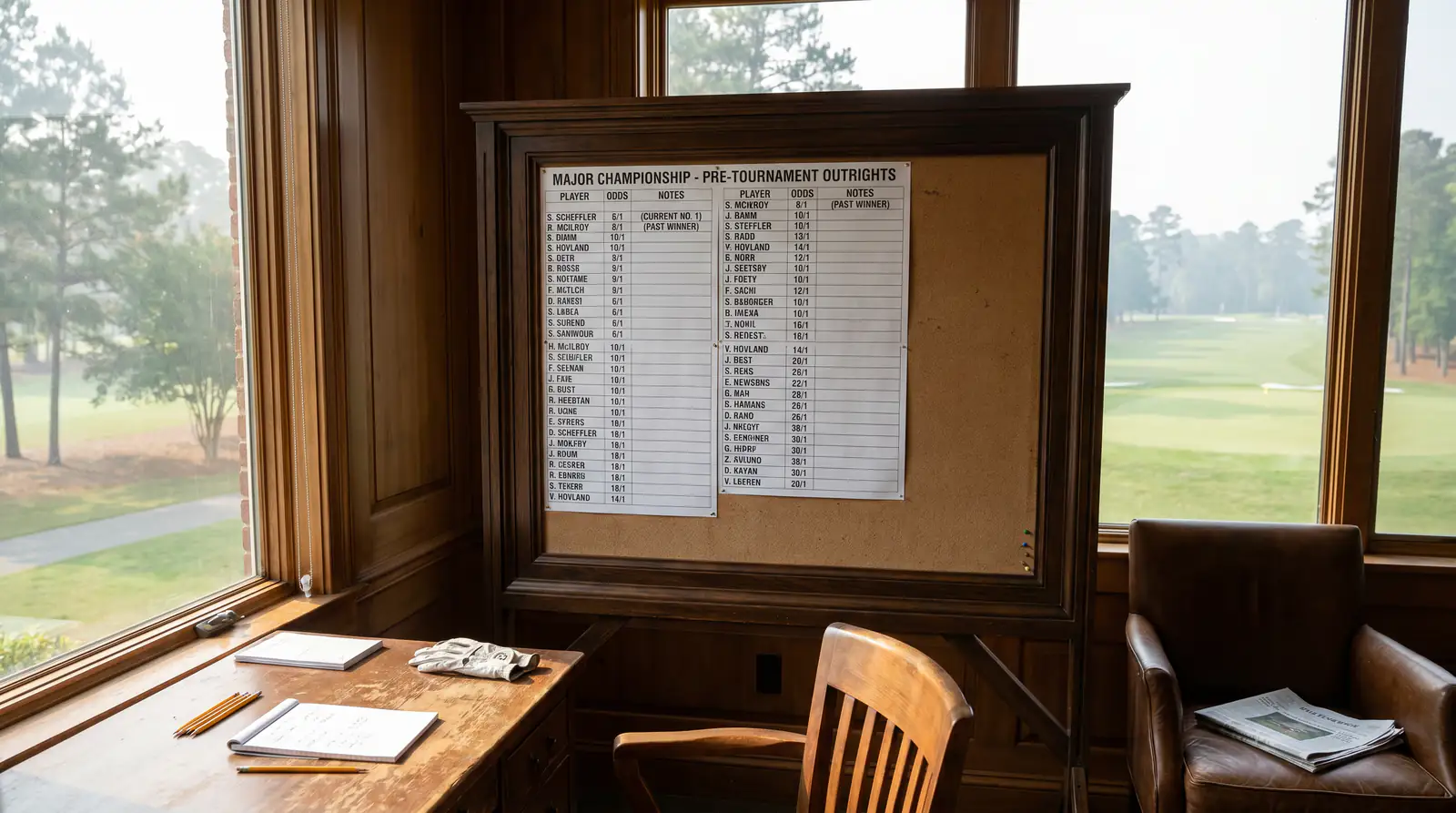
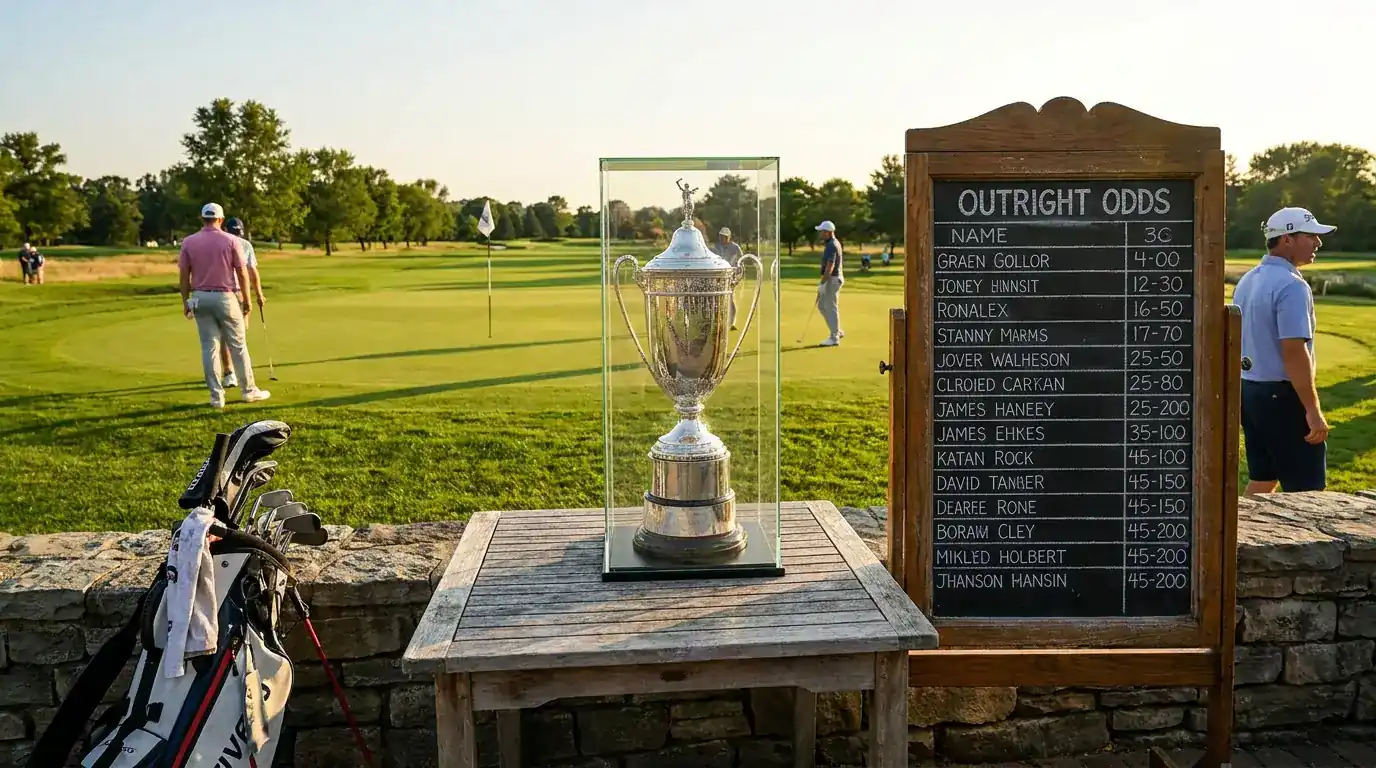
Outright betting is the oldest and most straightforward market in golf: you pick the player who will win the tournament. No place terms, no dead heats on the win part, no head-to-head comparisons. Win or lose. In a sport where fields routinely contain 144 players and even the world’s best convert roughly 5-10% of starts into victories, the odds reflect genuine uncertainty. A pre-tournament favourite at a PGA Tour event might be priced at 6/1 or 8/1. Mid-range contenders sit at 25/1 to 50/1. Outsiders stretch to 200/1 and beyond. The PGA Tour reported a 20% increase in golf betting handle in 2025 — the fourth straight year of double-digit growth — and outright markets remain the anchor of that volume. During FedEx Cup Playoffs, handle surged 50% year on year, with outright bets leading the charge.
How Outright Odds Are Set Before and During a Tournament
Before a single ball is struck, bookmaker traders build the outright market from a mix of quantitative inputs and qualitative adjustments. The quantitative side pulls from world ranking, recent form (last 12-24 events), course history (scoring average at this venue), and strokes gained profiles matched to course characteristics. A player with elite SG: Approach numbers heading to a course that rewards iron play will be priced shorter than his ranking alone would suggest.
The qualitative layer accounts for factors models struggle with: fitness concerns from social media or practice-round reports, equipment changes, caddie switches, and the general “buzz” around a player entering the week. I have seen odds shift by 30% on Tuesday afternoon based on nothing more than a practice-round video showing a player hitting the ball beautifully — or terribly.
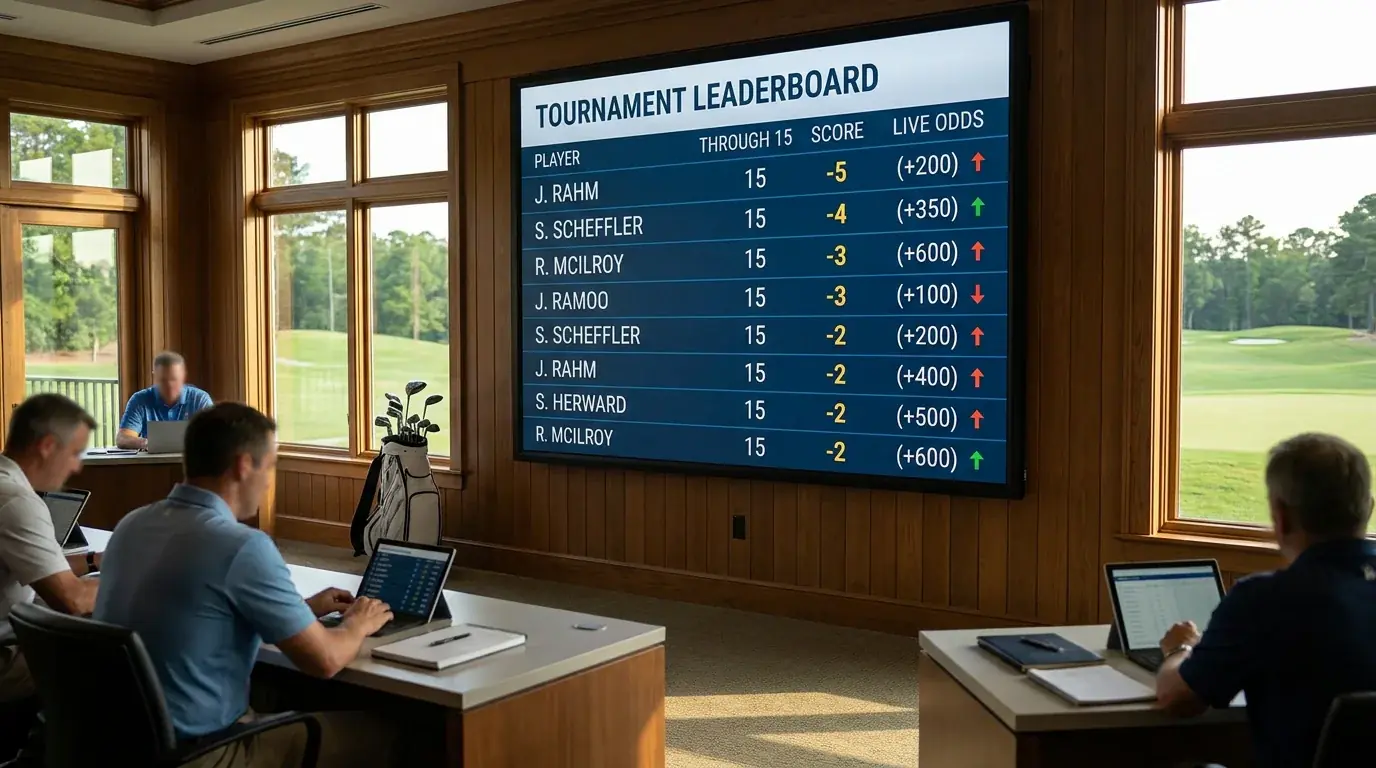
Once the tournament begins, outright odds become a living organism. Every birdie, bogey, eagle, and double compresses or expands the field’s probability distribution. A player who opens with a 63 on Thursday might see their odds collapse from 40/1 to 8/1 overnight. Someone who shoots 75 in benign conditions will drift from 25/1 to 100/1 or further. The in-play outright market is recalculated continuously, with algorithms processing ShotLink data and traders making manual adjustments during volatile periods — a weather delay, a leaderboard logjam, or a dramatic back-nine charge.
One detail many punters overlook: outright odds on Sunday afternoon behave differently from the same market on Thursday morning. By the final round, the field has been cut in half, the leaderboard is compressed, and the remaining variance comes down to 18 holes. The range of plausible winners narrows sharply. A player who is 5 shots back on Sunday might be 60/1 in the outright market, but he only needs one hot stretch to get into contention. The late-Sunday outright market is where I have found some of my most memorable wins — and my most painful near-misses.
Timing Your Outright Bet: Ante-Post vs In-Play
Should you bet before the tournament starts or wait until balls are in the air? After more than a decade of doing both, my answer is frustratingly nuanced: it depends on the specific tournament, the specific player, and the specific price.
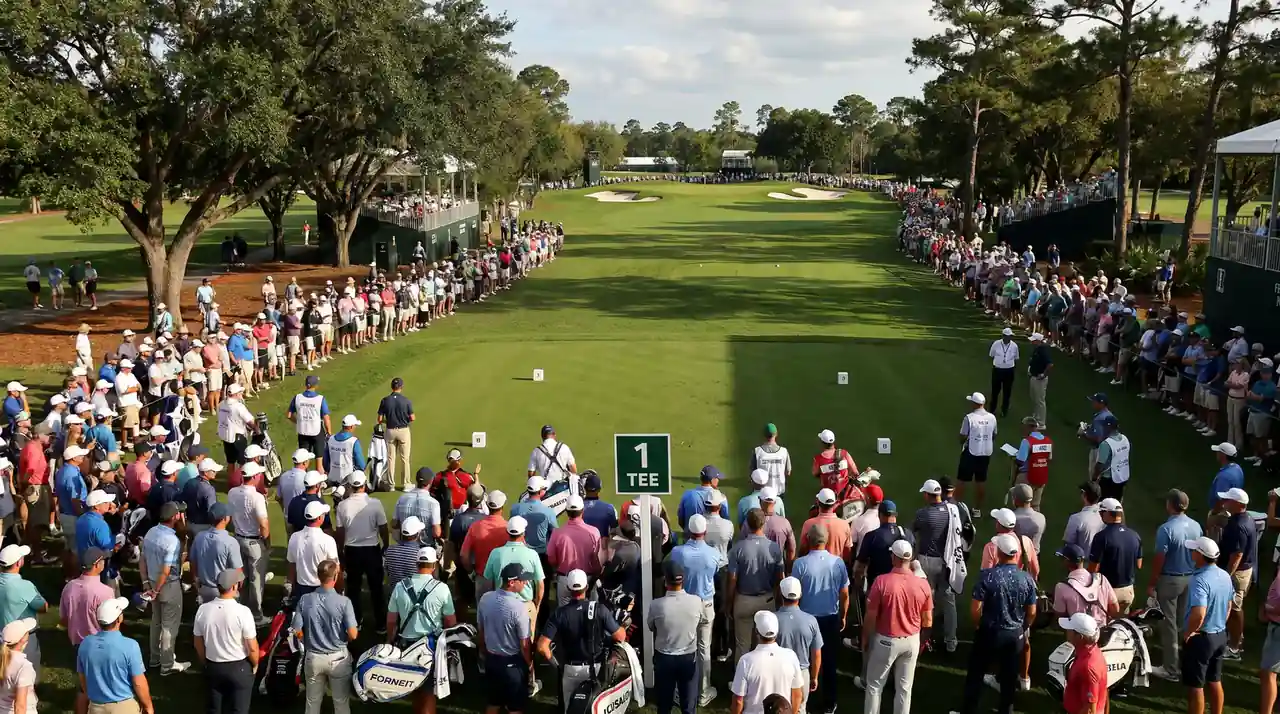
Ante-post betting — placing your outright wager before Round 1 begins — locks in the best odds. Bookmakers price the full field with some margin built in, but because there are 144 or more players to price, the overround is distributed broadly. Good ante-post prices on mid-range players can offer genuine value that disappears once the tournament starts and the market tightens. The downside is obvious: you commit your stake with zero information about current form, course conditions on the day, or tee-time wave assignments.
In-play outright betting sacrifices the best price for informational advantage. By Thursday afternoon, you know which wave got the better conditions. By Friday evening, you know who made the cut and where the leaderboard stands. By Saturday night, you have three rounds of data showing who is striking it well and who is hanging on. The odds reflect all of this, so you pay more, but you are buying with knowledge rather than projection.
My approach splits the difference. I identify three or four players pre-tournament whose course fit and form warrant ante-post backing, and I place small-unit outright bets at the best available price. Then I hold a larger portion of my weekly budget for in-play entries, looking for specific scenarios: a favourite who bogeys two of the first four holes on Thursday and drifts to double his opening price, or a player who is quietly putting together a back-nine charge on Saturday while the cameras focus elsewhere. The mechanics of how odds move in-play reward bettors who are watching the course, not just the leaderboard.
Why Field Size Shapes Outright Value
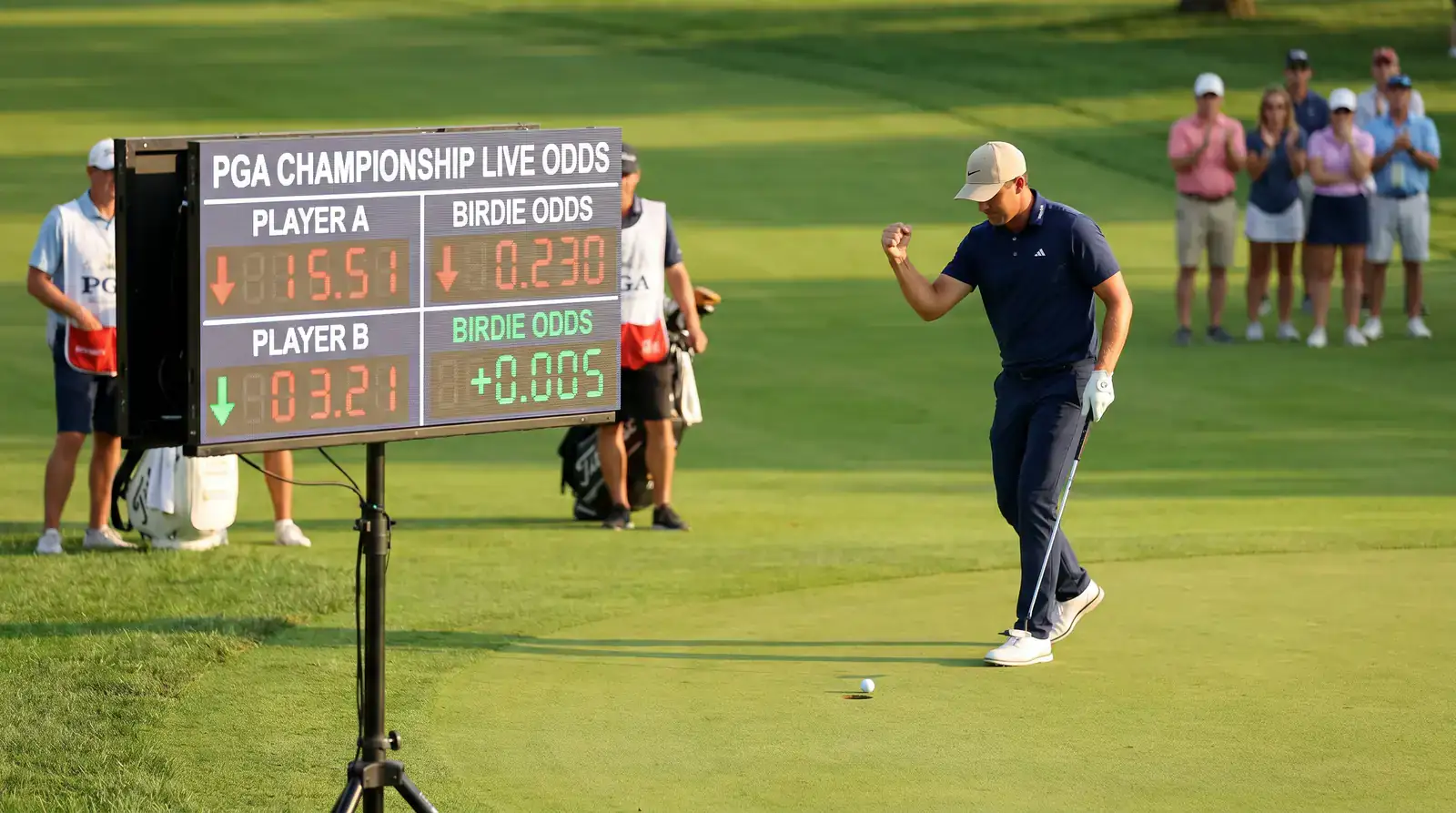
Field size is the single most underappreciated variable in outright golf betting. A standard PGA Tour event fields 144 players. A major championship might have 156. An invitational like the Genesis might cap at 120. And then there are the smaller-field events: the Sentry (60 players), limited-field Signature Events (70-80), or LIV Golf tournaments (48). The TGL league fields just a handful of competitors per match.
Smaller fields compress the odds. When 48 players compete instead of 144, the favourite might be priced at 4/1 instead of 8/1. The field is weaker at the bottom — no Monday qualifiers, no sponsors’ exemptions — so the top players carry a higher win probability. Expected value calculations shift accordingly. A player at 12/1 in a 48-man field might represent worse value than the same player at 25/1 in a 144-man field, even though the absolute odds look more attractive.
I apply a rough heuristic: in a full-field event, I need at least 30/1 on any player who is not in the top 10 in the world. In a reduced-field event (70 players or fewer), I lower that threshold to 16/1 or 20/1. These are not hard rules, but they prevent me from overpaying for a smaller-field illusion of safety.
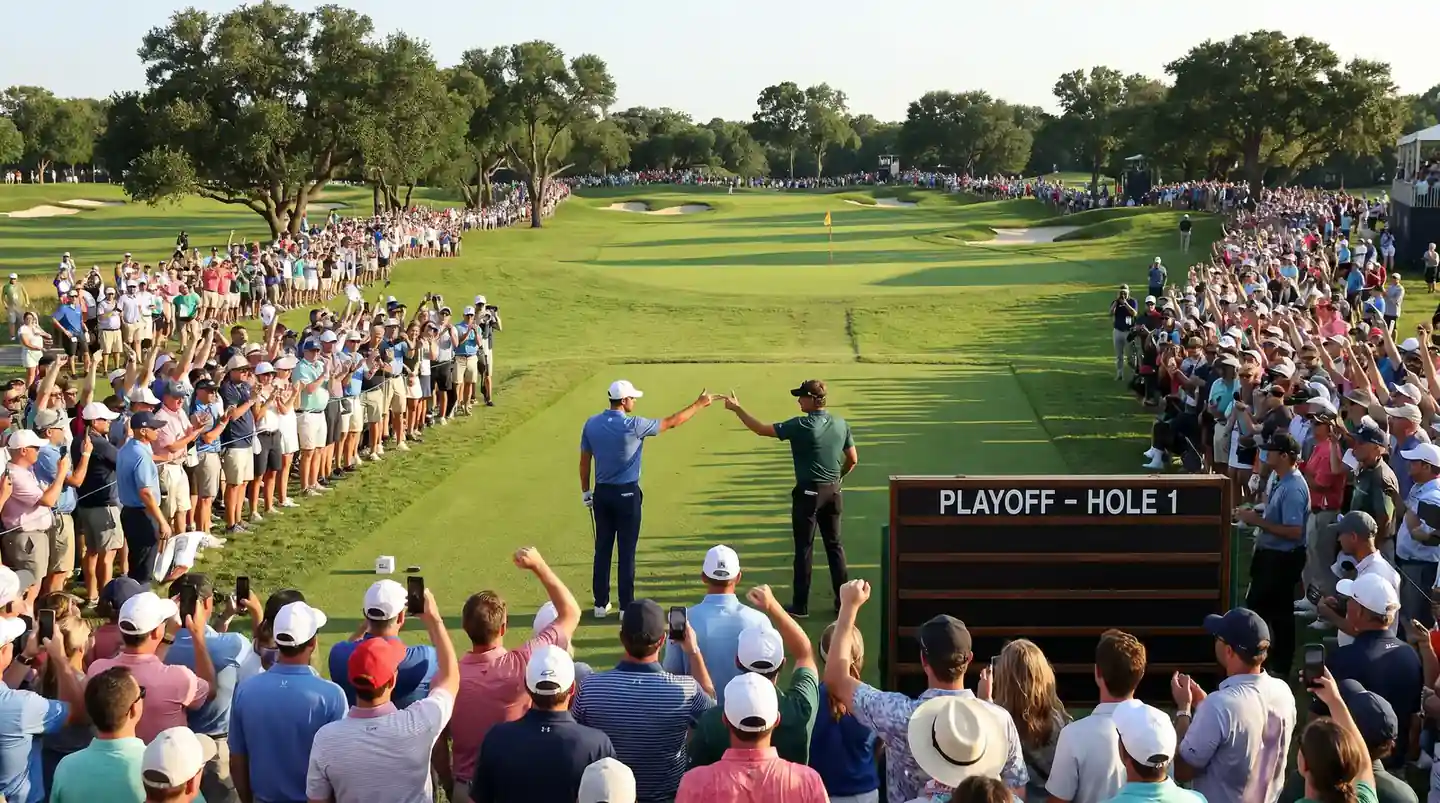
Playoff scenarios add one final wrinkle. If your player ties after 72 holes, outright bets are settled on the playoff result, not the regulation finish. This means your outright bet is alive until the last putt drops, even if it takes a three-hole aggregate playoff or a sudden-death shootout to decide it. No dead heat applies to the win part of an outright bet — there is always a winner.
The Long Game of Outright Betting
Outright golf betting is the long game in every sense. You commit capital for four days, ride through rounds of noise, and often lose. Most golf outright bets lose. The maths demands it: even a sharp bettor backing players at 20/1 will lose 19 out of 20 times on average if their strike rate matches the odds. The edge comes from consistently finding prices that underestimate a player’s true win probability — by 2%, 3%, sometimes 5%. Over a season of 40+ PGA Tour events and 30+ DP World Tour events, those small edges compound. Outright betting is not about the one big win. It is about building a portfolio of positive-expectation bets, managing variance through disciplined staking, and trusting the process when the losses pile up mid-season.
Can I place an outright golf bet after the tournament has started?
Yes. In-play outright markets remain open throughout the tournament at most UK bookmakers, with odds updating after each hole. You can back a player to win at any point from the first tee shot on Thursday through to the final holes on Sunday. Prices will be shorter than ante-post odds because the market incorporates the information revealed during play.
What happens to my outright bet in a playoff?
Outright bets are settled on the playoff result. If your player ties for the lead after 72 holes and then wins the sudden-death or aggregate playoff, your bet wins. If they lose the playoff, your bet loses. Dead heat rules do not apply to the win part of an outright bet because golf tournaments always produce a single winner through the playoff process.
Written by the editors at Live Golf Betting.