Two-Ball Betting in Golf: Picking Winners Within the Pairing
 Available in US

Two-Ball Betting in Golf: Picking Winners Within the Pairing
There is a reason two-ball betting has become my favourite in-play golf market, and it has nothing to do with the odds. It is the simplicity. Two players. Same course. Same conditions. Same tee time. One question: who shoots lower today? Strip away the chaos of a 144-player field and you get the purest head-to-head contest golf offers.
Two-ball betting — also called head-to-head or matchup betting — pits two golfers against each other for a single round. Your job is to pick which one posts the lower 18-hole score. The rest of the field is irrelevant. Whether the leader is 10 under or 2 over does not affect your bet. This laser focus is what makes it so attractive, especially in-play. PGA Tour handle has grown by 20% in 2025, marking the fourth consecutive year of double-digit growth, and head-to-head markets have ridden that wave because they give bettors a manageable contest to analyse rather than an unwieldy field to model. Among online bettors aged 25 to 34 — the most active in-play demographic in the UK — matchup betting is one of the most popular entry points into live golf wagering.
How Two-Ball and Three-Ball Markets Work
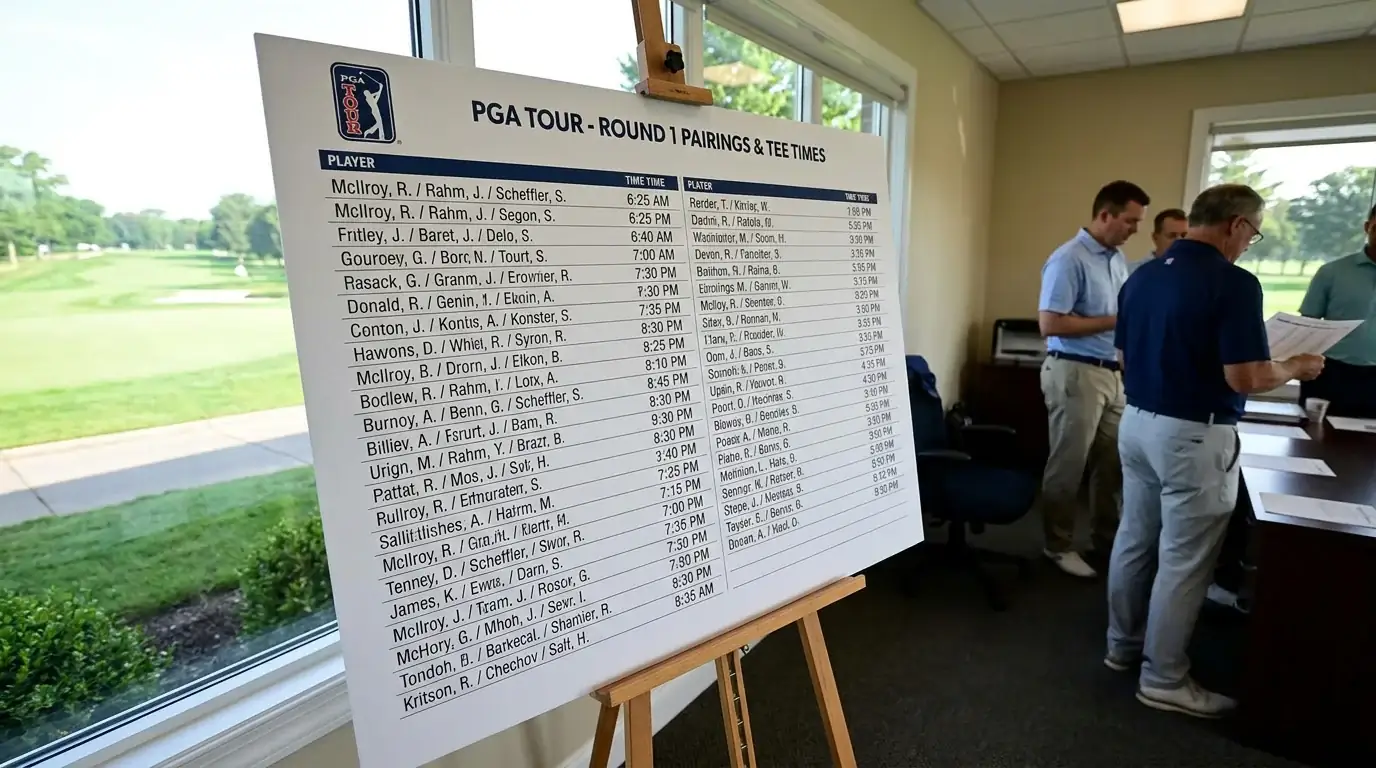
When the draw for a round is published, bookmakers create two-ball markets based on the tee-time pairings. In Rounds 1 and 2, players typically go out in threesomes (three-ball groups), while Rounds 3 and 4 often feature twosomes, especially near the top of the leaderboard. The market structure adapts accordingly.
A two-ball market is straightforward: Player A vs Player B. You back one of them to shoot the lower round score. Most UK bookmakers offer a “tie” option as a third outcome — if both players shoot the same score, the tie pays out and the other two selections lose. Some operators run two-ball markets without the tie, in which case a tied round means your stake is returned as a push. Always check which format your bookmaker uses before placing, because the presence or absence of the tie option changes the odds structure significantly. With a tie priced at, say, 7/2, the two named players will be priced shorter than they would in a no-tie market.

Three-ball markets work the same way but with three players and a more complex tie structure. Dead heat rules apply if two of the three players post the same lowest score — your payout is halved. If all three tie, your payout is reduced to one-third. Three-ball markets carry more variance but also more value, because pricing three outcomes plus ties is harder for bookmakers to get right. I find three-ball markets particularly fertile ground on Thursday and Friday mornings, when the field is still intact and the groupings are set by the tournament organisers rather than by leaderboard position.
Tournament-long matchup markets also exist at some bookmakers, pitting two players against each other for the full 72 holes (or 54, if one misses the cut). These are less common and less liquid, but they do appear for marquee pairings — think the world number one against the defending champion, or two players from the same country.
In-Play Dynamics of Head-to-Head Golf Bets
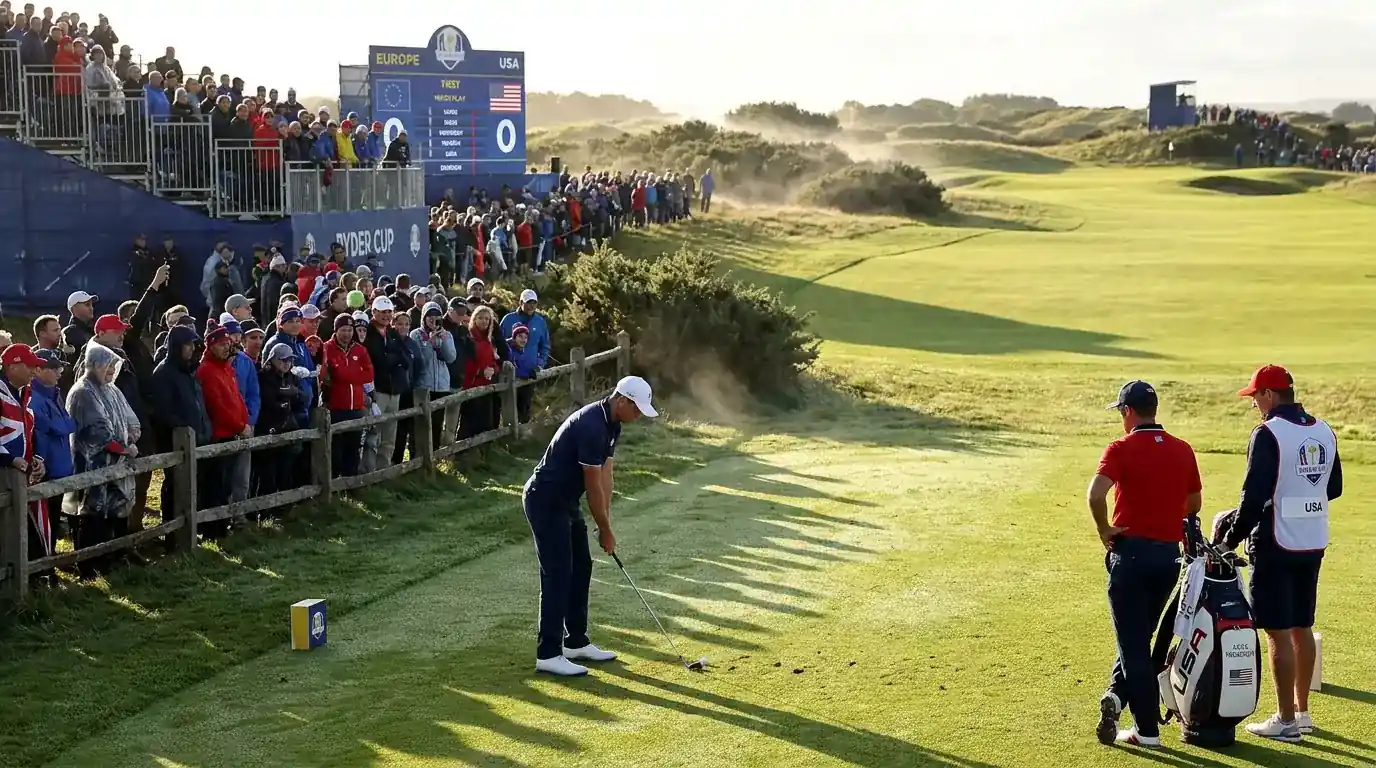
Last summer, I backed a player in a two-ball at the Scottish Open after watching him stripe his tee shot 30 yards past his playing partner on the 1st hole. The visual information — seeing one player confident and flushing it versus another who looked tentative — is something the odds model does not capture instantly. That asymmetry is the heart of in-play two-ball betting.
Odds in head-to-head markets swing on individual holes more dramatically than in outright markets. A single birdie by one player and a bogey by the other creates a two-shot swing, which in a round context is enormous. If one player was priced at 4/5 pre-round and falls two behind through four holes, their price might drift to 5/2 or longer. For the sharp bettor, the question is whether that drift reflects the true probability or an overreaction.
The PGA Tour’s Vice President of Gaming, Scott Warfield, has spoken about the “stickiness” of betting-integrated broadcasts — the ability to get viewers engaged and keep them watching. Two-ball markets are a perfect example. You can follow a single pairing on the live leaderboard or via streaming, watch every shot, and make informed in-play decisions based on what you actually see. The engagement is tighter and more personal than tracking 50 players on a scrolling leaderboard.
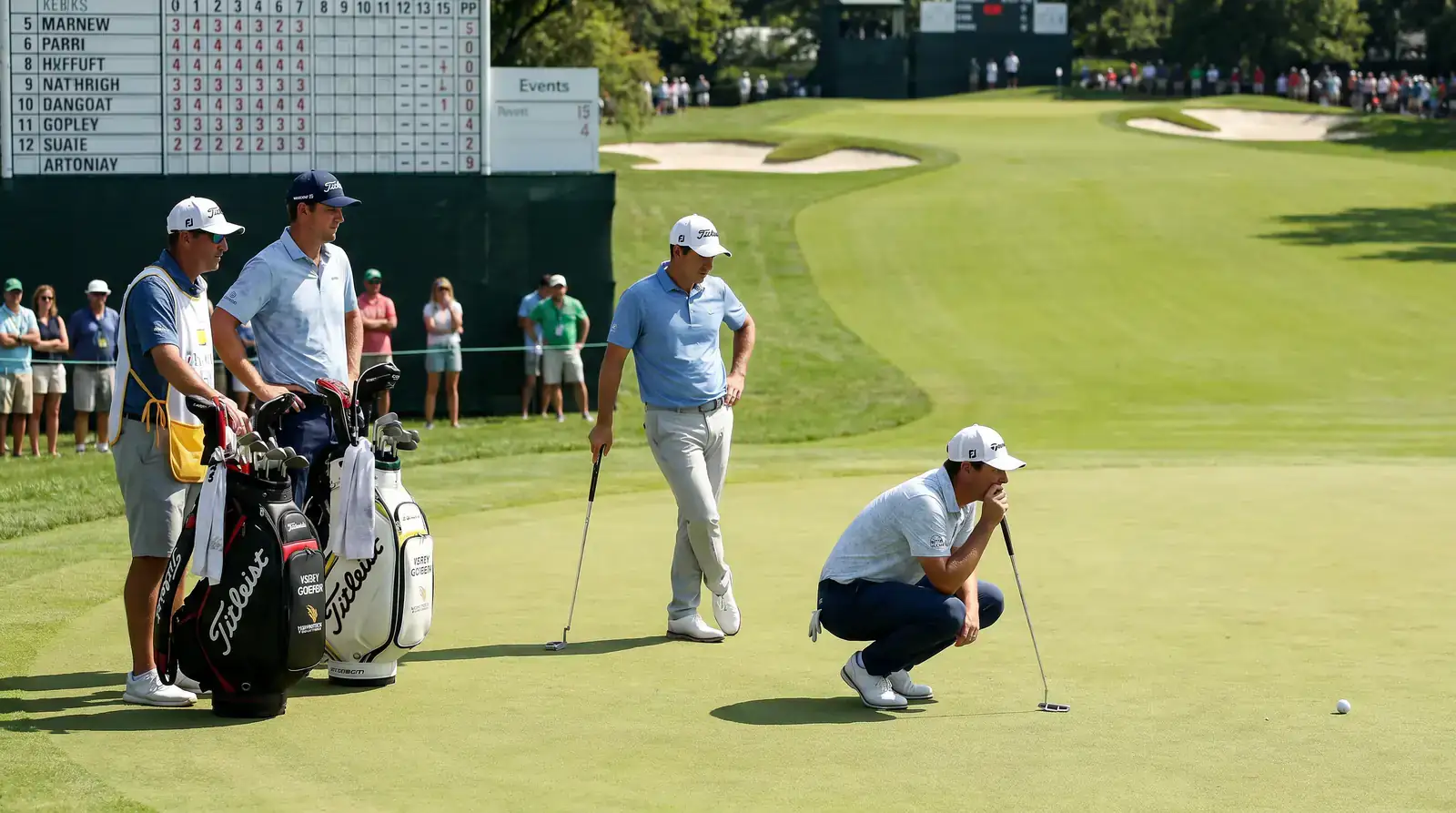
Momentum is a real factor within pairings, though it is easily overstated. A player who birdies three in a row might look unstoppable, but regression to the mean is a powerful force in golf. What matters more is reading the structural advantage: is one player hitting more greens in regulation? Is one missing fairways and scrambling? Those underlying metrics predict the rest of the round better than a hot streak. If you are watching the pairing and you can see that one player is consistently finding the middle of the green while the other is chipping from rough, the scoring gap is likely to widen — even if the current margin is only one shot.
Strategy: Exploiting Mismatched Pairings
The most profitable two-ball bets I have ever placed came from mismatched pairings — situations where the bookmaker’s pre-round pricing did not account for a specific edge one player held over the other in those exact conditions.
AM/PM wave advantage is the most obvious mismatch. In Rounds 1 and 2, the morning wave often plays in calmer conditions than the afternoon wave. If two players in the same three-ball group face a forecast of 25 mph winds in the afternoon, and one of them is a links-hardened ball-striker while the other is a high-ball-flight player who struggles in wind, the morning/afternoon split becomes irrelevant — but the wind-handling mismatch within the group becomes everything. The in-play strategy framework for post-bogey windows applies perfectly here: when the wind-vulnerable player drops a shot early, his two-ball price drifts, and that is your entry.
Course-fit mismatches are subtler but equally powerful. Two players paired together might have similar world rankings but wildly different profiles on the specific course type. One might gain 1.5 strokes on approach at parkland tracks but lose half a stroke on links courses, while his playing partner does the opposite. If the two-ball price reflects their overall form rather than their course-specific form, there is an edge.
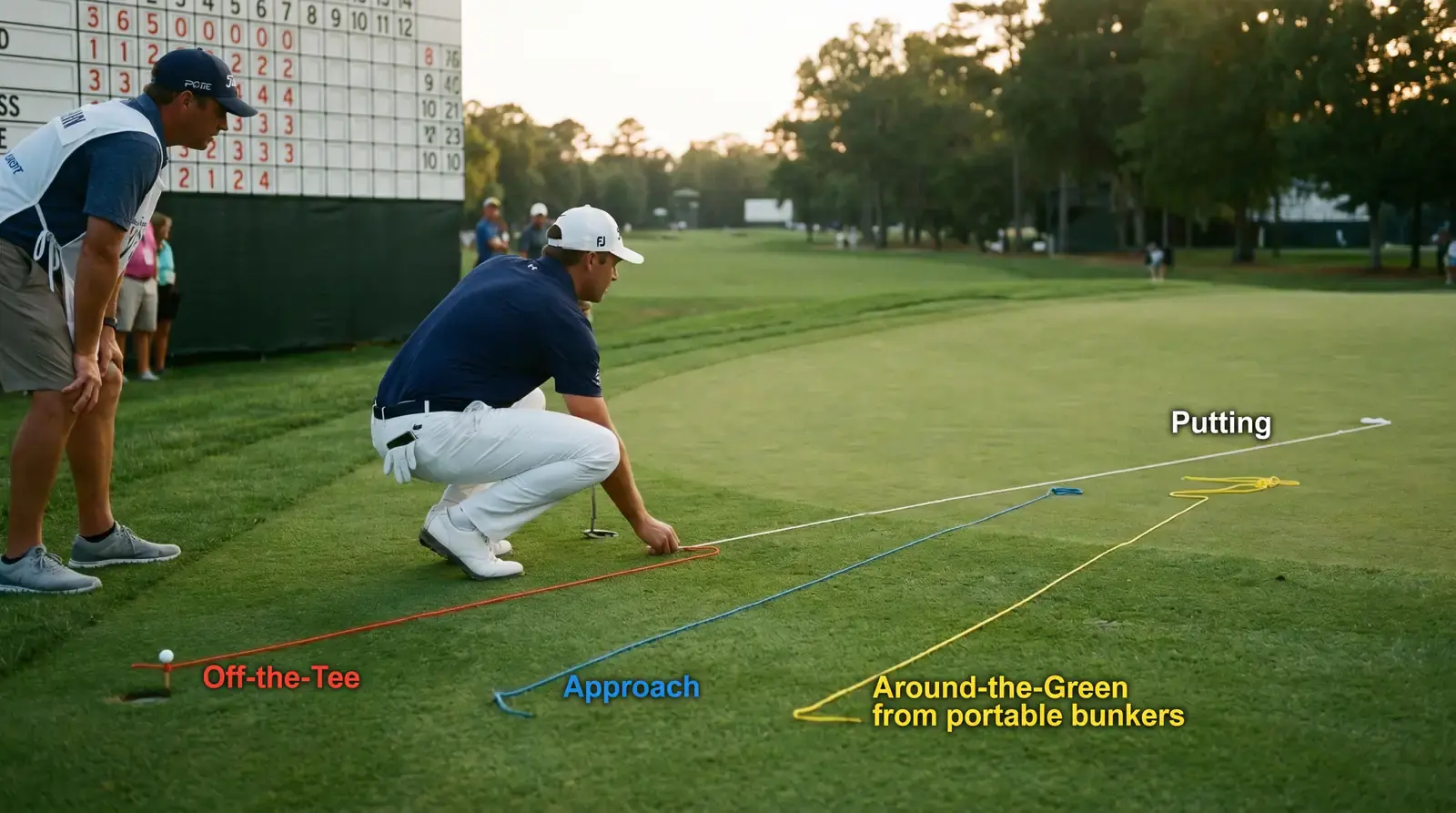
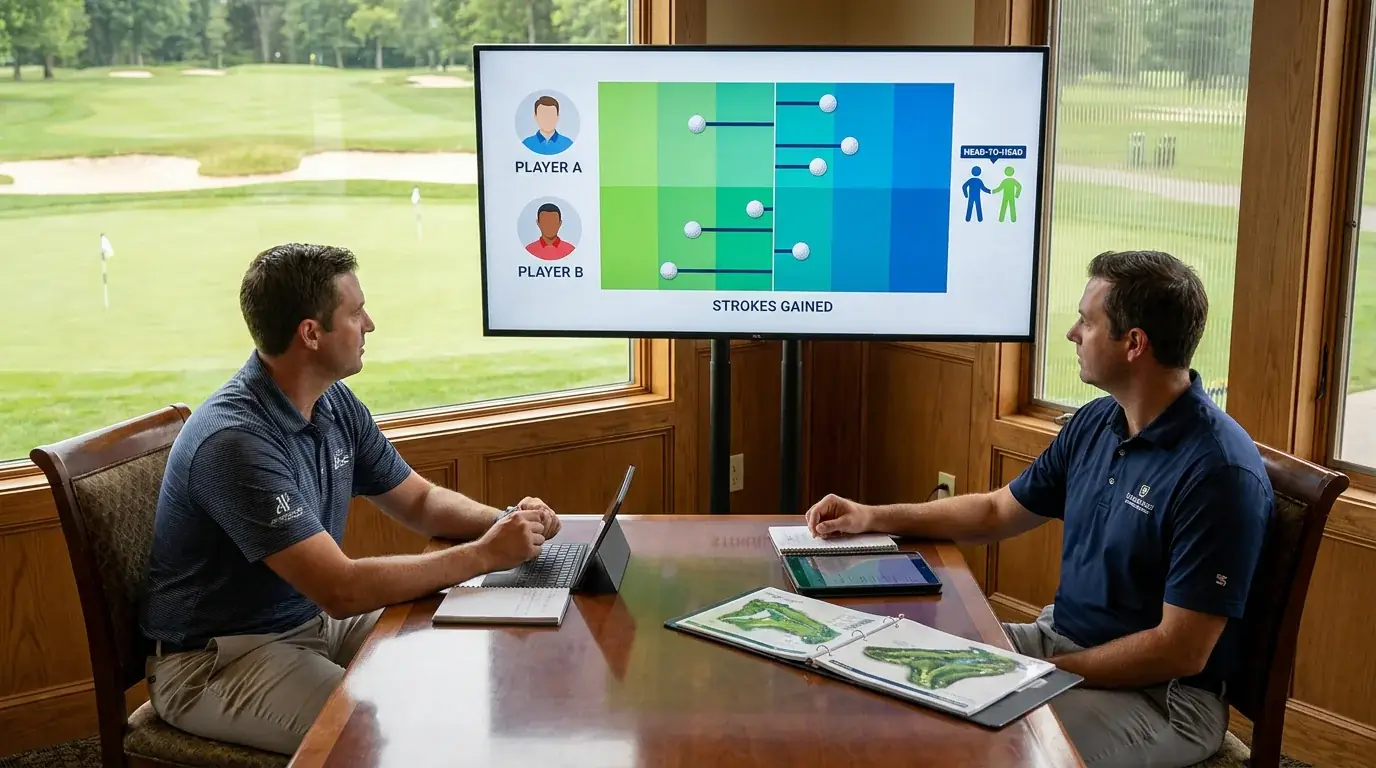
Using strokes gained data to assess matchups is the most systematic approach. Compare the two players’ SG profiles — Off-the-Tee, Approach, Around-the-Green, Putting — and weight the categories by how important they are at this specific course. A course that demands driving accuracy rewards SG: Off-the-Tee more heavily than one where distance off the tee is the dominant factor. A fast-greens week amplifies the importance of SG: Putting. If you run this comparison before the round and one player has a clear structural advantage on the metrics that matter most at this venue, the two-ball market is where that advantage translates into value.
One tactical note: late on Sunday, when the leaders go out in the final pairing, the two-ball market becomes the closest thing to a championship match. The pressure is different from Rounds 1 and 2. Players know they are head-to-head, the crowd is watching, and every hole matters. That psychological dynamic changes how you assess momentum — a player who falls behind in the final pairing faces not just a scoring deficit but the emotional weight of the occasion. I factor that in, but carefully. Emotional reads are the least reliable tool in the box.
Why the Pairing Matters More Than the Leaderboard
Two-ball betting inverts the usual hierarchy of live golf analysis. In outright betting, the leaderboard is everything. In two-ball, the leaderboard is background noise. What matters is the relative performance of two players over 18 holes in the same conditions at the same time. That narrower frame makes research more manageable, in-play reads more actionable, and the learning curve less steep than trying to model a 144-player field. It is the market I recommend to anyone transitioning from pre-tournament punting to live golf betting, and after 11 years, it is still the one I come back to most often.
What happens to a two-ball bet if one golfer withdraws mid-round?
Settlement rules vary by bookmaker. Most UK operators void the two-ball bet if one player withdraws before completing the round, and your stake is returned. Some will settle the bet in favour of the remaining player if the withdrawal happens after a defined point, such as after the 1st tee. Always check the specific rules for your operator, as this is one area where bookmaker policies differ.
Is a tie a losing bet in head-to-head golf markets?
It depends on the market format. In three-way two-ball markets (where a tie is offered as a separate outcome), backing either player is a losing bet if they tie. In two-way markets (no tie option), a tied round is settled as a push and your stake is returned. The three-way format is more common at UK bookmakers for golf.
Can you bet on two-ball matchups in-play during a round?
Yes. Most major UK bookmakers offer live two-ball markets that update as the round progresses. Odds shift after each hole based on the relative scores. The in-play two-ball market is one of the most actively traded golf markets because the constant head-to-head comparison makes it easy to follow in real time.
Created by the ”Live Golf Betting” editorial team.