How Does Live Golf Betting Work? A Step-by-Step Walkthrough
 Available in US
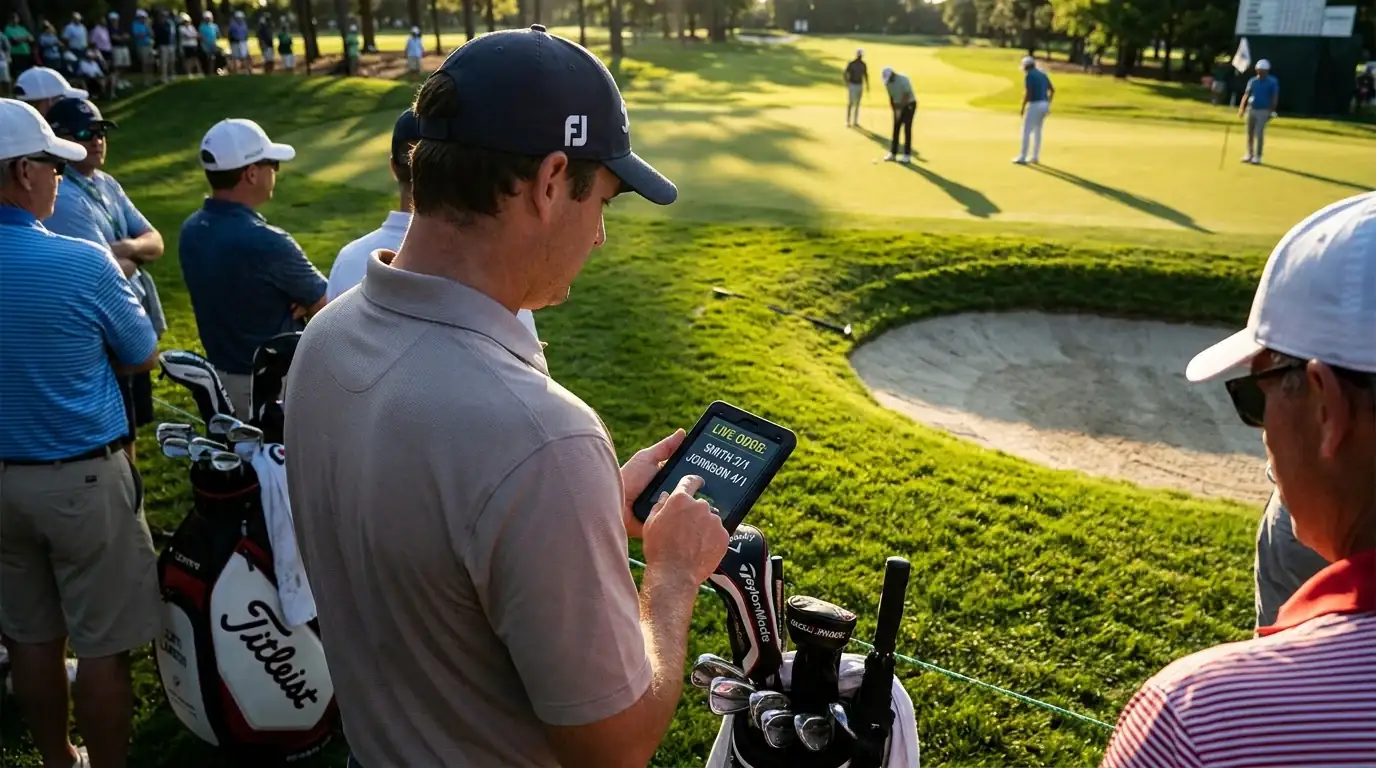
Table of Contents
How Does Live Golf Betting Work? A Step-by-Step Walkthrough
I remember placing my first live golf bet in 2014 — a tenner on a player whose name I’d barely heard, purely because his odds had drifted from 40/1 to 66/1 after a bogey on the 7th. He birdied three of the next four holes and I felt like I’d discovered a cheat code. I hadn’t, of course, but that moment taught me something every new in-play punter needs to understand: live golf betting is not a faster version of pre-tournament betting. It is a fundamentally different discipline.
Here is the core difference. Before a tournament starts, you are betting on projections — form, course history, statistical models. Once balls are in the air, you are betting on what is actually happening, shot by shot, hole by hole. Your pick is at 25/1 pre-tournament. By the 5th hole of Round 1, they have made two birdies and sit at 18/1. That price movement is not noise — it is the market recalculating in real time. Live golf betting, sometimes called in-play or in-running betting, lets you react to that recalculation and place wagers while the action unfolds. In-play wagering has become the leading category on the global sports betting market, driven by the interactivity and responsiveness it offers. Over a quarter of all online bettors in the UK have placed an in-play bet, with the highest participation among 25-to-34-year-olds. For golf specifically, the four-day tournament format creates a uniquely rich environment for live markets — more on that in a moment.
The Four-Day, 72-Hole Structure and Why It Matters
Most team sports give you 90 minutes of in-play action. A tennis match might stretch to four hours on a long day. A standard PGA Tour event runs four rounds of 18 holes each — 72 holes spread across four days, with each round lasting roughly five hours. That is approximately 20 hours of live betting windows per tournament, and the market never sits still during any of them.
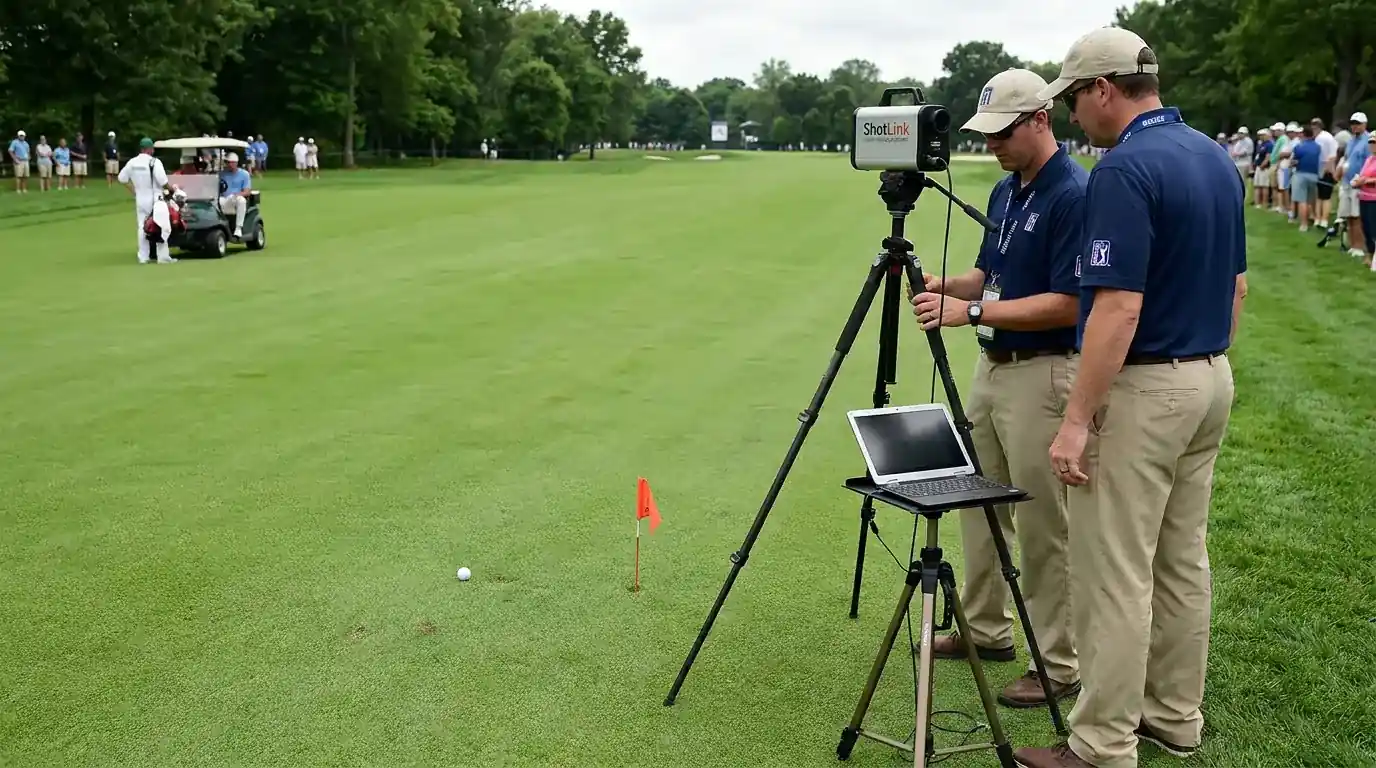
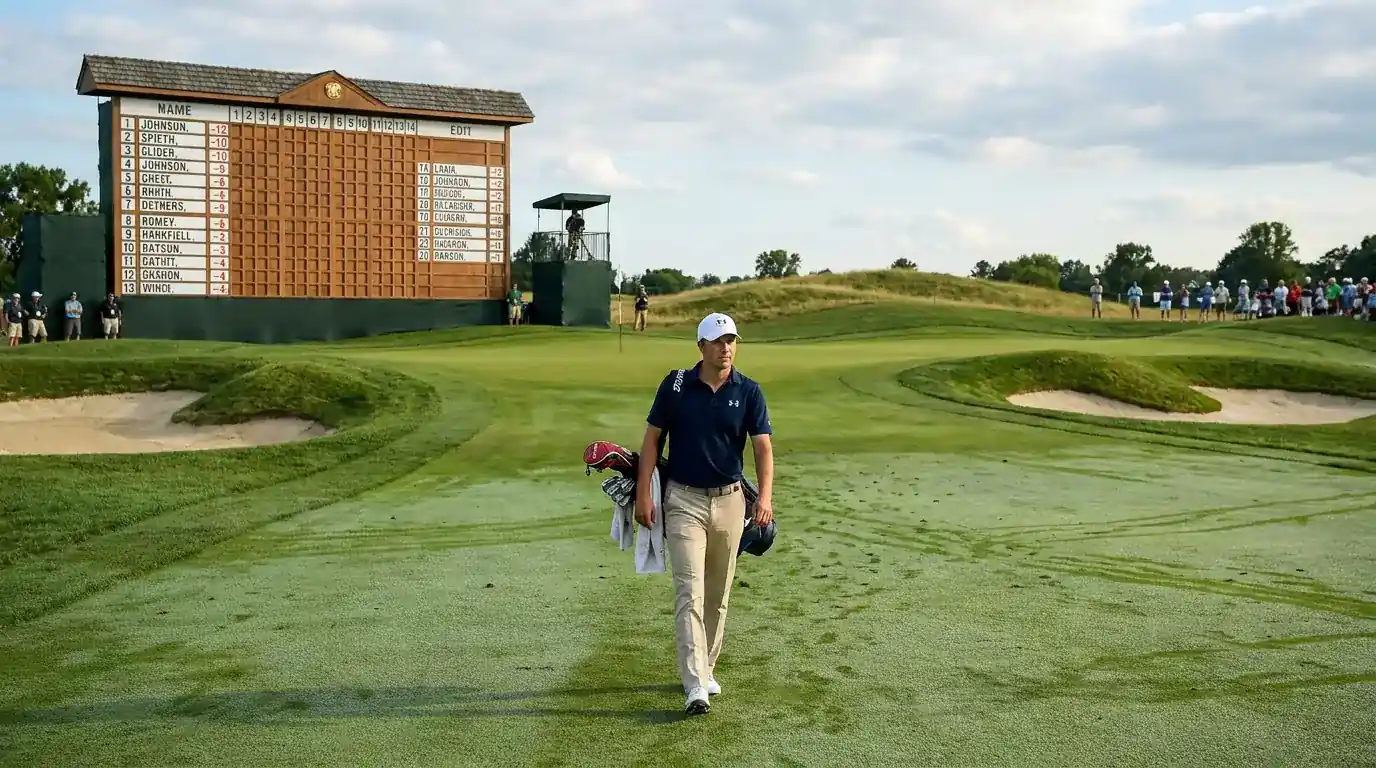
Each round operates as its own self-contained event within the larger tournament. Thursday and Friday are the opening rounds, where the entire field of 144 players (or more, at some events) plays. After Round 2, the cut eliminates roughly half the field — typically the top 65 plus ties. Saturday is known as “moving day,” where players jockey for position. Sunday’s final round decides the winner, usually with the leaders going out last in what becomes a pressure-cooker back nine.
What makes this structure gold for in-play bettors is the sheer volume of scoring events. Every hole is a potential turning point: 144 players times 18 holes equals 2,592 individual hole results per round. That is 2,592 moments where odds can shift, where a birdie or a bogey can reshape the leaderboard. The cut after Round 2 adds another dimension entirely — players on the bubble at two-over or three-over become fascinating in-play targets, because their odds fluctuate wildly with every stroke.
Wave splits add yet more texture. In Rounds 1 and 2, half the field tees off in the morning (the AM wave) and half in the afternoon (the PM wave). Weather conditions often differ dramatically between waves — calm mornings can give way to blustery afternoons. I have watched a leaderboard completely reshuffled by a four-hour wind shift, and the in-play markets reflected that chaos in real time.
How Odds Update Hole by Hole
The first time I watched golf odds move live, I was genuinely startled by the speed. A player double-bogeyed a par-3 and his outright price lurched from 14/1 to 22/1 within seconds. Behind that movement sits a sophisticated infrastructure that blends human traders with algorithmic models.
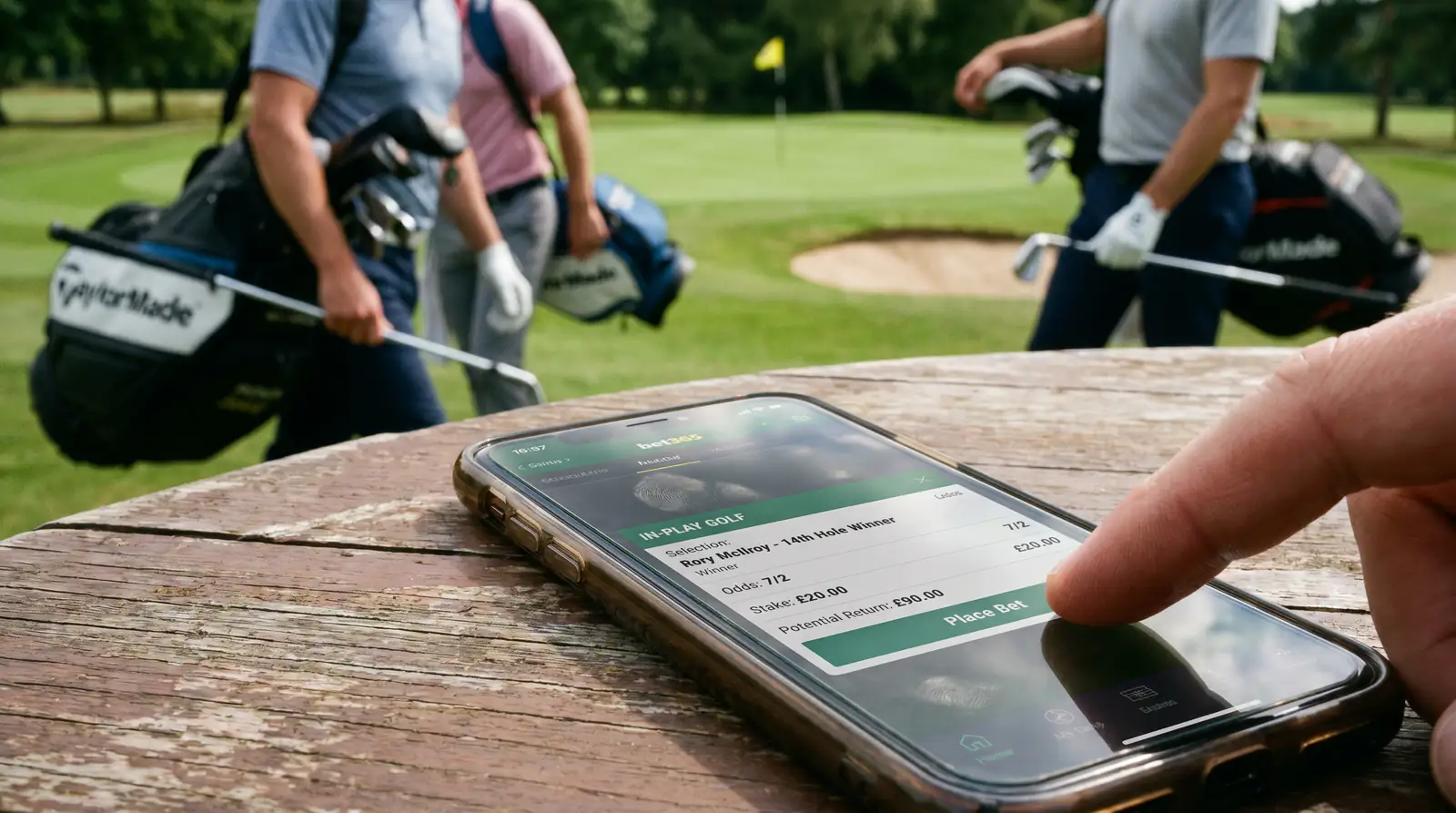
Data feeds from ShotLink — the PGA Tour’s shot-tracking system — and Sportradar’s pipeline deliver ball-by-ball information to bookmaker trading desks. Every drive distance, every approach proximity, every putt outcome gets captured and transmitted. Traders use this data alongside their own models to adjust prices. On a standard PGA Tour event, the update cycle is fast: odds typically refresh within 10 to 30 seconds of a scoring event being confirmed. Sportradar acquired IMG Arena in November 2025, consolidating a portfolio of rights covering 39,000 official events and 30,000 streaming events across 14 sports — golf included. That acquisition means the data pipeline feeding your in-play odds is now more comprehensive and faster than it was even a year ago.
Algorithms handle the bulk of the repricing — they recalculate probabilities across the entire field after each hole is completed. Human traders step in for unusual situations: weather delays, injury withdrawals, or moments of extreme leaderboard volatility where the model might overcorrect. The interplay between algorithm and human judgment is one reason golf odds can occasionally lag behind reality. If you are watching a live stream and you see a player hole a long birdie putt before the feed updates, there is a brief window where the old price still shows. That window is narrow, and bookmakers are getting better at closing it, but it exists.
For UK punters, there is a practical timing consideration. PGA Tour events in the United States typically run from early afternoon to late evening UK time. That means the most volatile scoring periods — the back nine on a Sunday afternoon in America — land in UK prime time. DP World Tour events, by contrast, play during UK daytime hours, making them more accessible for live betting during working hours or weekends.
Placing Your First In-Play Golf Bet: What Happens on Screen
I wish someone had walked me through this before I started. The interface on a betting app during a live golf event can look overwhelming if you do not know what you are looking at. Let me take you through the process as it happens on a typical UK bookmaker’s platform.
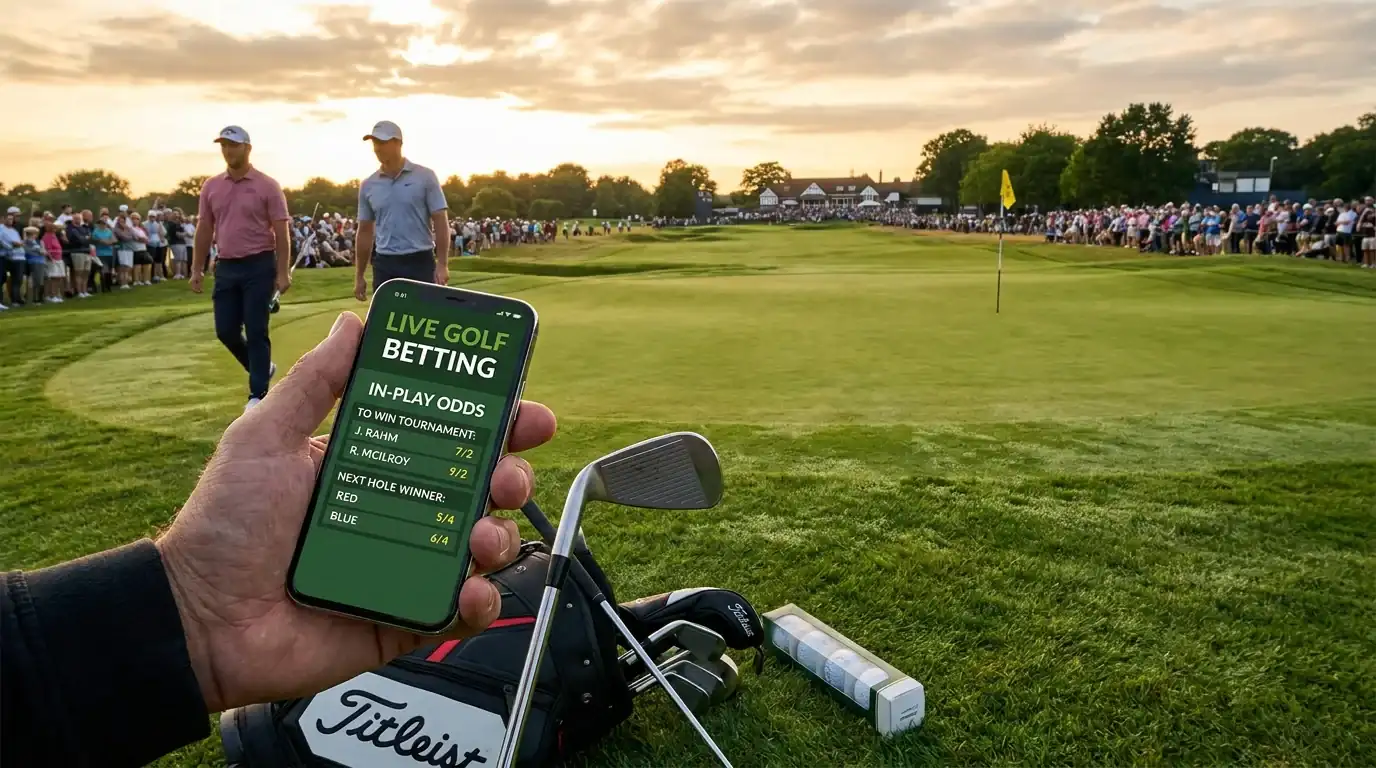
First, you navigate to the golf section — usually under “Sports” and then “Golf” or directly through a featured-event banner if a major is on. You will see a list of available in-play markets. The most prominent is usually the outright winner market, showing every player still active in the tournament with their current odds. Alongside that you will find head-to-head (two-ball) markets, round betting, top-finish markets, and potentially hole-by-hole props depending on the bookmaker and the tournament’s profile.
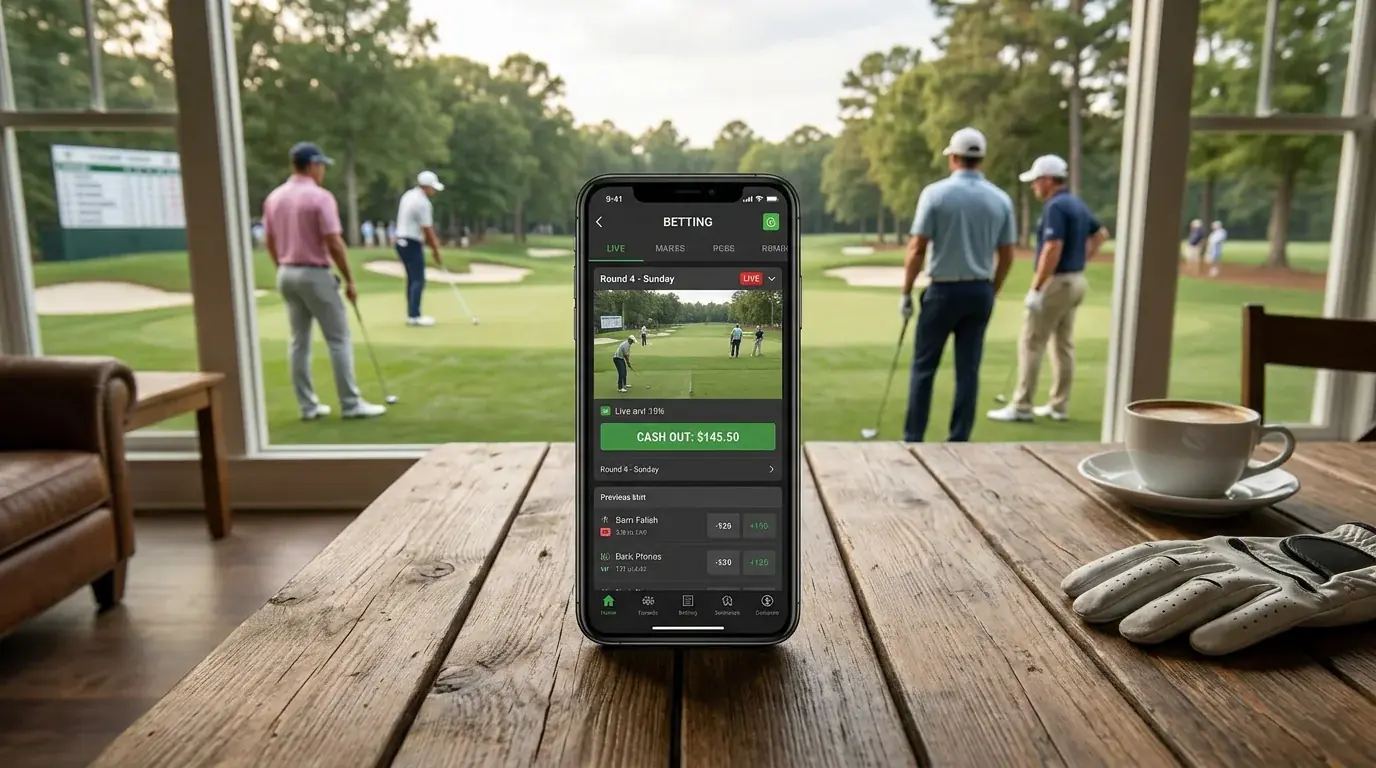
Select a market and tap a price. This adds the selection to your bet slip. Now here is where live betting diverges from pre-match: the price you see might not be the price you get. Most bookmakers operate either a “price lock” or a “floating price” model for in-play bets. Price lock holds the displayed odds for a few seconds while your bet is processed. Floating price means the odds can change between the moment you tap and the moment the bet is confirmed, and you might get asked to accept a new price. Some apps let you toggle a “accept any odds movement” setting, which speeds up bet placement but means you might take a worse price.
Acceptance delay is real. Unlike pre-match bets that confirm almost instantly, in-play bets go through a brief review — typically 3 to 10 seconds. During that window, a trader or algorithm checks whether a scoring event has just occurred that would change the price. If so, your bet might be rejected or referred back at new odds. This delay is standard practice mandated by data integrity requirements, and it exists at every UK-licensed operator. Do not panic if your bet takes a moment — that pause is the system working as designed.
Once confirmed, your bet appears in your open bets section. From there, you can monitor it against the live leaderboard, and if your bookmaker offers cash out on golf markets, you will see a cash-out value that fluctuates with the odds.

Five Mistakes New Live Golf Bettors Make
After 11 years of placing in-play golf bets, I have made every error on this list at least once. Some of them I made repeatedly before the lesson stuck. Here is what I wish I had known from the start.
Chasing drifters is the first and most common trap. A player’s odds drift from 20/1 to 40/1 after a poor front nine, and the instinct screams “value.” Sometimes it is. More often, the market is correctly pricing the deteriorating situation. The player who bogeys three of the first six holes is not automatically about to bounce back — the course might be exposing a genuine weakness in their game. Before backing a drifter, ask yourself whether the drift reflects temporary bad luck or a structural mismatch with the course.
Ignoring wave splits is the second mistake, and it catches people every week during Rounds 1 and 2. Two players can shoot the same score, but if one played in calm morning conditions and the other battled afternoon wind, their performances are not equivalent. The leaderboard does not show you this context. You need to check tee times and the broader market structure before assuming a low score in the PM wave means the same as a low score in the AM wave.
Overexposure on a single tournament is the third pitfall. Golf is a high-variance sport — fields of 144 mean even strong players miss the cut regularly. If you place six or seven in-play bets on the same event without a staking plan, you can burn through a week’s budget in a single round. Cap your total exposure per tournament and stick to it.
Having no staking plan at all is the fourth mistake, closely related to the third. In-play golf markets tempt you with constant action — every hole offers a new opportunity. Without pre-set unit sizes, it is easy to escalate stakes when you are winning or, worse, when you are trying to recover losses. A flat-staking approach of 1-2% of your betting bank per wager keeps variance manageable.
The fifth error is ignoring cash out entirely. Golf tournaments last four days. Circumstances change — your pick might lead after Round 2 but face brutal weather on Saturday, or they might develop a back injury visible in their swing. Cash out exists for exactly these situations, letting you lock in profit or limit losses before the tournament resolves. Not using it is leaving a tool in the box.
The Live Edge Starts With Understanding the Mechanics
Live golf betting rewards patience and preparation over impulse. The four-day structure, the wave splits, the data infrastructure feeding every odds update — none of this is decoration. It is the machinery that creates opportunity for punters who understand how the game and the markets interact. My first in-play bet was blind luck. Every good one since has been grounded in knowing exactly how the mechanics work, and then finding the moments where the market has not caught up with reality. That gap between what is happening on the course and what the odds say — that is where in-play golf betting lives.
How long do I have to place a live golf bet before odds change?
Golf odds typically update within 10 to 30 seconds of a confirmed scoring event. Between scoring events, prices can remain stable for several minutes. The practical window depends on the pace of play and how volatile the leaderboard is at that moment. During quiet stretches — a run of pars, or a weather delay — prices move slowly and you have more time.
Can I bet on any golfer in the field during a live round?
In-play outright markets usually cover the entire active field, so you can back any player who has not withdrawn or missed the cut. However, some secondary markets like head-to-head or hole-by-hole props only cover selected groups, typically the leaders or featured pairings. Market availability varies by bookmaker and by the profile of the tournament.
Do live golf odds include ties and dead heats?
Outright winner markets settle on the playoff result if players tie after 72 holes, so there is no dead heat on the win part. However, place markets and top-finish markets are settled at the tied position, and dead heat rules apply. If three players tie for 5th in a top-5 market, your payout is reduced proportionally. Always check the settlement rules before placing a top-finish or each-way bet in-play.
Prepared by the Live Golf Betting editorial staff.