Links vs Parkland Golf Betting: How Course Type Shapes In-Play Odds
 Available in US

Table of Contents
Links vs Parkland Golf Betting: Two Course Types, Two Different Strategies
A few years ago I backed the same player in consecutive weeks — first at a links course on the Scottish coast, then at a parkland venue in the English Midlands. His strokes-gained profile was nearly identical both weeks. His results were not. On the links he finished outside the top 40 after two rounds of battling sideways wind and unpredictable bounces. On the parkland he cruised to a top-10 finish. Same player, same form, completely different betting outcomes — and the course type was the variable I had underweighted.

The UK hosts both course types in abundance, and each creates a fundamentally different live-betting environment. Links courses — coastal, treeless, firm, windswept — produce scoring volatility that makes in-play odds swing dramatically. Parkland courses — inland, wooded, irrigated, sheltered — compress scoring and reward consistency. If you are betting the same strategy on both, you are making a structural mistake. The course type should change not just which players you back but how you bet, when you enter in-play, and how much variance you tolerate in your staking plan.
Betting on Links Golf: Wind, Bounce and Volatility
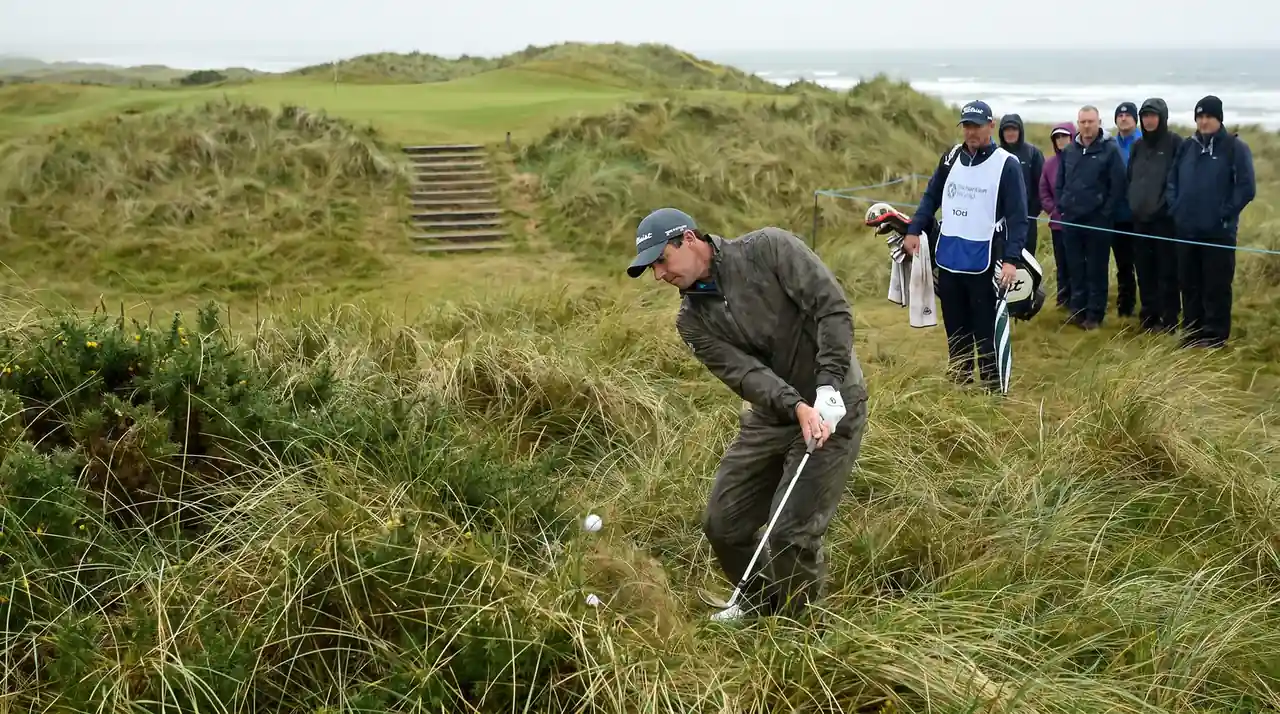
Standing behind the 11th tee at Royal St George’s in a 30 mph crosswind, I watched a tee shot land in the middle of the fairway, bounce hard left off the firm turf, and roll into a pot bunker that was not visible from the tee. The player made bogey from a perfectly struck drive. That is links golf distilled into a single hole — and it is why links tournaments produce wider scoring spreads and more dramatic leaderboard reshuffles than any other course type in professional golf.
Wind is the dominant factor. On links courses, wind direction and intensity change throughout the day, often mid-round. A player who shoots 66 in calm morning conditions might have carded 73 in the afternoon gusts over the same holes. That asymmetry creates enormous in-play pricing opportunities: odds move violently when a player in the PM wave starts dropping shots in conditions that the AM wave never faced. The FedEx Cup Playoffs saw handle jump 50% year-on-year at venues that included exposed layouts — evidence that punters are drawn to the action these conditions generate, even when predicting outcomes is harder.

Firm fairways add a second layer of unpredictability. Links turf is maintained to run fast, which means the ball bounces and rolls in ways that softer parkland turf simply does not. A slightly offline drive that would stop in the rough on a parkland course can run through the fairway on a links and end up in thick fescue or a greenside bunker. For bettors, this translates to a higher frequency of unexpected bogeys from apparently strong positions — and unexpected birdies from recovery shots that use the contours of the terrain.
In-play odds on links courses reflect this volatility with wider spreads and more frequent market suspensions during scoring surges. If you are analysing course form, links specialists stand out clearly: they tend to have strong wind-play statistics, high scrambling percentages, and a track record of controlled ball flight. Backing non-links players at links venues is one of the most common and most costly errors in golf betting.
Betting on Parkland Courses: Predictability and Scoring Depth
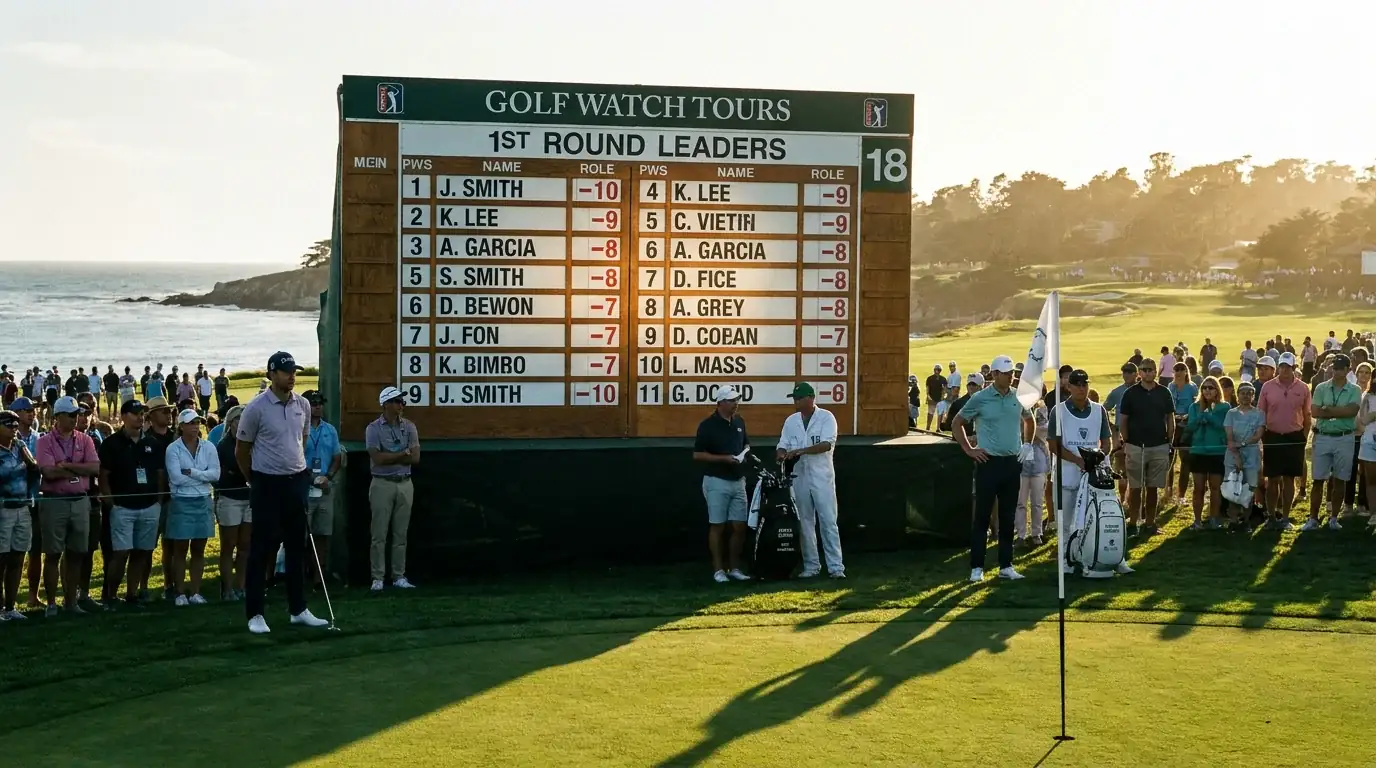
The first thing I notice when a PGA Tour event moves to a well-manicured parkland is how tight the leaderboard gets. Instead of six or seven shots separating first from 20th after two rounds, you might see three or four. The scoring compression is a direct product of the course type — and it changes every aspect of how I approach the betting markets.

Parkland courses are typically sheltered by mature trees, irrigated to maintain soft fairways, and designed with defined landing zones and predictable green speeds. Wind is a factor but rarely a dominant one. The result is that skill differentials between players show up more cleanly: the best ball-strikers and putters rise to the top because the course does not throw random variables at them. PGA Tour betting handle has grown by 20% across all venue types, but the most predictable betting outcomes — the ones that reward data-driven approaches — tend to cluster at parkland events.
For in-play betting, parkland conditions produce tighter odds and less dramatic movement. A two-shot lead after 54 holes on a parkland course is more defensible than the same lead on a links because the conditions are less likely to produce wild scoring swings on Sunday. That means in-play value on parklands is harder to find in outrights but easier to capture in top-finish and match-up markets, where small edges compound more reliably.
One pattern I have observed consistently: parkland events produce more dead heats in top-finish markets because the compressed scoring creates ties at virtually every leaderboard boundary. If you are betting top 10 or top 20 at a parkland event, factor in dead heat risk more aggressively than you would at a links.
Matching Player Profiles to Course Type
When I am building a shortlist for a links event, I start with one filter: driving accuracy off the tee in windy conditions. Strokes gained off-the-tee in calm conditions means almost nothing on a links; what matters is how a player performs when the wind exceeds 15 mph. That subset of data narrows the field quickly and identifies the kind of controlled, low-trajectory ball-strikers who thrive on coastal turf.
Links specialists tend to share certain traits — strong scrambling from awkward lies, comfort with bump-and-run approach shots, and the ability to shape the ball both directions on demand. Players from the British Isles and Scandinavian tours often develop these skills early. Backing an American bomber who leads the PGA Tour in driving distance but ranks 80th in scrambling is a recipe for frustration at a links venue.
Parkland courses reward a different set of strengths. Approach play and putting on bentgrass or poa greens become the primary separators. Strokes gained on approach from 125-175 yards correlates strongly with parkland performance because the soft conditions allow players to attack pins with controlled spin. Length off the tee is useful but secondary — accuracy and green-hitting percentage matter more when the fairways do not punish slight misses.

The practical application is straightforward: build separate shortlists for links and parkland weeks. A player who dominates your parkland model might not appear in your links shortlist at all, and vice versa. I maintain two separate tracking sheets and resist the temptation to force a player into a course type that does not suit his game. The data is clear enough to guide the decision — using it requires discipline, not creativity.
Frequently Asked Questions
Do links courses produce more upsets in golf betting?
Yes. The scoring volatility on links courses — driven by wind, firm turf, and unpredictable bounces — means that favourites are less likely to win outright compared to parkland events. This creates more opportunities for longshot results and wider leaderboard spreads.
Which course type offers better value for live golf bets?
Links courses typically offer more dramatic in-play odds movement and mispricing opportunities because conditions change rapidly during a round. Parkland courses offer steadier markets with smaller edges, making them better suited to systematic, data-driven approaches rather than reactive in-play plays.
Course Type Is the Variable Most Bettors Ignore
I have lost more golf bets by treating all courses the same than by any other single error. Links and parkland are not just different landscapes — they produce different scoring patterns, different leaderboard structures, and different in-play dynamics. Once I started adjusting my strategy by course type — different player shortlists, different staking approaches, different timing for in-play entries — my results improved measurably. The adjustment is not complicated, but it demands that you recognise the distinction before the tournament begins and let it shape every decision that follows.
Published by the Live Golf Betting team.